 Yorimichi Games
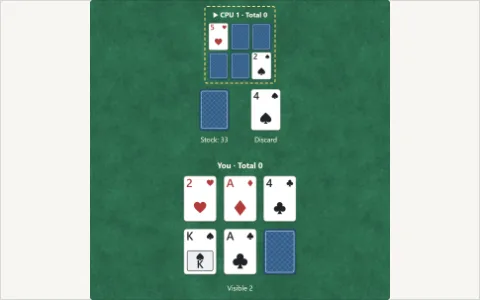
How to play Whist online
Whist is a partnership card game for four seats. Here you sit South and play with the computer partner opposite you. West and East form the other partnership. Your aim is to win tricks together, then turn the tricks beyond six into points. You can play free in your browser without an account. This is Classic Whist: there is no bidding, no exchange of cards and no prediction of how many tricks you will take. Bid Whist is a separate game with an auction and other rules. Start with the standard five-point game if you want to learn the original partnership rhythm.
The deal and the turned trump card
Use a standard fifty-two-card deck with no jokers. Every player receives thirteen cards, dealt individually clockwise starting to the dealer’s left. In the standard setting the final card dealt is shown face up, and its suit becomes trump. That card belongs to the dealer’s thirteen-card hand; it is not an extra card. The turn-up remains visible until the dealer plays to the first trick. The dealer may play any legal card at that turn, not necessarily the turned card. The first dealer is random, and the deal moves clockwise after each completed hand.

Who leads the first trick?
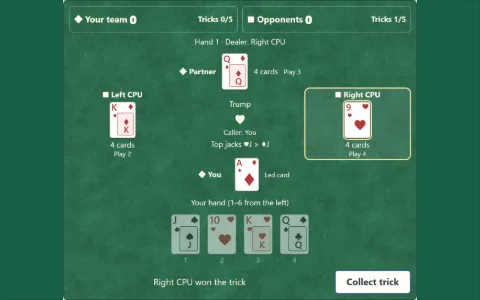
The player immediately left of the dealer leads first. The clockwise seat order on this table is You, West, Partner, East. A leader may play any card, including a trump. You do not have to wait for trump to be broken. Each of the other three players adds one card in turn. Those four cards make one trick. The winner leads the following trick, regardless of who dealt the cards. A full hand contains thirteen tricks. At the end of a trick, the four cards stay on the table until you select Next trick, giving you time to compare them.

Whist rules: follow the led suit
The first card played to a trick sets the led suit. If you hold one or more cards of that suit, you must play one of them. You cannot play a trump instead simply because it would win. You also cannot discard an unrelated ace while still holding the led suit. You may choose any card of the required suit: there is no obligation to beat the current winning card. Cards you cannot legally play are shown faintly. Select one to read the reason. Tap a white-framed card with a dot to play it directly. Undo play returns to before your card, including later computer plays. Once you select Next trick, you cannot undo that trick.

When you cannot follow suit
If you have no card of the led suit, you may play any card in your hand. You may use a trump to try to win, or discard another suit. Trumping is optional, not compulsory. This matters when your partner already has a likely winner and you want to keep your trumps for a later trick. If trump itself was led, players who hold trump must follow it as usual. There is no special card order within trump: ace is highest, followed by king, queen, jack, ten and the remaining numbers down to two.
Which card wins the trick?
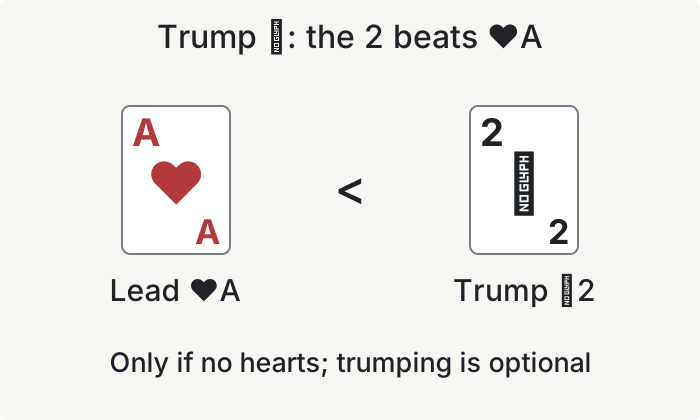
When any trump is played, the highest trump wins. Without trump, the highest card of the led suit wins. A card from an unrelated suit cannot win, even if it is an ace. A two of trump can beat an ace of a different led suit. The winning card receives a frame and a check mark, so you can recognise it without relying only on colour. Tricks won by you and your partner count towards the same total. It makes no difference which member of the partnership physically takes them. Both contribute one trick to the team.
Whist scoring: the first six are the book
The first six tricks taken by a partnership do not score. Seven tricks earn one point, eight earn two, ten earn four and a sweep of all thirteen earns seven. The other side earns no trick points for that hand. Because thirteen is odd, the partnerships cannot tie on tricks within one hand. Complete the entire hand before adding its points to the match total. In the standard game the first partnership to reach five or more points wins. Reaching a seventh trick partway through a hand does not stop play; the remaining tricks can still increase the score.

Standard rules and honours variations
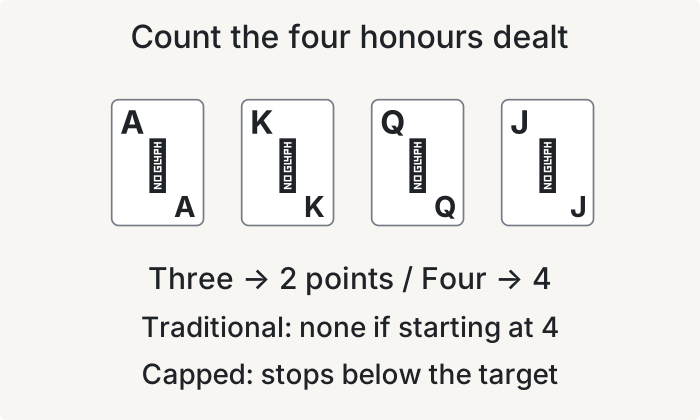
Standard here means last-card trump, a five-point target and no honours. Honours count the ace, king, queen and jack of trump originally dealt to a partnership, not cards captured later. Traditional five-point honours award two bonus points for three of these cards or four for all four. A side starting that hand on four points cannot score the bonus. Trick points are counted first, so a side winning through tricks finishes before an opposing honours award. The Capped option is different: a bonus can take a side only to one point below the target. It must win the final point through tricks.
| Rules | Details |
|---|---|
| Standard | Last card trump; first to five; no honours |
| Traditional honours | Five-point game. No bonus when starting at four. Trick points first |
| Capped honours | Bonus stops one point below the target |
| Rotation · 4 hands | ♥ ♦ ♠ ♣. Four hands; equal totals draw |
Rotating trumps and a fixed number of hands
Rotating trump follows hearts, diamonds, spades, clubs and then repeats. The rotation with no trump adds a no-trump hand after clubs. In a no-trump hand only the led suit can win each trick, and there are no trump honours. Fixed-hand mode lets you play one, four or eight hands and compare the accumulated trick points afterwards. Honours are off in this mode. An equal total is a draw. The Rotation · 4 hands preset combines rotating suits with four hands. This is a convenient single-table session, rather than a simulation of a complete tournament in which players move between tables.
Whist strategy: let your partner work
Before spending a strong card, check whether the current winner is your partner or an opponent. If your partner appears likely to keep the trick, a lower card may preserve your strength for later. However, a partner winning midway through a trick is not guaranteed to win the completed trick. An opponent still to play may hold a higher card or have the opportunity to trump. Fourth seat is easier to judge because all the other cards are visible. Consider who will lead next as well: winning a trick also lets that player choose the next suit.
Count trumps and watch missing suits
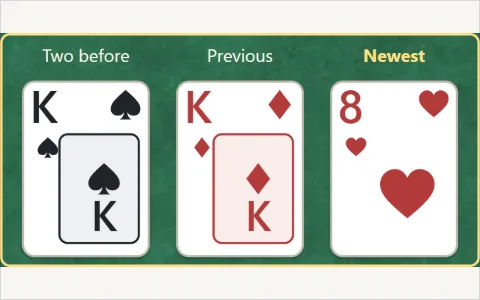
Trump is powerful, but a low trump can still lose to a higher one. Before ruffing, consider whether another player could overtrump. Remembering which aces and kings have been played helps you recognise when a queen or jack has become strong. If a player fails to follow suit, you know they had no card of that suit at that moment. Simply not seeing a particular card does not prove that someone lacks it. The Previous trick record can help you check a recent play. Use what was actually shown rather than guessing from a card’s colour or a seat’s score.
Keep useful entries and long suits
Holding many cards of one suit can create late winners once other players run out of it. A small card may eventually become valuable even though it would lose at the start. Leading a high card can draw out other high cards; leading low can give your partner a chance to take the lead. Try to keep a card that can regain the lead when you need it, rather than spending every ace immediately. Running out of a suit creates opportunities to trump, but only if you have trump left. Length, rank and the remaining trumps all matter together.
Controls, pause and saved games
Tap or click a card to play it directly. White frames and dots mark the cards you can play. On a keyboard, the arrow keys move the card cursor. Enter or Space plays that card. Escape clears the cursor, and Z undoes your play. N advances a completed trick or hand, and P pauses or resumes. Pause hides your hand and stops computer progress. Leaving the tab also pauses the game. The browser remembers your unfinished match, latest settings and record on this device. Continue restores the original match even if you edited the settings afterwards.
Whist FAQ: difficulty, saving and restarting
Difficulty controls West and East. Your computer partner stays at Normal, so changing the opponent level does not also weaken your teammate. Easy gives more room to keep valuable cards; Normal asks you to pay attention to partnership play; Hard makes better use of what has appeared on the table. There is no time limit on your decision. Saved progress does not move to another device and may be removed if browser data is cleared. Restart begins a new match. Sound starts off, and every outcome is shown through cards, symbols and text, so sound is optional.
Can I lead trump immediately?
Yes. Classic Whist has no restriction requiring trump to be broken before it can be led. You must follow the led suit if possible, but you do not have to overtake the current winner. When you cannot follow, you may discard even if you hold trump. There are no jokers or special powers attached to court cards. Ace is high, yet an unrelated ace still cannot win a trick. Settings offer five, seven or ten-point targets. Traditional honours select the five-point target automatically. Capped honours can be used with any offered point target, while fixed-hand sessions use trick points alone.
A classic partnership tradition
Whist developed in Britain and is associated with the history of bridge and other trick-taking games. Many later games use Whist in their names, but their auctions, partnerships and scoring may be quite different. Agree on the target, honours and method of selecting trump before a game with physical cards. On this table you can start with the standard preset, learn to follow suit and recognise trump, then explore the clearly labelled variations. The central pleasure is reading a small amount of information and helping your partner make the most of the cards you share as a team.