 Yorimichi Games
How to play Classic Canasta online
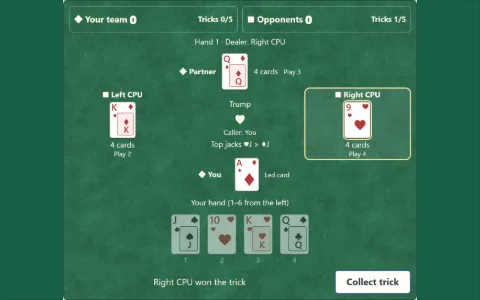
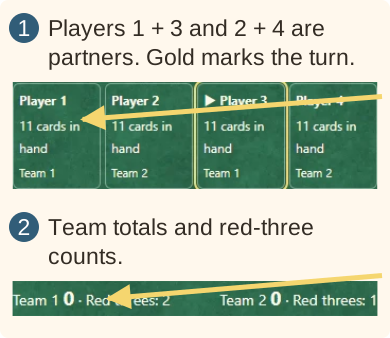
Classic Canasta is a partnership card game for four players in two fixed teams. Partners sit opposite each other and build a shared collection of melds. Two ordinary decks and four jokers make 108 cards, and each player receives eleven cards. This version uses a single stock draw per turn. In computer mode, you and the Partner CPU form Team 1; the left and right computers form Team 2. Local mode keeps the same four-player rules, with Players 1 and 3 against Players 2 and 4. Pass the device before revealing the next player’s hand. This is not the two-player version with a different drawing procedure.
Draw, meld and discard
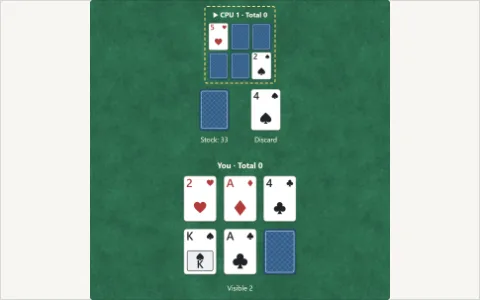
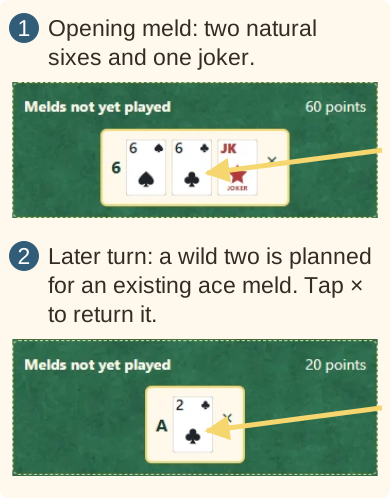
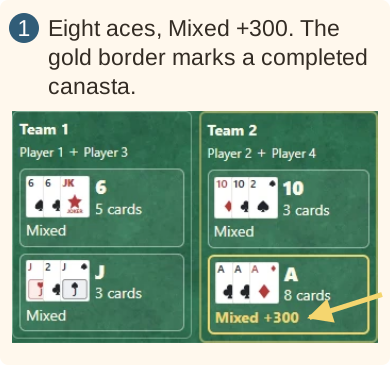
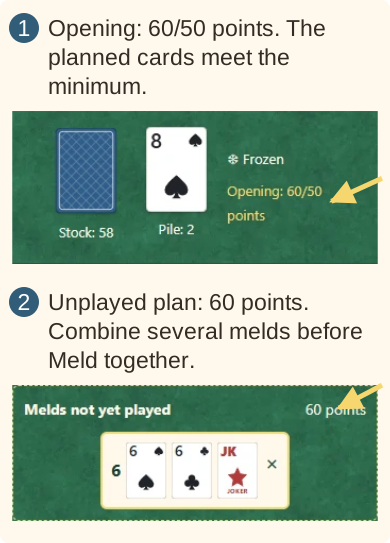
A turn begins by drawing one card from stock or legally taking the whole discard pile. After drawing, you may lay down melds or add cards to your team’s existing melds. Melding is optional. Finish by discarding one card from your hand, unless you legally go out by melding everything. Select hand cards to highlight their target melds with dashed borders. Tap your team’s existing meld or the rank shown below your hand to prepare those cards. When selecting only wild cards, tap the rank that should receive them. Prepare several ranks before selecting Meld together. That matters when the opening minimum needs the combined value of two or more melds. To discard, select a single card still in your hand and tap the discard pile. Use Played melds and Hand / plan to move within the table. Every played meld shows its rank, full card count and Natural or Mixed type; a completed canasta has a gold border and its bonus. Planned cards have not yet left your hand until the play is committed.
Tap a selected card again to deselect it; tap empty felt to clear the selected cards. Esc or Cancel clears both the selection and all planned melds. Tap × on one planned meld to return just that group to the hand while keeping the other groups. Check ranks, counts and opening points before committing.
Canasta meld rules and wild cards
A meld contains at least three cards of the same rank, regardless of suit. A run of consecutive ranks is not a Canasta meld. Every ordinary meld needs at least two natural cards of its rank. Twos and jokers are wild and can substitute for that rank, with a maximum of three wild cards in one meld. Wild-only melds are not allowed. Q-Q-2 is valid; Q-2-joker is not, because it has only one natural queen. Two naturals plus two wilds is valid in the Classic rules used here. Cards of a rank already melded by your team join that same meld. You may extend a partner’s meld, but never an opponent’s.
Natural and mixed seven-card canastas
A meld of seven or more cards is a canasta. A natural canasta contains no wild cards and earns a 500-point bonus. A mixed canasta contains wild cards and earns 300. The ordinary values of its cards still score separately. You may continue adding cards after the seventh card; the three-wild maximum still applies. Adding a wild card to a natural canasta turns it into a mixed one and reduces its bonus from 500 to 300. That may help empty your hand, but it also gives up 200 bonus points. Check the completed meld’s card count and type before deciding. Your partnership needs at least one canasta before either player can go out.
Opening meld minimum and card values
Before your partnership has opened, the first meld or simultaneous group of melds must meet a minimum based on its score at the start of the hand: 15 when negative, 50 below 1,500, 90 from 1,500 to below 3,000, and 120 thereafter. Jokers count 50; aces and twos count 20; ranks eight through king count 10; four through seven and black threes count 5. Red-three and canasta bonuses do not help meet the minimum. Once either partner opens, both may add any legal meld. When opening by taking the discard pile, only its top card contributes to the opening count. Buried cards cannot be used to justify taking the pile.
Taking the discard pile: prove the top card first
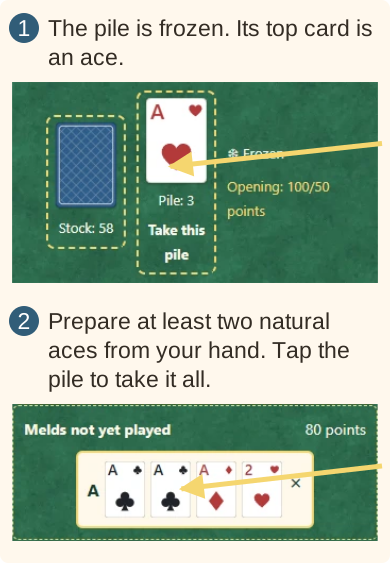
To take the discard pile, first use its top card in a legal meld, then take all remaining cards into your hand. Before your team opens, the pile is frozen against that team. A frozen pile requires two matching natural cards from your own hand. You cannot borrow a matching card buried in the pile to establish your right to take it. When unfrozen, you may use a natural pair, one matching natural plus a wild, or add the top card to an existing meld of your team. A wild card or any three on top cannot be taken. The suggestion button can prepare a legal pickup plan, but there may be no legal suggestion for the current hand.
Frozen piles and black-three stop cards
A two or joker in the discard pile freezes it even after later cards cover the wild. An initial red three also freezes the pile. Taking the whole pile removes that global freeze. In the standard rules here, a black three is a stop card: it blocks the next player, but has no continuing effect once covered. Bicycle’s published explanation gives black threes a continuing freeze, so that is offered as a separate setting rather than silently mixed into the standard. The treatment of an initial black three follows that choice. Under either setting, a black three on top cannot be taken. Check both the frozen indicator and the top card.
Red threes, replacements and the final stock card
Red threes are bonus cards rather than ordinary meld cards. When dealt or drawn from stock, they are automatically exposed and replaced. A red three found inside a taken discard pile is exposed without a replacement. A team that has melded scores 100 per red three, or 800 for all four; a team with no meld loses the same amount. Black threes normally cannot be melded. You may meld a natural group of three or four black threes only while going out, without wild cards. Two black threes are not a meld. If the last stock card is a red three, it is exposed and the hand ends immediately; there is no further melding or discard.
Going out, concealed finishes and an empty stock
Going out requires a canasta for your team. You may meld everything or meld all but one card and discard that last card. Without a canasta, do not meld down to a lone card that would have to be discarded illegally. An ordinary finish scores 100. A concealed finish scores 200 in total when you have not previously melded or added to a partner’s meld and complete your own new canasta in this turn. Drawing from stock can waive the opening minimum for this complete concealed finish; taking the pile cannot. When stock is empty, play can continue through legal pickups. Adding an unfrozen top card to an existing meld is compulsory. Otherwise declining the pile ends the hand. A one-card hand cannot take a one-card pile.
Black-three finishes and concealed finishes using the opening exception are committed together. If the plan leaves one card, that last card is discarded as part of the finish.
Scoring, the standard game and excluded variants
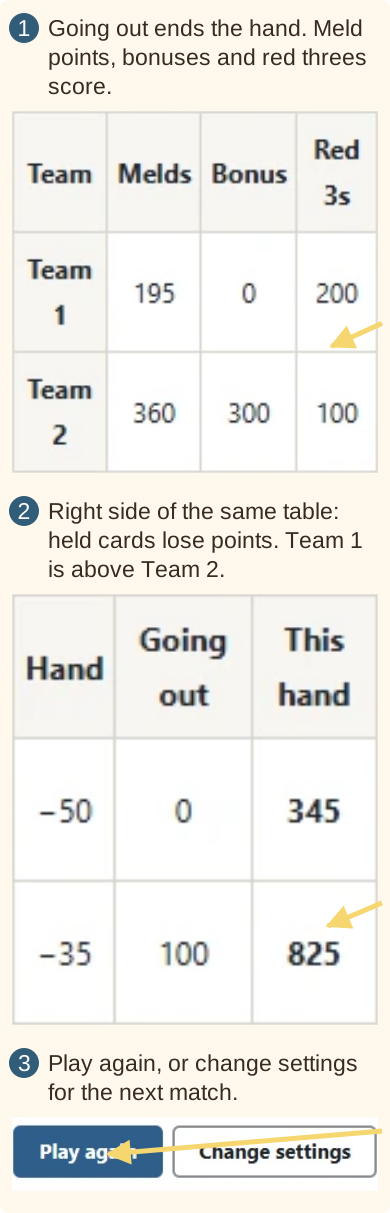
At the end of a hand, add melded card values, canasta bonuses, red threes and the going-out bonus, then subtract the values left in both partners’ hands. Finishing first does not necessarily produce the higher score. The standard match continues to 5,000 points and compares totals after the entire hand. If tied at the target, play another hand. A shorter 1,500-point target and a single-hand comparison are optional lengths. This first version excludes Modern American special hands, wild-only melds, special ace and seven conditions, Hand and Foot, and Samba. It also omits the optional partner-permission conversation: you may go out legally without asking, as the Classic rules allow.
| Setting | Standard | Option |
|---|---|---|
| Target | 5000 | 1500 / 1 hand |
| Black 3 | Stop next player | Persistent freeze |
| Players / decks / draw | 4 / 2 / 1 | Fixed |
Canasta strategy: six useful habits
Keep natural pairs that can become melds or claim a frozen discard. Use wilds where they can complete a canasta instead of spending them casually on small groups. Remember that retained jokers are expensive hand penalties, so saving them forever also has a cost. Look at the opponents’ public meld ranks before discarding: a matching rank may hand them the entire pile. Black threes can stop an immediate pickup. Plan an opening by its combined card value rather than judging each group separately. Before going out, notice your partner’s hand count and possible penalty. A suggestion is one legal option, not a guarantee of the best long-term play.
Canasta FAQ
Do suits have to match? No. Collect ranks; suits may differ. Why is my meld rejected? Check the opening minimum, the two-natural requirement, the three-wild limit, and whether you would leave too few cards without a canasta. Why can I not take a pile matching an existing meld? A frozen pile still requires a natural pair in your hand. Why did a drawn red three not stay in my hand? It goes to the table and is replaced from stock when possible. Can I play alone? Three computer seats provide two opponents and a partner. Difficulty changes how carefully opponents build melds, preserve useful cards and choose discards.
The partner uses the same judgement at every difficulty. Difficulty applies to the two opponents, so your partner’s support stays consistent.
Saving, local privacy and taking a break
An unfinished match and the selected settings are saved in this browser when storage is available. Japanese and English share the same save on the same browser and origin, but another device or browser does not share it. Restricted storage may prevent continuation after closing the page; play remains available. Pause cancels a pending computer action, and opening Settings also stops play. A plan not yet melded is only a temporary selection, so choose those cards again after resuming. Local handoff hides the next player’s cards until they reveal them. Pass the device before doing so. Sound starts off and can be enabled for short dealing and placement effects.
Undo returns your last meld or discard before you pass the turn. A safe Undo remains available after saving and resuming. Drawing unknown cards, taking the pile and a completed hand cannot be undone. Computer moves appear with a short animation; Continue CPU advances to the next action. Settings, sound and records are in the supplementary panel below the table.
Origins and choosing the right Canasta rules
Canasta became widely popular in the middle of the twentieth century and is commonly described as having originated in Uruguay. As groups developed local versions, the same name came to cover different hand sizes, drawing procedures and finishing requirements. Before joining a table, ask whether it uses Classic or Modern American rules, how black threes affect the pile, and what ends the match. This browser version does not reproduce tournament penalties or a face-to-face permission conversation. It offers a consistent Classic framework for building shared melds, judging the value of a discard pickup, and deciding when a finish helps the whole partnership.