 Yorimichi Games
How to play Ten Thousand Dice
Ten Thousand is a six-dice game about building a score and choosing when to stop. Each player takes a turn rolling dice, keeping scoring results and deciding whether to bank the turn total or roll the dice that remain. If a throw contains no scoring dice, the current turn ends with zero points. Points banked on earlier turns stay safe. The target is 10,000, and in the usual setting every other player gets one final turn after somebody reaches it.
You can play against the computer or pass one phone, tablet or computer between two, three or four people. Choose an opponent, a scoring preset and a computer level, then press Start. Player 1 goes first. The player named above the dice is the one who should act; their score card also has a highlighted border. The large number on the table is the unbanked turn total. The smaller score cards show each player's banked total. Keeping those two kinds of points separate makes the game much easier to follow.
Find single 1s, single 5s and triples
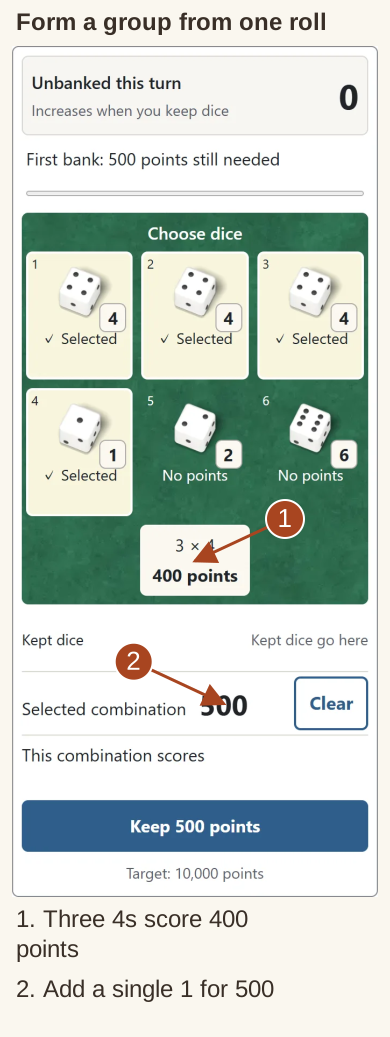
Press Roll to throw all six dice. A single 1 scores 100 points, and a single 5 scores 50. Other faces need a combination: three matching dice score the face value multiplied by 100. Three 4s, for example, score 400 points. Three 1s are the exception, normally scoring 1,000. Custom rules also offer a 300-point triple of 1s. The scoring reference below the controls shows the rules used by the current game.
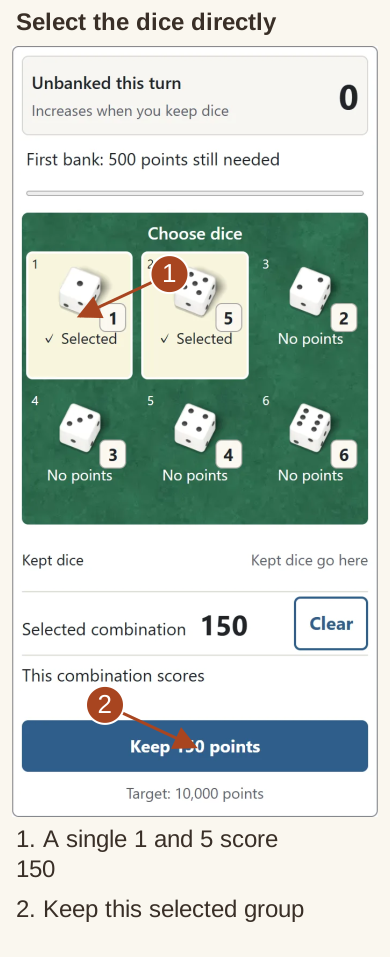
Click or tap the dice you want to keep. Their borders change, and the selection note shows how many points they are worth. Every selected die must be part of a valid scoring combination. A 1 and a 5 together are worth 150; adding a lone 2 would make that selection invalid. A triple must include all three matching dice. You may keep only some of the scoring dice, provided the selection itself is valid. For example, you can keep a single 1 and leave a scoring 5 available to roll again.
Keep first, then bank or roll again
Press Keep to add the selected points to the turn total. You then have two choices. Bank adds that total to your permanent score and ends the turn. Roll throws every die you left behind and lets you continue collecting points. Keeping a selection does not bank it automatically. You cannot keep a second selection from the same throw after pressing Keep: either bank the current total or roll the remaining dice.
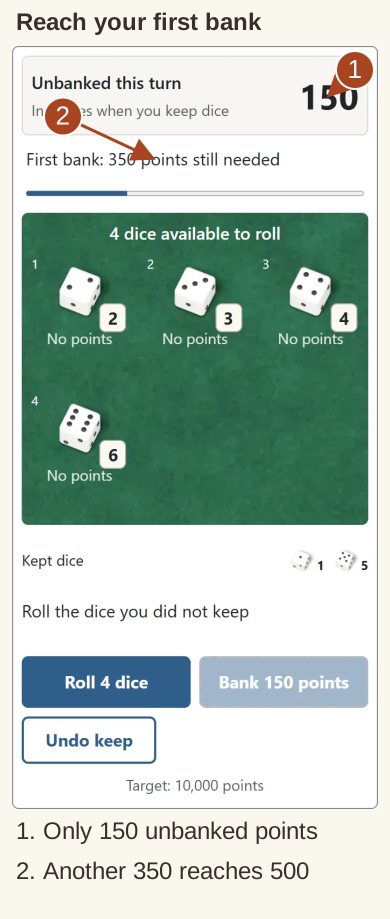
There is usually a 500-point opening requirement. Before you have banked any points in the game, your turn total must reach at least 500 before Bank becomes available. Once you have recorded your first score, later turns can be banked for any positive amount, even a single 5 worth 50. Custom rules let you remove the opening requirement or set it to 350. The message above the dice tells you when the requirement is still preventing you from banking.
Tap a selected die again, tap the empty mat, press Escape, or use Clear to cancel your selection. A group button selects a complete scoring group directly.
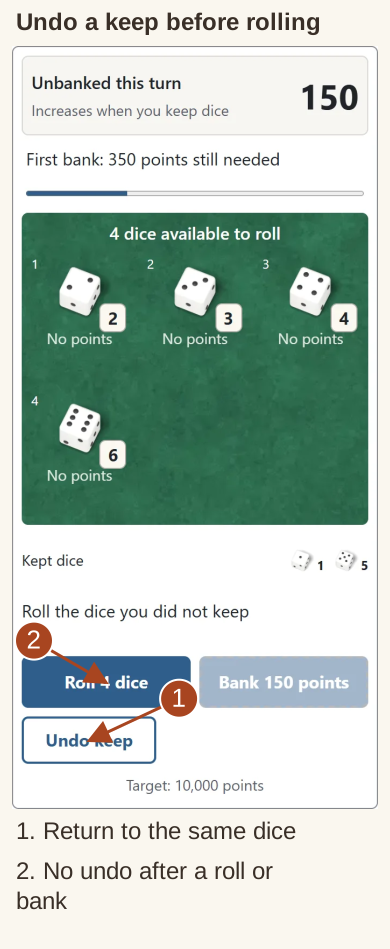
Undo a keep before the next roll
Undo keep restores your previous selection and the same dice. It is available only before a new roll, banking or passing the turn. It cannot undo a computer action or change a random result. A valid pending keep undo is saved with Continue.
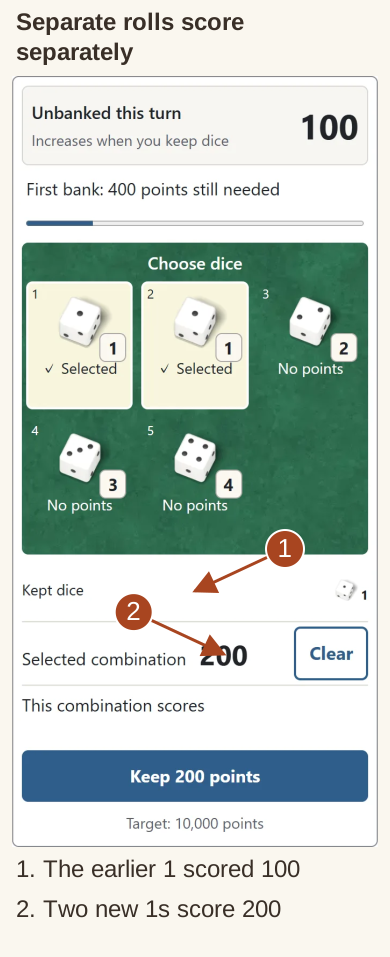
Combinations cannot cross throws
Only dice rolled together can form a combination. If you keep one 1 on your first throw and two more 1s on the next, you have scored 100 plus 200, a total of 300. You do not have a triple worth 1,000. The kept-dice row is a record of dice already scored during the current cycle; it is not a pool you can combine with the new throw. This matters particularly when you are one matching face away from an impressive-looking group.
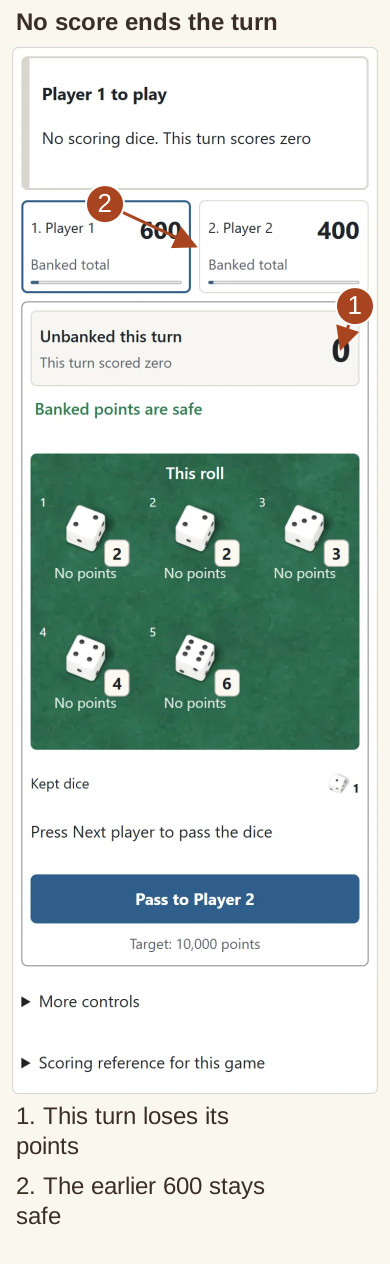
A scoreless throw ends your turn
If the dice you roll contain no valid scoring selection, you lose the unbanked turn total. Your banked score does not go down. The screen leaves the dice visible so you can see why the turn ended. Press Next player to pass the dice. In a local multiplayer game that button also gives you time to hand the device to the next person. The computer completes its own turns, but your turn starts with your own press of Roll.
All six scored: a fresh set of dice
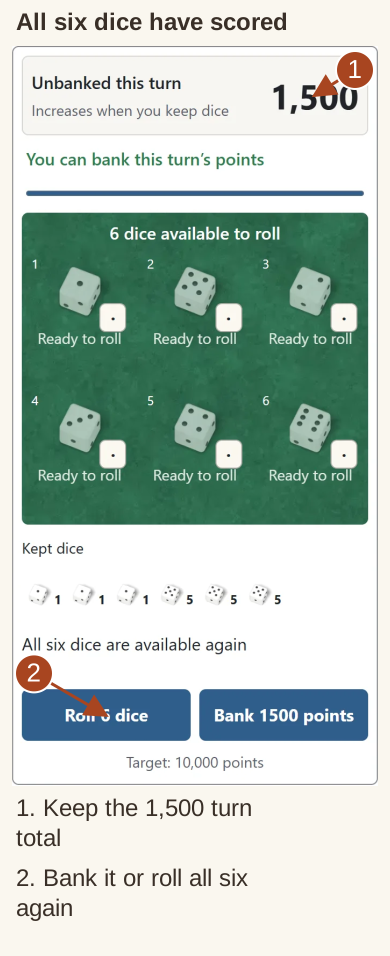
When you have kept all six dice, whether in one throw or across several throws, you may roll all six again. The points already collected remain part of the same turn. You may also bank instead, as long as the opening requirement is satisfied. A fresh six-dice roll creates more chances to find scoring results, but it is still possible to get no scoring dice and lose everything collected in that turn. No automatic bonus is added just for using all six.
Ten Thousand scoring and rule variations
There is no single scoring chart shared by every household version of this game. The Basic preset uses singles and triples. The Extra combinations preset adds larger matching sets and special six-dice patterns. Check the preset before you begin, particularly if you have played with a different scoring sheet.
| Combination | Basic | Extra combinations |
|---|---|---|
| Single 1 / single 5 | 100 / 50 | |
| Three matching dice | 1s: 1,000; other faces: face × 100 | |
| Four / five / six matching dice | Triples plus scoring leftovers | 1,000 / 2,000 / 3,000 |
| One each of 1 through 6 | No extra combination | 1,500 |
| Three pairs, or four plus a pair | No extra combination | 1,500 |
| Two triples | Sum of the triples | 2,500 |
In Basic, four 1s score a triple plus a single: 1,100 points. Four 2s do not all score, but you can select three of them for 200 and leave the fourth to roll again. In Extra combinations, selecting all four matching dice uses the fixed 1,000-point value. You can still choose a smaller valid selection. Straight, pair and double-triple patterns require all six dice to come from the same throw. In Custom, choose whether extra combinations are enabled, the value of triple 1s, the opening requirement and the ending rule.
Reaching 10,000 and the final turns
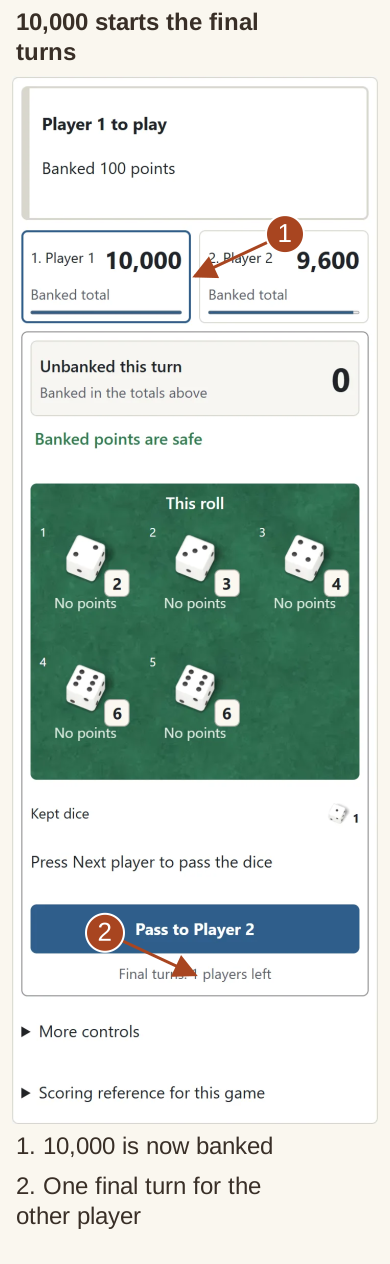
Under the normal ending rule, banking a total of 10,000 or more triggers the final turns. Every other player gets one additional turn, in the ordinary playing order. The player who triggered the finish does not get another turn. Once those turns are over, the highest banked total wins. Equal highest totals share first place; there is no extra tie-break roll. You do not need to reach exactly 10,000, and points beyond the target count normally. With Immediate finish selected, the first player to bank at least 10,000 wins immediately.
Ten Thousand Dice strategy and tips
1. Count the dice left, as well as the points
A turn total of 500 is not the same decision with one die left as it is with five. In Basic, a single die scores only on 1 or 5. Four of its six faces end the turn. More dice create opportunities for triples as well as singles. Before rolling again, look at the number of dice available and consider how much of the turn total you would be giving up on a scoreless throw.
2. Get your opening score onto the board
If you have not banked anything yet, reaching the opening minimum matters. A useful triple may let you record your first score immediately. Once that is done, small later turns become available too. Failing to open for a few turns does not mean the game is over: one larger combination can quickly change the score. Keep checking your own requirement rather than comparing only the visible totals.
3. Do not always keep every scoring die
Keeping more dice increases the immediate total but reduces the next throw. If you want to continue, keeping a 1 while leaving a 5 can sometimes be useful. If you intend to bank right away, collecting all the scoring dice is often the simplest choice. Think about the next action before pressing Keep. There is no reward for leaving dice unused when you are about to finish the turn anyway.
4. Banking is an active decision
A high-scoring throw can make another roll tempting, but Bank turns uncertain points into a safe total. A short turn that adds points can be more useful than a long turn that eventually ends with zero. Try alternating modest scoring turns with longer turns when you have many dice available. You do not have to follow a rigid stopping number in every situation.
5. Work out what you need in your last turn
During the final turns, compare your banked total plus the points collected now with the highest opposing score. If banking would put you ahead, stopping deserves serious consideration. If you are still behind, you will need more points. Sharing first place is possible, so decide whether you are content to tie or want to attempt a higher total. The final-turn counter above the dice tells you how many players still have a turn.
6. Learn from the computer's stopping choices
Easy tends to focus on points immediately available and sometimes keeps rolling with too few dice. Normal balances the turn total with the remaining dice. Hard is more careful about leaving enough dice for the next throw and about banking a useful total. Every level occasionally makes a poor choice. Dice can change a game dramatically, so a single win or loss is not a reliable measure of how well you played.
Ten Thousand Dice FAQ
Must I keep all scoring dice?
No. You must keep a valid scoring selection before continuing, but you can leave other scoring dice to roll again. A lone 2, 3, 4 or 6 cannot be kept without a combination.
Does a scoreless throw remove my earlier points?
It removes only the unbanked points from the current turn. Scores you banked on previous turns remain unchanged. Even a scoreless first throw simply ends that turn with zero.
Am I forced to roll again when all six score?
No. You may bank or roll a fresh six, provided you have met any opening requirement. The fresh throw continues the same turn rather than starting a new one.
Can I save and continue later?
Yes, on the same device and browser. Continue returns to the saved turn, including a selection phase or a decision to bank or roll. Closing during the rolling animation returns to the position before that roll. Opening Settings keeps the current game available; starting a new game replaces it.
How do I use the keyboard?
Keys 1 through 6 toggle the corresponding dice. Enter or Space performs the main action: roll, keep the selection or pass to the next player. B banks points. Escape clears a selected group first; otherwise P or Escape pauses or resumes. Standard Tab and Enter also work on the individual buttons. On a phone, tap the dice and use the same action buttons.
Is there a time limit or sound?
There is no time limit. Sound starts off and can be switched on inside More controls. Pause gives you as much thinking time as you need. Switching tabs or apps pauses the game too; press Resume when you return.
About the Ten Thousand dice game
Six-dice games played toward a total of ten thousand are known by several names and have many local scoring traditions. Ten Thousand and 10,000 Dice describe the target rather than one particular scoring sheet. If your family uses a different chart, compare the available custom settings before playing. You can also play with six ordinary dice and paper: the important choices are which scoring dice to keep and when to record the turn total.
Rule references and artwork
Gold Cup / PlayMonster rules / Dice Game Depot
The three-dimensional dice are existing original Blender artwork. The felt is an existing original texture. The top face is the result, also shown as a number at the lower right. Diagrams use real game screens with original numbered arrows. Sound effects are original site audio.