 Yorimichi Games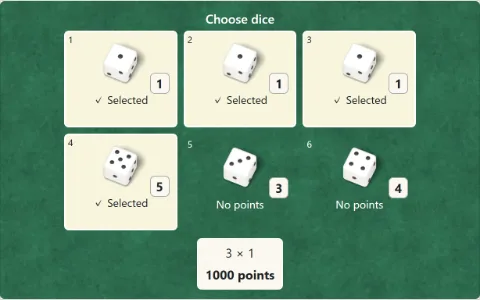
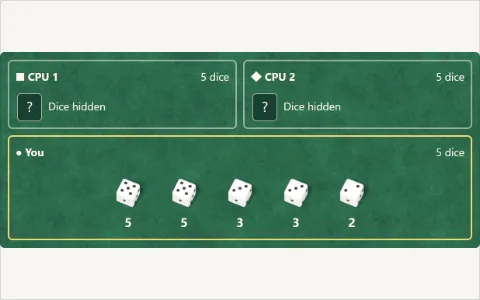
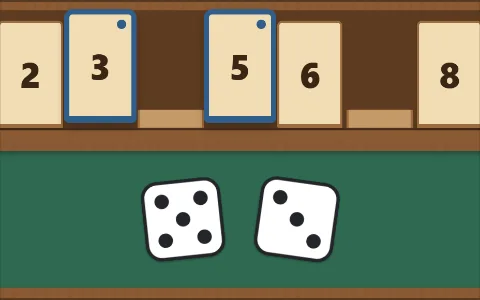
Normal and Hard use the same fair dice. Hard has a brisker CPU pace. Every roll still waits for your review.
How to play Bunco online: the one-table version
Bunco is a dice game built around a changing target number. Roll three dice together and look for the number of the current round. In round one you want ones; in round two you want twos. The target continues through six, then starts again at one if you are playing a second set. You do not add the faces of the dice together. A six is not automatically better than a one. What matters is whether a face matches the target.
This free online game is a small-group individual version: you play at one table against three computer players. Each person has a separate round score. There are no partners, other tables or seat changes. The familiar party version usually has twelve people at three tables, with temporary partners sitting opposite each other. That social format is described below so you can tell the two versions apart. Learning this page does not mean that every party will use the same rules.
Choose the difficulty, point goal, number of rounds and scoring option before selecting Start. The standard options here are twenty-one points, six rounds and five points for an off-target triple. The first roller is selected at the start. On your turn, tap the dice or the Roll the dice button immediately below them. All three dice move together, then remain visible for you to read. Sound starts off. Open Pause / settings to find the sound switch and other support controls. You can also use the keyboard: Enter or Space rolls or continues, and P pauses or resumes when focus is in the game area.
Bunco scoring: one, five and twenty-one
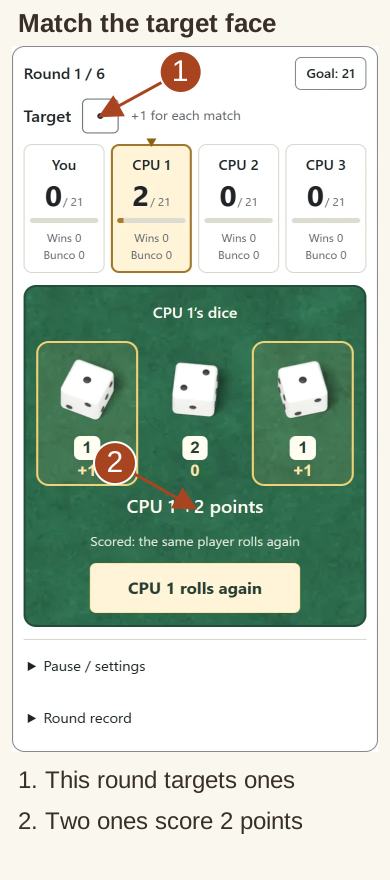
Count each die matching the target as one point. For example, in round two a roll of two, two, five scores two points. The five contributes nothing. Two, four, six scores one point. One, four, six scores zero. This simple counting rule is replaced by a special award when all three dice show the same face.
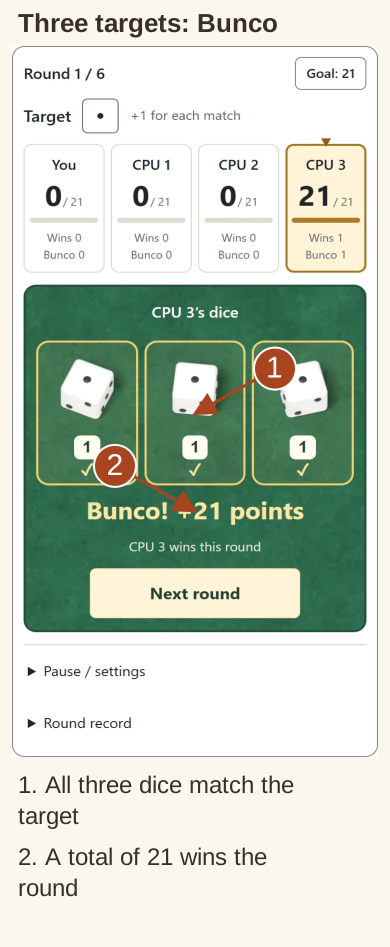
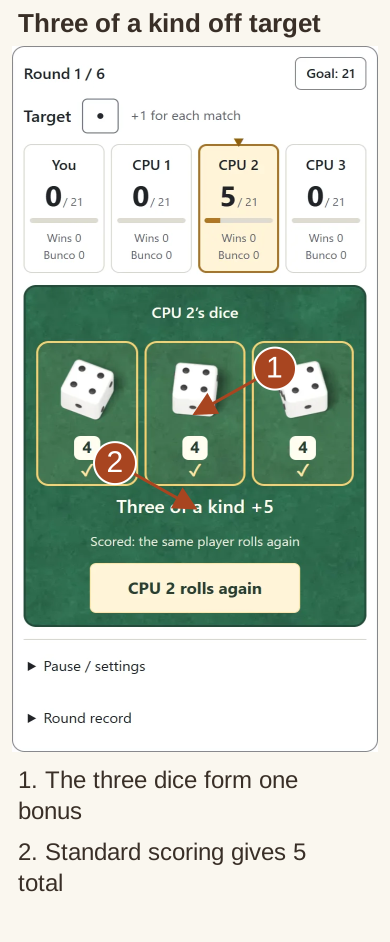
Three matching target faces make a Bunco and score twenty-one points. Three twos in round two are a Bunco; three fours in that round are not. A Bunco is worth twenty-one altogether, not twenty-one plus the three ordinary matching points. The person who rolled it also adds one to their personal Bunco count. An off-target triple normally scores five points and is sometimes called a mini Bunco or baby Bunco. It does not increase the personal Bunco count used in the final ranking.
Points accumulate during the round. A blank roll does not erase the points you already earned. If your score is twenty and you earn two more, your new score is twenty-two. You do not need to land exactly on the goal. Reaching or passing it is enough. The eleven-point option shortens the race, but it does not change a Bunco into an eleven-point award: the roll still earns twenty-one.
When to keep rolling and when to pass
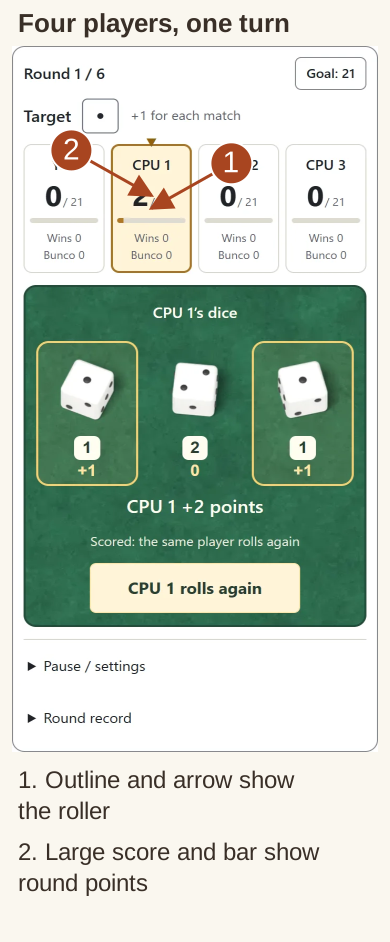
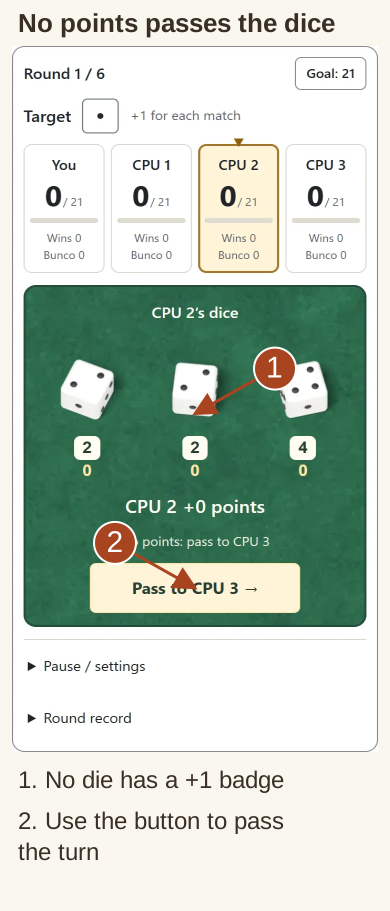
A scoring roll keeps the dice with the same player. That includes a five-point mini Bunco. A roll worth zero passes the dice to the next player on the left. In this game the order is You, CPU 1, CPU 2, CPU 3, then back to You. There is no voluntary bank or pass button. You cannot keep an individual die, choose a new target or reroll only two dice.
The dice stay visible until you use the button below them. After your scoring roll, Roll again confirms the result and rolls once more. After a zero, the button names the player who receives the dice. After a computer scores, the button says that the same computer rolls again. These buttons acknowledge the result; they do not decide whether to accept the points. Computer rolls also stop for review, so you can follow a scoring streak one result at a time.
The round ends immediately when a player reaches the goal. The other players do not receive a guaranteed last turn. Record one round win for that person. Select Next round to clear all four round scores and move the target forward. The player to the left of the previous winner starts the new round. In a twelve-round game, round seven targets ones again. Each new round is a fresh point race, but accumulated wins and personal Buncos remain on the scorecard.
Standard rules and house-rule differences
Bunco groups do not all use the same detailed rules. This page uses one point per matching die, five for an off-target triple and twenty-one for a target triple as its standard scoring. The optional low-triple rule awards seven points when an off-target triple is below the target number. A triple above the target remains worth five. In round four, three twos would therefore score seven, while three fives would score five. There is no lower face in round one, so all off-target triples in that round still score five.
The point goal can be eleven for a shorter game or twenty-one for the usual length here. Six rounds form one set; twelve rounds form two. Changing the settings does not rewrite a saved game. Continue returns to the conditions that game started with. Use Start to begin a new game under the new conditions.
These choices do not turn the game into full party Bunco. At a typical twelve-person party, a head table signals the beginning and end of a round. Other tables may stop on its bell, or players may finish the scoring turn already in progress, depending on the group. Some instructions let each table reach its own goal. Seating and table movement can also differ. Our individual table stops immediately at its own goal, without a bell interval, finishing turns or moving players. Confirm those details before joining a real group rather than assuming that one description covers every town or club.
Winning the game and reading the scorecard
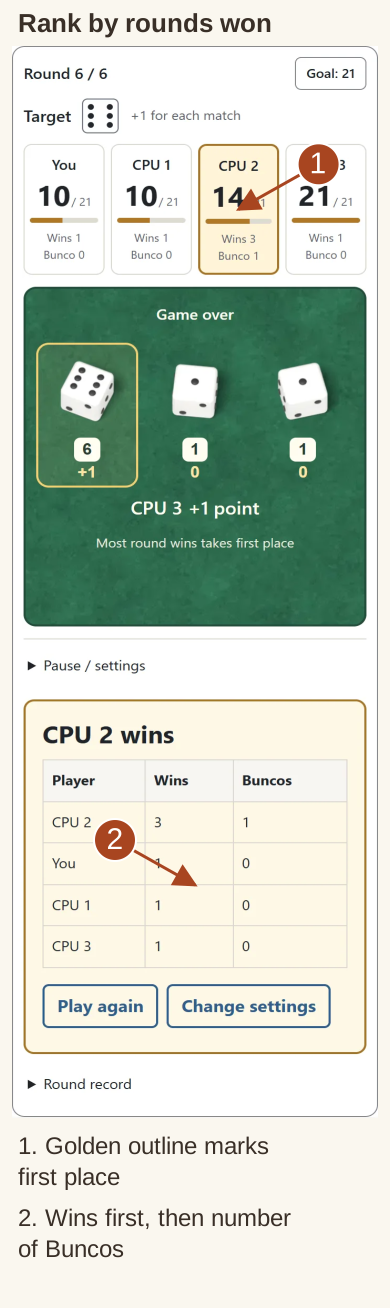
After the selected rounds, the most round wins takes first place. Among players with the same number of wins, compare their personal Bunco counts. If those are equal too, first place is shared. This page does not add a final roll-off. Some groups instead prize the most Buncos first, give several separate awards, or break a remaining tie with extra dice play. Those arrangements belong to their own event and should be agreed in advance.
The large number beside each player is the score in the current round. The smaller counts show round wins and personal Buncos across the game. These are different measures. The game does not determine the overall winner by adding every raw point from every round. Winning one round by a huge margin still gives one round win, just like winning it narrowly.
Open the round record to review who won and the four scores at the finish. This can explain why a player with a spectacular triple is still behind on total round wins. The final table lists players in ranking order. A shared first place is a real result; it does not secretly select one tied player as the winner.
Bunco tips: follow the game comfortably
Check the target at the start of each round. It is easy to continue counting the previous number after a round changes, especially after a lively streak. Then count matching faces rather than the sum of the dice. A pair of sixes can look impressive but earns no ordinary points when the target is one.
When all three dice match each other, check whether they also match the target. That separates the twenty-one-point Bunco from a smaller triple. Remember that scoring keeps the turn and a blank roll only changes the roller. Previously earned points stay in place.
Try eleven points and six rounds for a short introduction. A longer setting gives more individual races without adding complicated decisions. Read the player name beside the result before continuing so you know whose score changed. Pause if you want a break; there is no need to hurry through a computer result.
Bunco is a game of chance. Faster clicks, a particular rhythm or waiting longer before rolling are not techniques for selecting a face. There is no strategic choice of held dice or a safe point at which to stop. The useful tips are about understanding and following the results, not controlling them. Enjoy the occasional triple and the changing lead, without treating a short streak as a promise about the next roll.
Bunco FAQ
Do I need twelve people? Not here. This page supplies three computer opponents for one human player. It is a four-person individual adaptation, not a simulation of twelve people switching partners. There is no network lobby or remote multiplayer.
Can I reroll one die? No. Every roll uses all three dice. If you earn points, the same person rolls all three again after reviewing the result. If you earn zero, the turn passes automatically when you continue.
Does an opponent’s Bunco remove my points? No. Their own score increases by twenty-one and they win the round. Your score is kept in that round’s record. Everyone then starts the next round at zero.
What happens if the final ranking ties? Round wins are compared first and Buncos second. If both counts match, the tied leaders share first place. There is no extra roll-off in this small-group version.
Can I close the page and return? An unfinished game and your settings are saved in this browser when storage is available. Select Continue to resume. Japanese and English use the same local save. Private or restricted browsing may prevent storage; the game can still be played, but the continuation and record may not remain after the page is closed. Pause and Settings both stop pending rolls while you take a break or consider a new game.
Bunco, bunko and the party tradition
Bunco is the general name of a dice pastime, also sometimes spelled bunko. Accounts of its past connect it with older dice games, but a single neat origin does not explain all the modern group rules. Today it is often a social occasion with repeated rounds, changing partners and plenty of conversation. Its appeal does not depend on difficult calculations.
A one-table computer game cannot supply the conversations or movement of that gathering. It can let you practise recognising scores and enjoy the same basic target-and-triple pattern. Before playing with a group, ask about triple awards, the end signal, table movement and final ties. Knowing which rules are shared and which are local makes it much easier to join in comfortably.