 Yorimichi Games
How to play this table tennis game
This is a one-on-one table tennis game played on a table seen from directly above. Your paddle is the red one at the bottom; the computer plays with the blue paddle at the top. Because you look straight down, the ball’s height is shown by its shadow: the higher the ball flies, the further the shadow drifts away from it, and the moment ball and shadow meet is the moment it bounces. Put the ball on the other side of the net and make the computer fail to return it, and you win the point. The first player to 11 points takes the game.
There is nothing to install and no account to create. The game runs in any modern browser on a PC, Chromebook, tablet or phone, and you can switch between mouse, touch and keyboard whenever you like.
Move the paddle and return the ball after it bounces
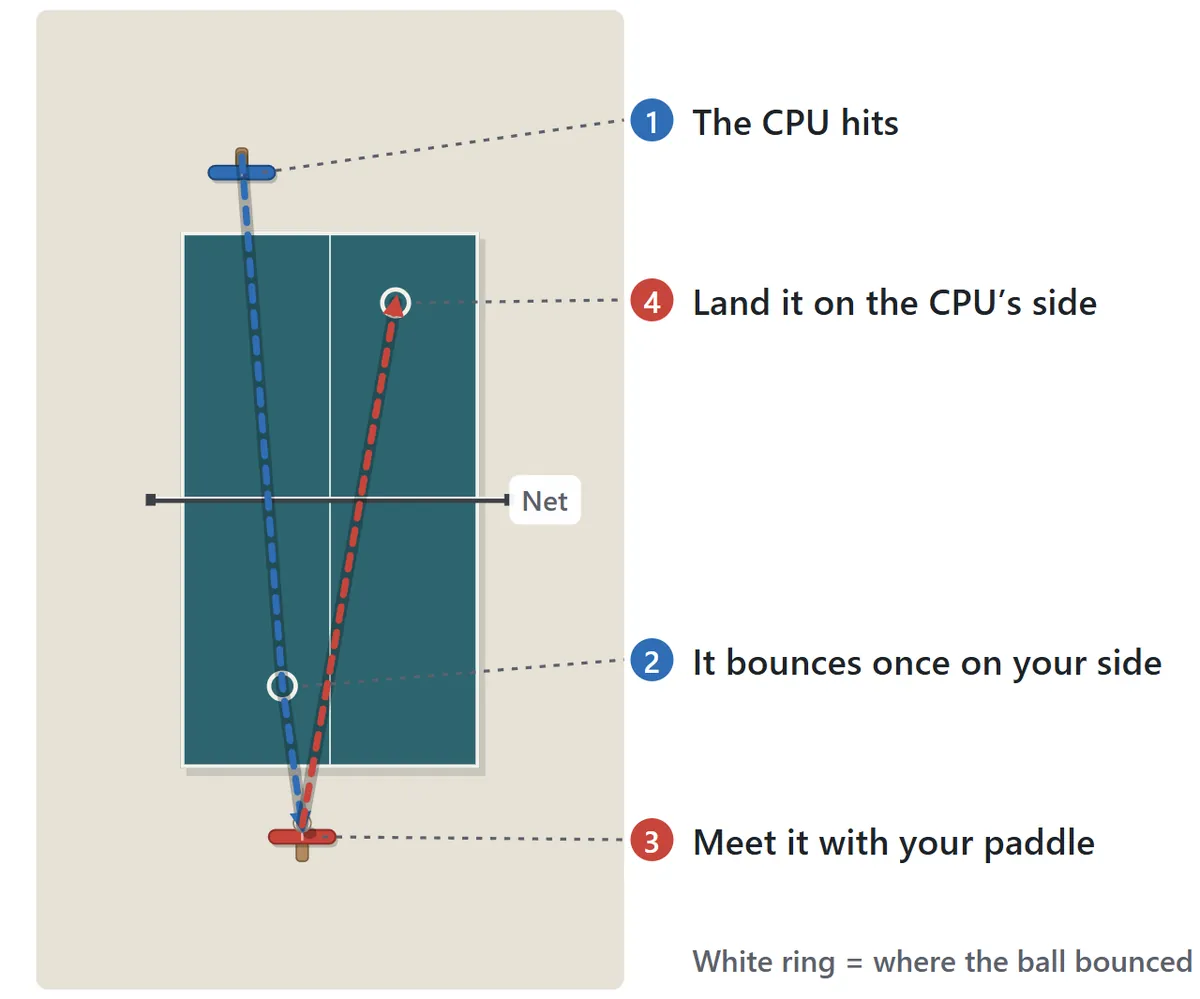
With a mouse, the paddle follows the pointer over the game screen. On a phone or tablet, slide your finger anywhere on the screen and the paddle moves by the same amount, so your finger never hides the ball. On a keyboard, use the arrow keys or W, A, S and D. The paddle moves forward toward the net and back as well as left and right. You do not need to press anything to hit: as soon as the ball touches the paddle, it is returned. Wait for the ball to bounce once on your side first. If you touch it while it is still above the table and has not bounced, the point goes to your opponent.
Table tennis serve rules: your side first, then theirs
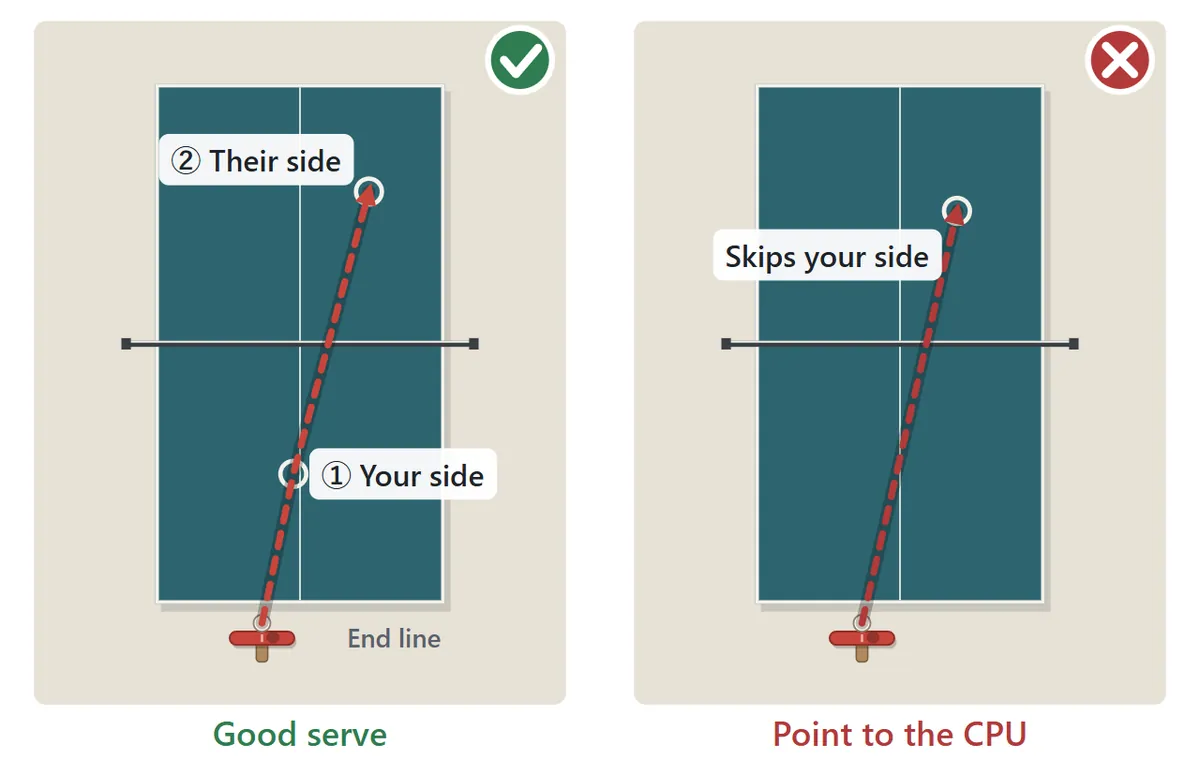
Every point starts with a serve. The server stands behind the end line and hits the ball so that it bounces first on their own half, then clears the net and lands on the receiver’s half. In this game you serve by clicking, pressing Space, tapping the table or pressing the “Serve” button, and the ball always travels on a legal path. If you slide the paddle sideways just before serving, the serve goes in that direction, so you can mix up wide and central serves. If a serve clips the net and still lands on the correct side, it is a “let”: no point is scored and the serve is simply taken again.
How points are scored
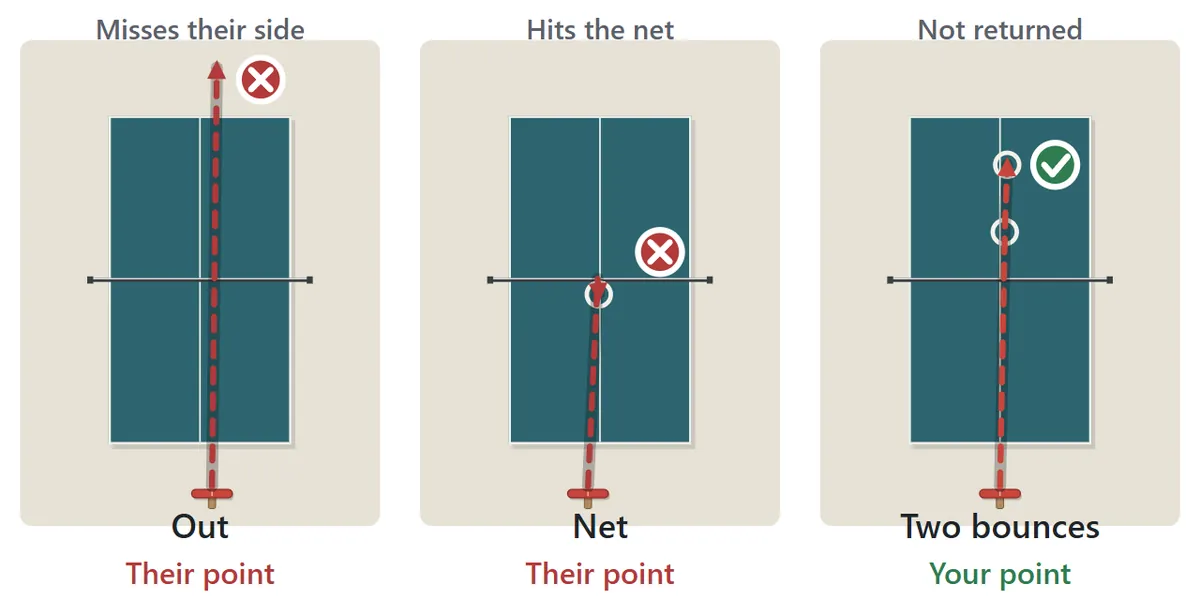
You lose the point when your shot flies past the other half without touching it (out), when it hits the net and does not cross, when you hit the ball onto your own side, when the ball bounces twice on your side before you return it, and when you strike the ball over the table before it has bounced. Your opponent loses the point in exactly the same situations. During a rally, a ball that brushes the top of the net and drops onto the other side is still in play, and a ball that just catches the edge of the table counts as good.
Where the ball meets the paddle decides the angle
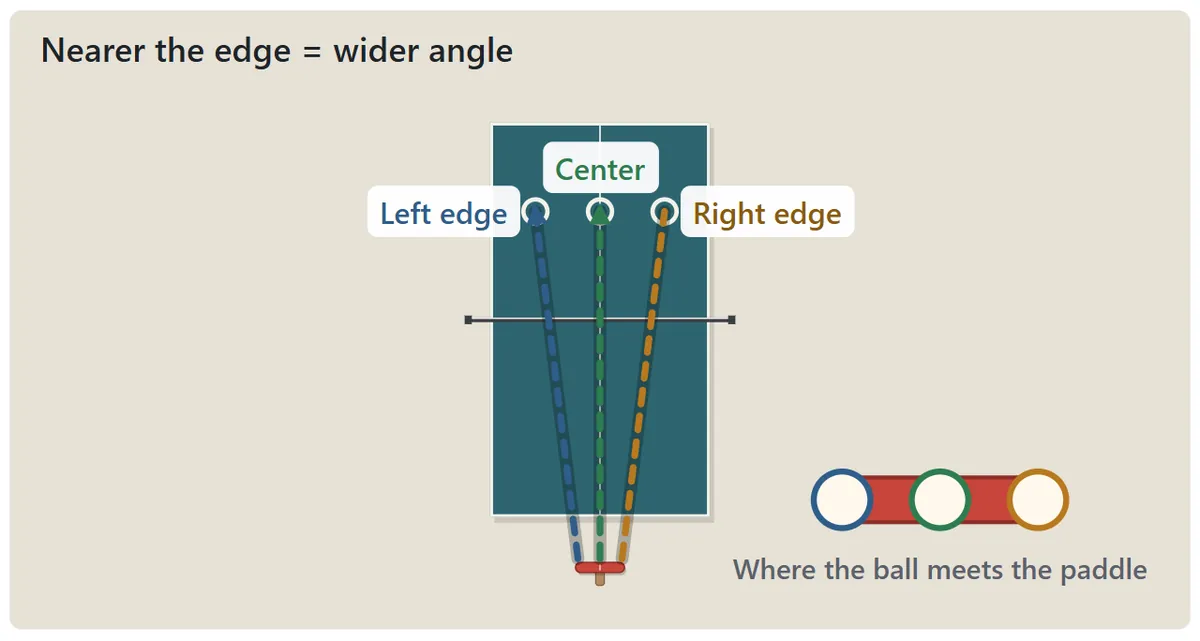
Contact with the center of the paddle sends the ball back toward the middle of the other half. Contact with the right edge sends it to the right, and the left edge sends it to the left. Aim for the side where the computer is not standing and it may not get there in time. Be careful when you are already out beyond the side of the table, though: an edge hit from that position can carry the ball past the sideline.
Pushing forward at contact adds speed and depth
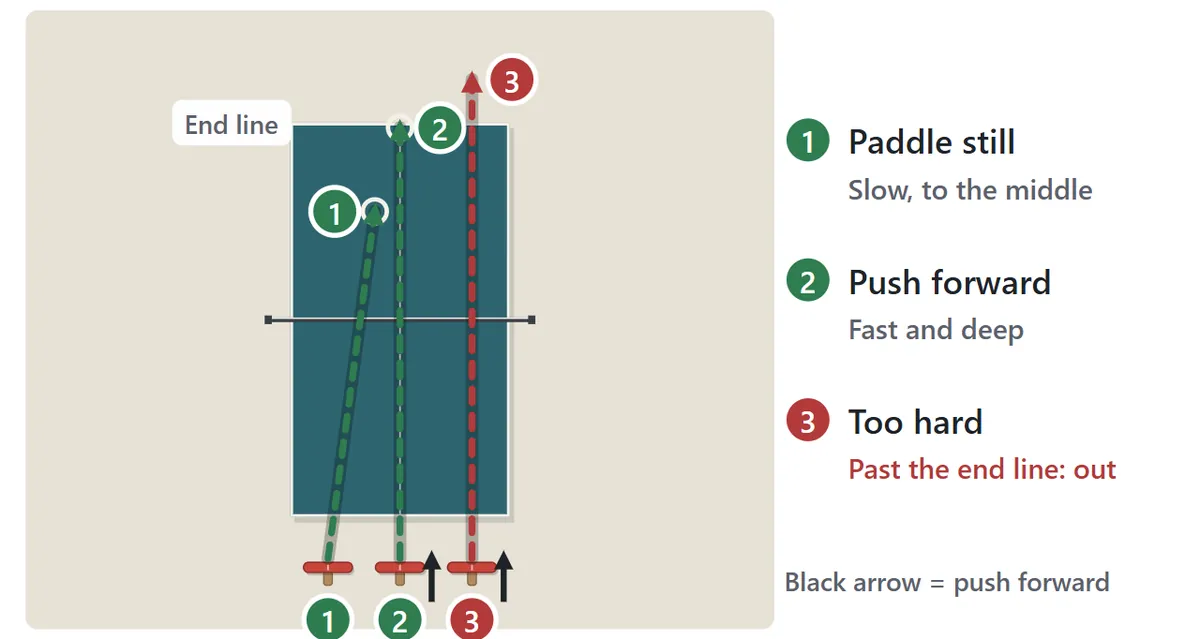
If the paddle is moving forward, toward the net, at the moment of contact, the ball comes off faster and lands deeper. Holding the paddle still returns a slower ball to the middle of the table. Hitting the ball while it is still rising after the bounce also adds a little pace, while letting it drop below table height gives a slower, shorter return. Push too hard and the ball sails past the end line. Start by blocking with a still paddle, then add a little forward push once you have the timing.
Table tennis scoring: first to 11, win by 2
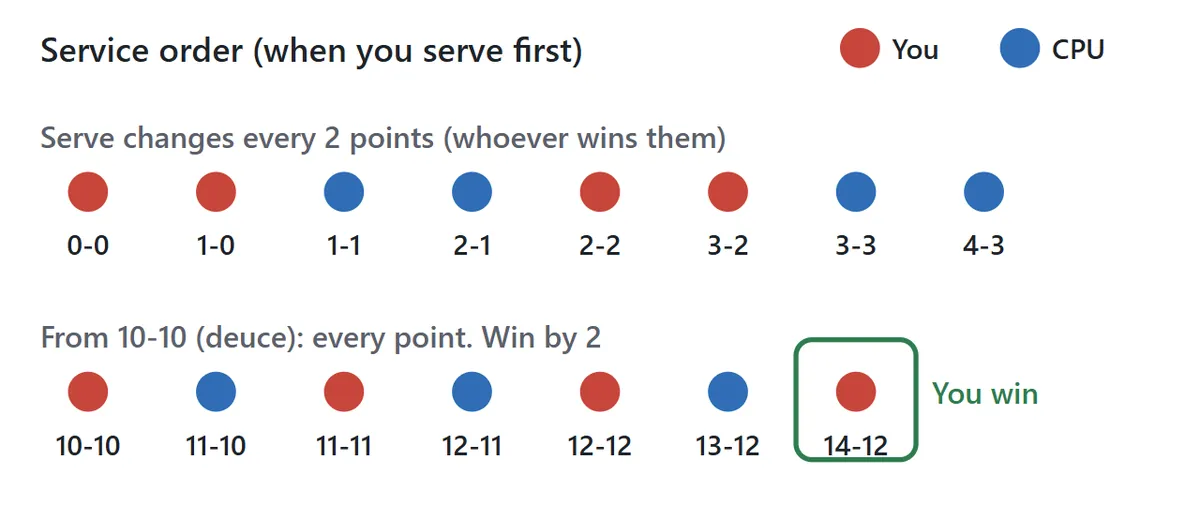
A game is played to 11 points. At 10-10 the game goes to deuce and continues until one player is two points ahead. The serve passes to the other player every two points, no matter who wins them, and from 10-10 it alternates after every single point. Who serves first is decided by a coin toss. In a best-of-3 match the first to win two games takes the match; in a best-of-5 match you need three. In each new game, the player who received first in the previous game serves first.
CPU levels and match length
| Level | What it feels like | Good for |
|---|---|---|
| Easy | Reacts late, moves slowly and usually returns the ball toward the middle | Your first few games |
| Normal | Reaches most balls and now and then plays a deep or angled shot | Players who know the controls |
| Hard | Rarely misreads the ball, moves you left and right, short and deep, and varies its serve | A real test once you can place the ball |
At every level the computer sometimes reacts late or swings too hard and hits out, so it pays to keep the ball in play. Many points are won simply because the opponent makes the last mistake. You can choose a single game (about three minutes), best of 3 or best of 5. The longer the match, the more the stronger player tends to come out on top.
Table tennis tips and strategy
1. Watch the shadow, not the ball
When the ball is high, it floats away from its shadow. It bounces exactly where the two meet. If you follow the shadow with your eyes, it becomes much easier to read where the ball will land and where it will be when it reaches you.
2. Wait a little behind the end line
Standing too close to the table is the most common way to lose easy points: you touch the ball before it bounces and the point goes to the computer. Stay just behind your end line and let the ball come to you. A deep shot will not catch you out either.
3. Start with a still paddle and the center
Meeting the ball with the middle of a still paddle sends a slow, safe ball to the middle of the table. It is very hard to hit out this way, so make it your default shot until returning the ball feels natural.
4. Hit to the open side
When the computer drifts to the left, use the right edge of your paddle to send the ball to the right, and vice versa. After every shot, bring your paddle back toward the center so you are ready for the reply.
5. Push forward only on the easy balls
A forward push gives you a fast, deep attacking shot, but it is also the easiest way to hit long. Save it for balls that bounce up high and sit nicely in front of you, and you will make far fewer errors.
6. Vary your serve
Slide the paddle to one side before you serve to send the ball that way. Mixing wide serves to both sides with the occasional one down the middle makes the computer’s first return less accurate.
Table tennis game FAQ
Can the ball pass through my paddle?
No. Even at high speed, if the ball’s path crosses the area the paddle sweeps through, it is always hit. That includes the moment you are moving the paddle.
Why doesn’t the paddle stick exactly to my mouse?
The paddle has a top speed, just like a real player. If you flick the mouse or your finger a long way at once, the paddle chases the target at that speed. Start moving early and you will get there.
Can I stop and continue later?
Yes. On the same device and browser, press “Continue” to pick up with the same games and score. Play resumes with a serve.
Can I pause the game?
Press the “Pause” button, or P or Esc on the keyboard. The game also pauses by itself when you switch to another tab or app.
How is it different from real table tennis?
A few things are simplified so the game works from a top-down view. There is no spin, and a serve always travels on a legal path once you hit it. Players do not change ends during the match, so you always play from the bottom, and there is no doubles.
Is it free, and do I need an account?
It is completely free and there is no sign-up. Settings, your win–loss record and a match in progress are stored only in your own browser.
A short history of table tennis
Table tennis is usually traced back to England in the late 19th century, when it spread as an after-dinner parlour game played on a dining table, sometimes with books for a net and improvised bats. Celluloid balls and bats faced with rubber soon took over, and the pastime grew into a sport with a fixed set of rules and international competitions. Today it is played everywhere from school halls and basements to the Olympic Games. Modern rules use games to 11 points with the serve changing every two points, the same format you play here.