 Yorimichi Games
How to play Mexican Train
Mexican Train is a domino game about building matching chains while keeping the total value of your remaining tiles low. Each player has a personal train, and there is one shared Mexican Train. Some personal trains become marked open, giving everyone another place to play. Going out is useful, but the winner of a match is the player with the lowest accumulated score. You do not earn points for putting a domino down. Points represent the tiles left behind at the end of each round. Start by choosing a tile set, opponent type and match length.
Tile sets and the engine
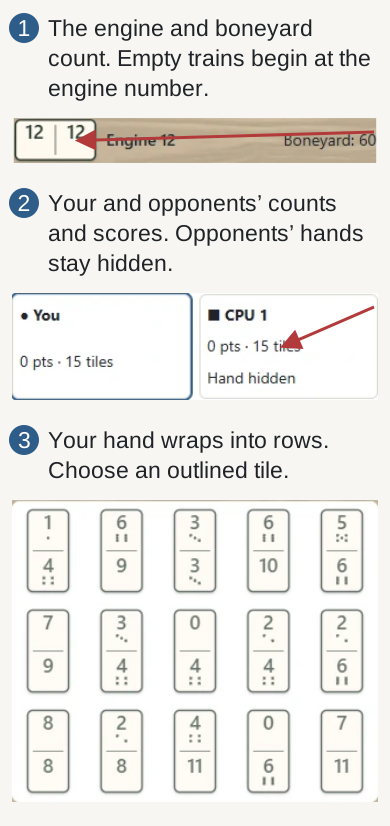
The default is a double-12 set: 91 different tiles using values from zero to twelve. The 12–12 engine is removed before dealing, and each player receives 15 tiles. This page supports two to four players. For smaller practice games, double-9 contains 55 tiles and deals ten to each player. Double-6 contains 28 tiles; this page deals seven each to two players, or five each to three or four players. These smaller-set deals are local practice conventions. The engine is never part of a player’s hand or the boneyard. Every train begins by matching its value.
Select a tile, then select a train
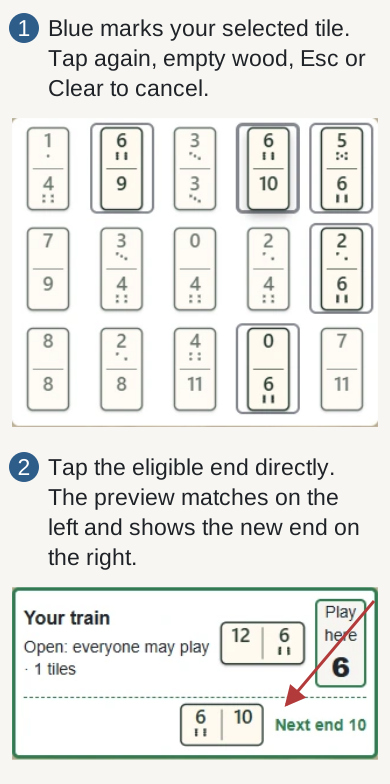
Click or tap an outlined tile in your hand. Then tap an eligible train end to play it directly. Either half must match the exposed end. A 3–9 tile played on an end of three changes that end to nine. On each displayed train tile, the left number is the matching side and the right number is the new end; the game turns the tile for you. An empty train begins at the engine number. Choosing a tile does not play it immediately, so you can compare available destinations. Tap the same tile again, empty wood, Escape or Clear selection to cancel only your preparation. Drawing a tile, committing a play or passing the device to the next player cannot be undone.
Personal, shared and marked trains
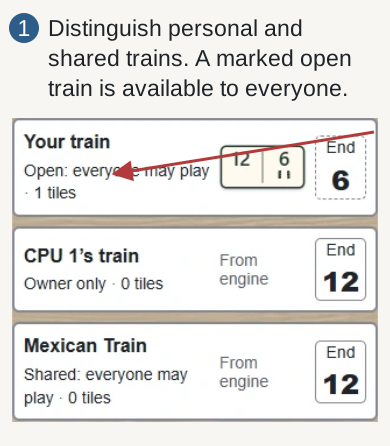
Your unmarked personal train belongs to you. Other players cannot play there. The shared Mexican Train can be started by anyone on their turn with a tile matching the engine. Once started, everyone can use it. A marked personal train is also open to everyone, including its owner. A marker is removed only when the owner plays on their own train. Someone else playing there does not remove it. The screen states whether a train is private, shared or marked open, using words as well as its appearance. Your own train does not have to be started before you play on the shared train in this page’s standard rules.
Drawing, passing and the obligation to play
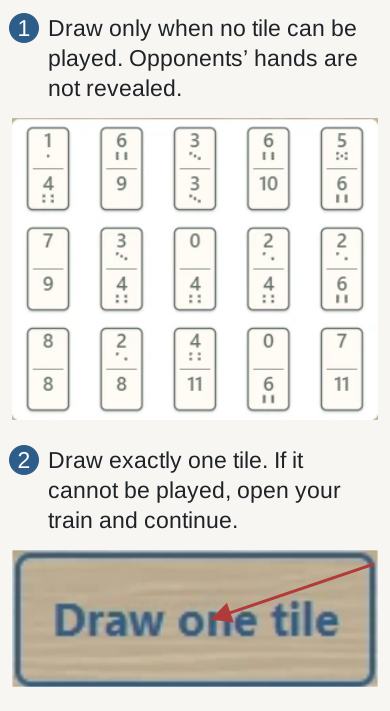
If you have a legal move, you must play. You cannot draw to look for a more attractive tile. If no move is available, draw exactly one tile from the boneyard. Play it if possible. Otherwise your personal train becomes marked open and your turn ends. With an empty boneyard and no move, pass instead; this also marks your train. After a completed turn, press Next player to review the changed layout before continuing. Drawing repeatedly until you find a match is not the rule used here. If a double is awaiting a cover, a tile that fits a different train does not excuse you from the double obligation.
Doubles and the compulsory extra tile
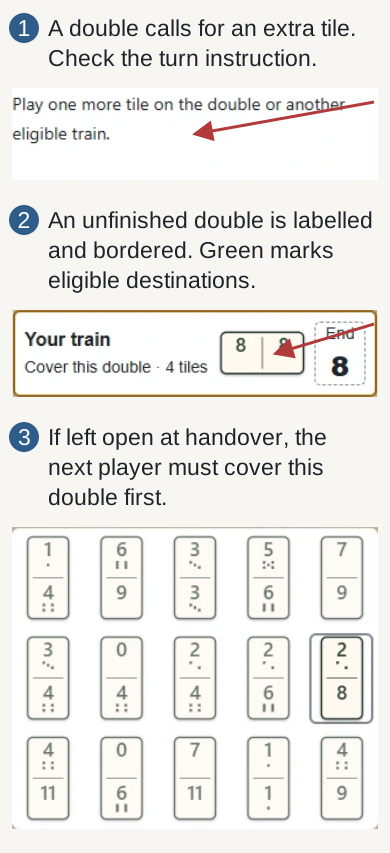
A double has the same number on both halves, such as 6–6. Unless it is your final tile, playing a double requires an additional play. Under the default flexible rule, that extra tile may go on the double or another eligible train. If you cannot make that extra play, draw one tile and play if possible. Failing that, mark your train and end the turn. When a double remains uncovered after the turn, all other trains are unavailable until someone covers it. Each subsequent player must cover that double, or draw one and try, then mark their train if still unable.
Two doubles in one turn
The flexible rule permits two doubles on different eligible trains only when you already have a third tile in your hand that can cover one of them. You may not draw to obtain that third tile. After covering one, the remaining open double controls the following turns. The interface only allows a second double when this condition is met. Immediate cover, the alternate preset, requires the additional play on the double just placed. It therefore does not allow you to use the extra play to put a second double on another train. Check the rule shown below the board when joining a saved match.
Scoring and winning a match
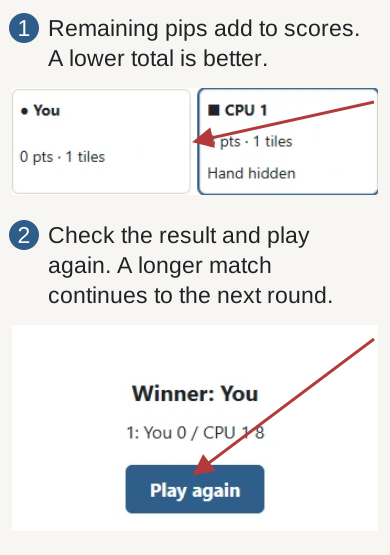
A round ends when a player has no tiles, even if the last tile is a double. It also ends when the boneyard is empty and every player has passed without anyone playing in between. Add both values on every remaining tile to that player’s score. A 2–5 and a 0–9 total sixteen. Double blank scores zero by default. The next round uses the next lower engine and rotates the starting player. A full double-12 match has thirteen rounds, from 12–12 down to 0–0. One-round practice and a three-round short match are also available. Lowest total wins; equal lowest totals share the result.
Mexican Train rule variations
There is no single household convention for every detail. This page combines the manufacturer’s flexible double procedure with a fifteen-tile double-12 deal. Ordinary turns use one tile from the beginning; there is no opening turn where you build your entire personal chain at once. You can instead select immediate cover, a blank-double penalty of twenty-five or fifty, and an exhausted-suit exception. With that exception, a double needs no extra tile if every other tile containing its number has already been played. It is off by default. A specialist tournament booklet also describes three branches answering a personal double. That branching format is distinct from the single-cover format offered here and is not implemented.
Six practical tips for better decisions
First, plan a possible chain using only the tiles in your own hand. A valuable tile that looks easy to discard may be the bridge between two parts of that chain. Second, look for spare tiles that do not belong in your personal plan. The shared train is a useful place for those extras. Third, notice marked trains before they close. An opponent’s open train may offer an opportunity now, but its owner could close it on the next turn. Fourth, reduce high pip totals when another player has few tiles left. Building a long chain is less useful if the round is about to end. Fifth, check your follow-up before playing a double. You may have a matching extra tile, or you may be able to use another eligible train under the flexible rule. Finally, compare scores across rounds rather than judging your play by one finish. A quiet round with only a small penalty can be better than a risky attempt to go out that leaves several large doubles in your hand.
Frequently asked questions
Can I play on my own marked train? Yes. Doing so removes your marker. Can someone else close my train by playing there? No, only the owner removes that marker. Can I ignore an open double because I can extend my own train? No. Once the previous turn leaves a double open, it must be covered first. Is zero a wildcard? No. Zero matches zero, just like any other value. Only the scoring of the 0–0 tile has an optional special penalty. Must I finish the personal train before starting the shared one? No, this page allows the shared train to be started whenever you have a legal engine match and no higher-priority double obligation.
Mobile play, hidden hands and saving
Tiles and train buttons work with touch or mouse. On a keyboard, Tab moves through the available controls and Enter activates the focused one. Press P or Escape to pause or continue. There is no time limit. Sound starts off and can be enabled with the sound button. In a local two-to-four-player game, the next player’s hand stays hidden until they take the device and press Reveal hand. Ask the previous player to look away before revealing. CPU hands are hidden, while their tile counts remain visible. Progress is stored in the same browser on the same device. Opening settings preserves the match. Continue resumes it, while starting a new match replaces it. If you leave the tab, CPU play pauses until you return and continue.
Choosing a CPU opponent
Easy gives you space to practise finding eligible trains and handling doubles, with occasional choices that leave it poorly connected. Normal offers a more balanced opponent and pays attention to both tile values and future matches. Strong is more careful about keeping its hand connected and about using its own train effectively. None of these opponents can see your hidden tiles. Changing the difficulty affects their choices rather than the shuffle. In a four-player CPU game, you face three independent opponents; the competition is different from a two-player match. Try a small set and one round first if you are learning, then move to the standard set and a longer match.
The name and the tabletop game
Mexican Train is the common name used for this train-building domino game. Different families may recognise a different deal, opening sequence or double rule. Agree on those details before a physical game, just as you select them before a browser match. Keep the engine, personal trains, shared train and boneyard distinguishable. A simple marker beside a personal train is enough to show that it is open. The numbered tiles and stacked train layout here are original drawings rather than reproductions of a commercial station or train-piece design.
Rules references and artwork
University Games / Puremco / Spin Master / Cardinal / MexicanTrainFun tournament booklet
Tiles are original SVG drawings. Wood reuses the project’s Ludo texture (ambientCG Wood049, CC0). Diagrams use actual game screens with original annotations. Sound effects are original site sounds.