 Yorimichi Games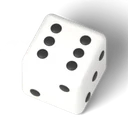
How to play Ludo
Ludo is a race game for two to four players. Each player has four pawns that start in a corner yard. You roll a single die, move your pawns clockwise around the cross-shaped board and then up your own colored column into the center. The first player to bring all four pawns home wins. Along the way you can land on an opponent’s pawn and send it all the way back to its yard, which is where most of the laughter and groaning comes from.
On this page you play against the computer. Pick two, three or four players in total (you plus one to three CPU opponents), choose your color and a CPU level, and press Start. The rules below are exactly the ones used in the game, so you can read them first or learn as you go.
The Ludo board
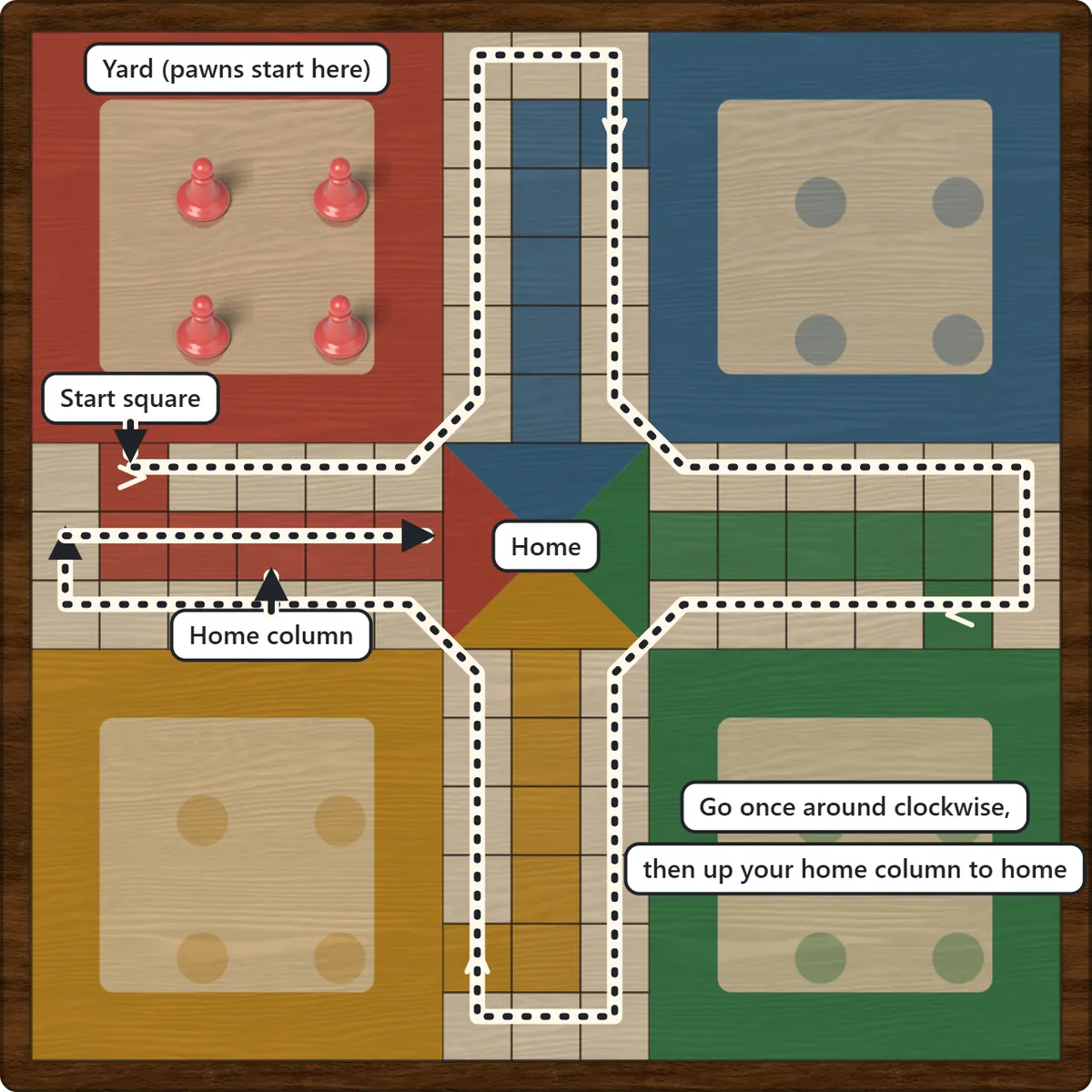
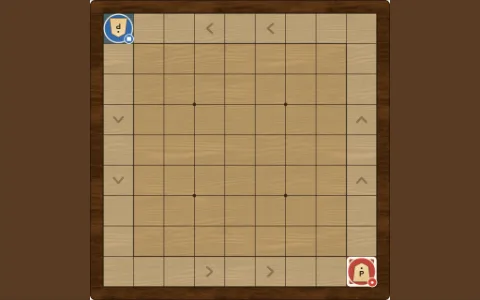
The four large squares in the corners are the yards, one for each color. All four of your pawns begin there. The colored square just outside your yard is your start square, and the colored lane that points toward the middle of the board is your home column. The triangle of your color in the center is home, the finish.
Who goes first
Everyone rolls the die once, and the highest roll starts. If two or more players tie for the highest number, only they roll again. After that, play passes clockwise around the board. The game shows these opening rolls in the message line, so you can see why a player started.
Roll a 6 to bring a pawn out
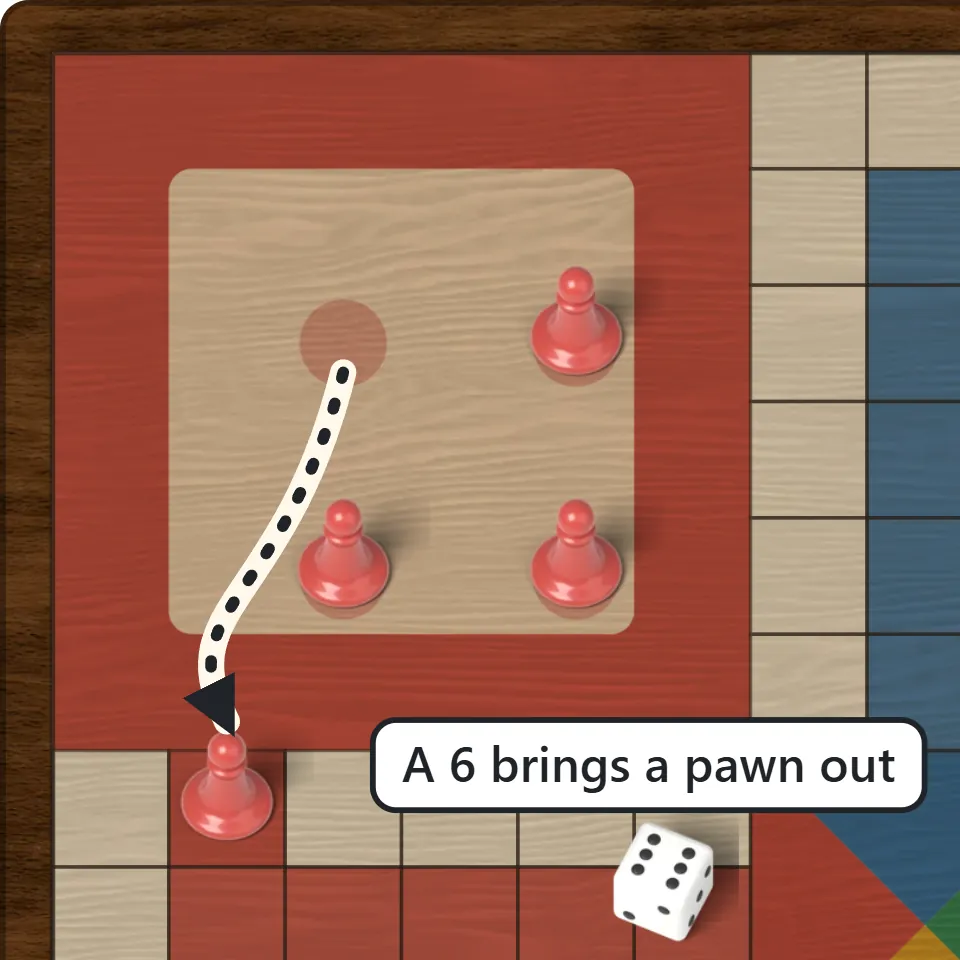
While all of your pawns are still in the yard, any roll except a 6 means you can do nothing and the turn passes on. A 6 lets you bring a pawn out (or move a pawn that is already on the board) and then roll again. There is one catch: if you roll three 6s in a row, the third 6 can’t be used and your turn ends immediately.
Move by the number you roll
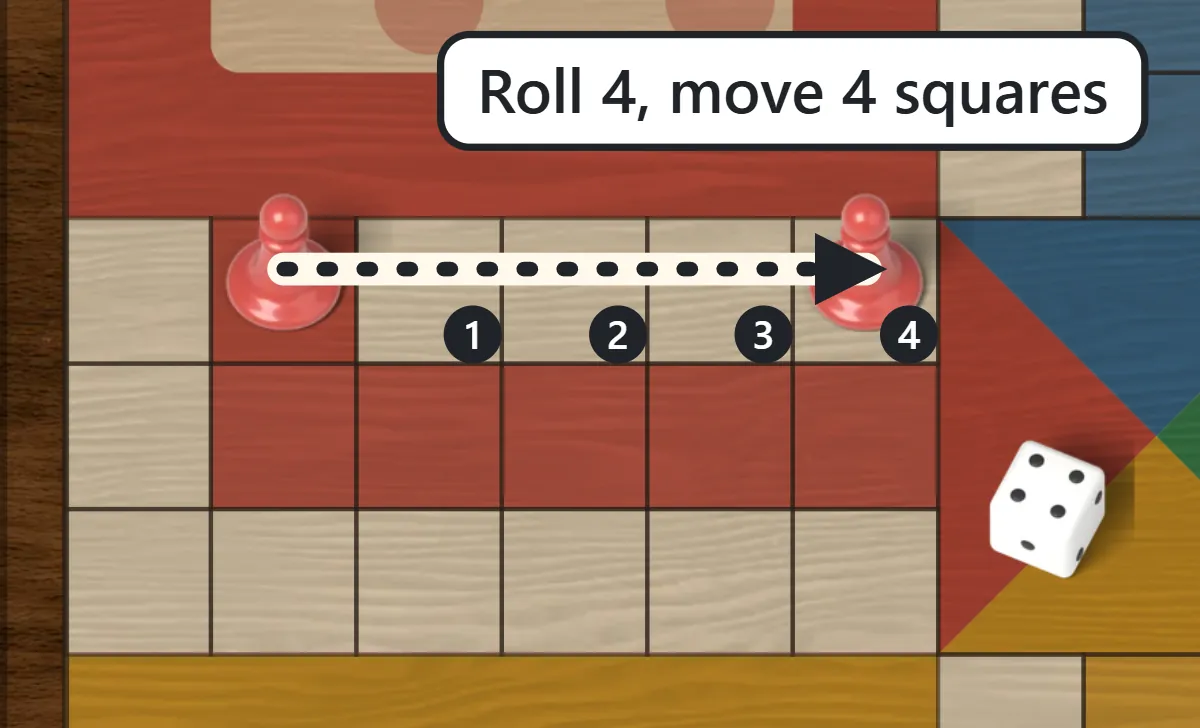
You always move a single pawn by the full number on the die; you can’t split a roll between two pawns. When you have more than one pawn out, you choose which one to move, and that choice is where the strategy lies. If any pawn can legally move, you must move one.
Capturing: send a pawn back to its yard
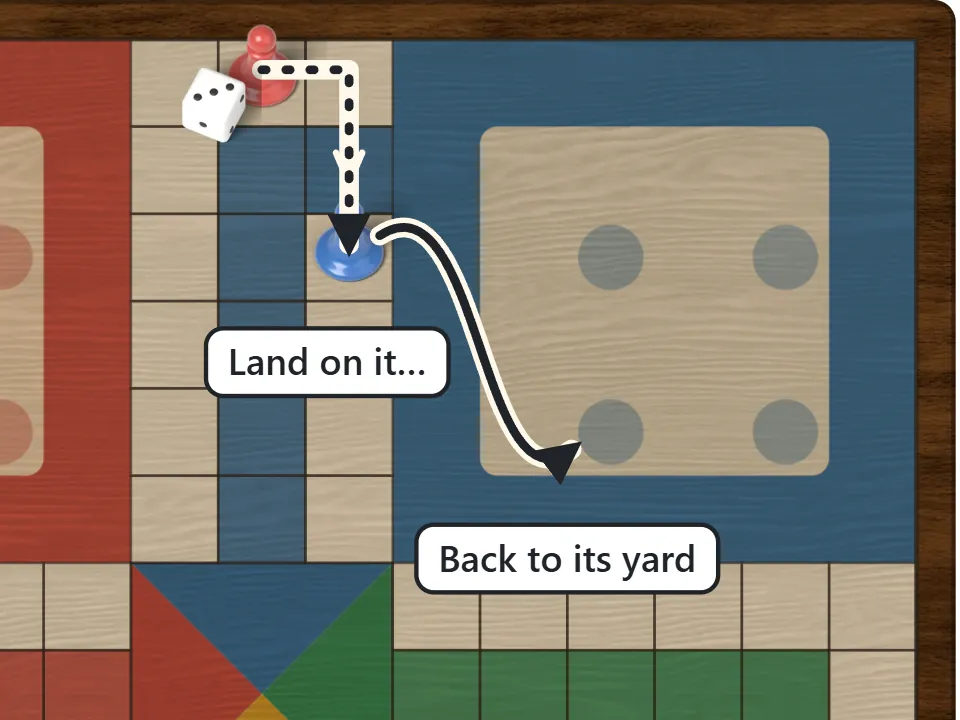
A captured pawn has to wait for another 6 to come out and start its journey from the beginning. The same can happen to you: any of your pawns with an opponent one to six squares behind it can be hit on their next turn. Opponents can never enter your home column, so once a pawn turns off the main track it is completely safe.
Blocks: two pawns on one square
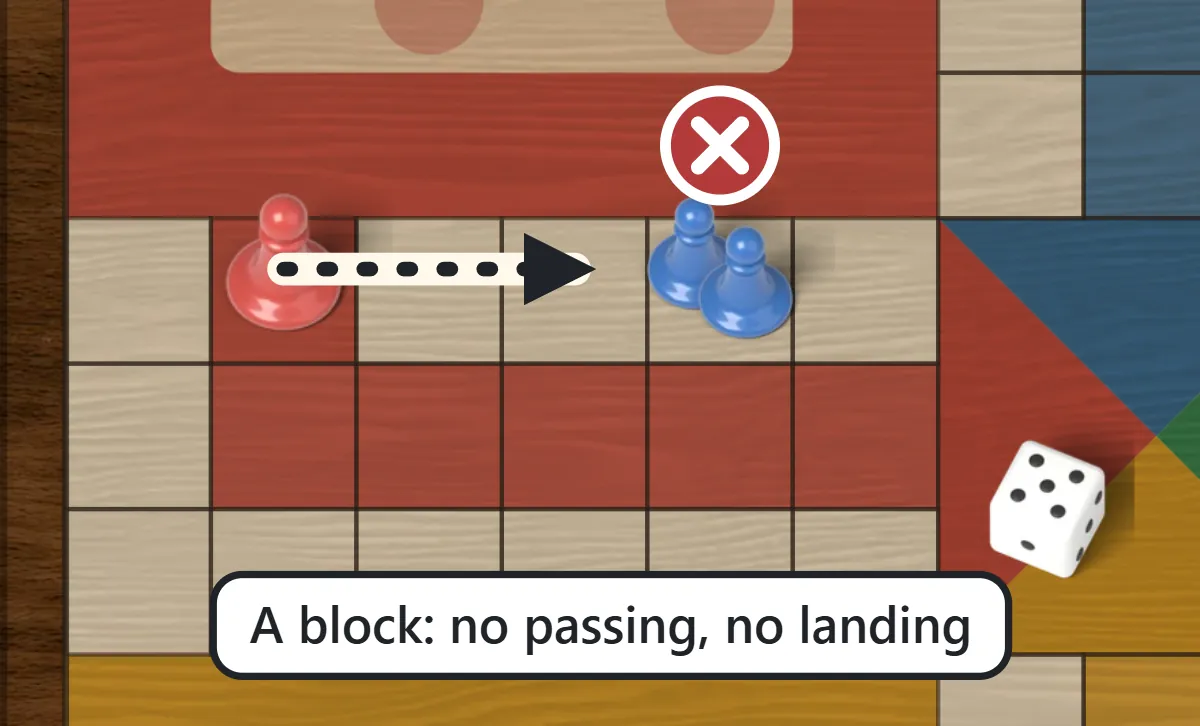
If a block stands in the way, a pawn that would have to pass it can’t move with that roll. Your own pawns can pass your own blocks freely. The pawns in a block can’t be captured, and the block holds back every opponent coming from behind, so building one at the right moment is a strong play.
Getting home needs an exact roll
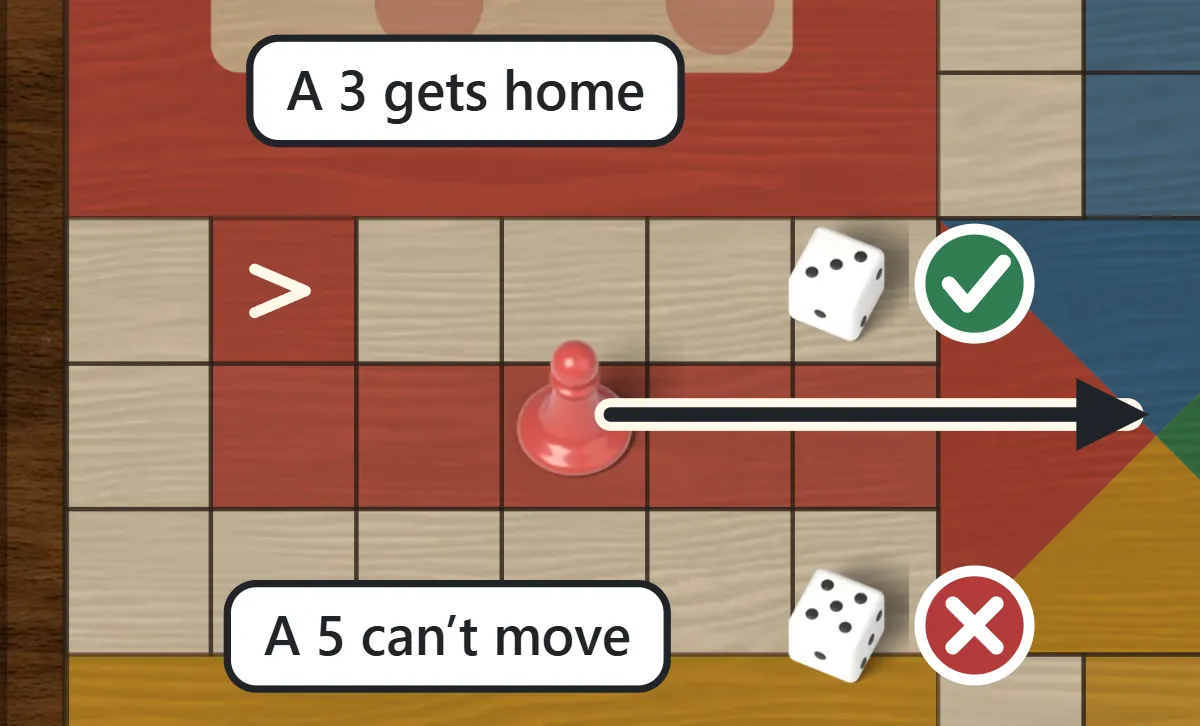
If the die shows more than the squares remaining, that pawn can’t move. The first player to bring all four pawns home wins the game.
Ludo rules: Classic vs. Star squares
Ludo rules differ from country to country and even from family to family. This game lets you choose between the two most common styles, or pick Custom in the settings and switch individual rules on and off.
| Rule | Classic | Star |
|---|---|---|
| 6 to come out, 6 rolls again, three 6s end the turn | Yes | Yes |
| Blocks can’t be passed or landed on | Yes | Yes |
| Exact roll to get home | Yes | Yes |
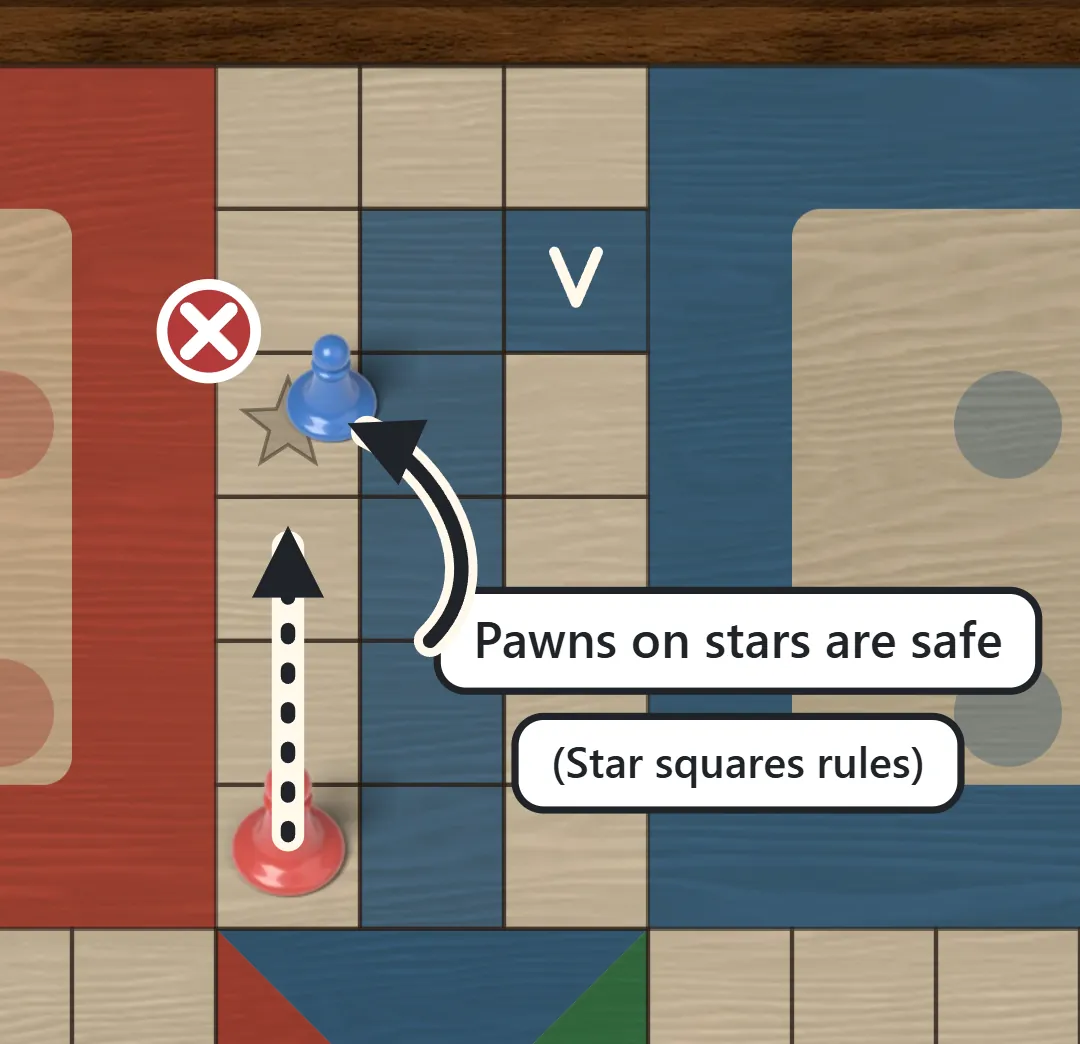
| Star and start squares are safe | No | Yes |
| Capturing gives another roll | No | Yes |
| Getting a pawn home gives another roll | No | Yes |
Classic follows the way Ludo spread through Britain: the only safe place is your home column, so the whole track is dangerous. Star squares follows the boards common in India, where the start squares and the squares marked with a star are safe spots, and it adds bonus rolls for capturing and for getting a pawn home. If you have played Ludo in a mobile app, the Star squares rules will probably feel familiar. Classic games tend to have more captures; star games move faster and reward bold play.
Ludo strategy: tips to win
Ludo has plenty of luck, but good choices add up over a whole game. These tips work at every CPU level.
1. Get more than one pawn out early
The more pawns you have on the board, the more choices each roll gives you. With only one pawn out, you often have no option but to move it onto a dangerous square. When a 6 comes up early in the game, bringing out a new pawn is usually better than pushing your leader further ahead.
2. Don’t stop just in front of an opponent
Before you move, look at the six squares behind the square you are about to land on. Every opponent pawn there has roughly a one-in-six chance of hitting you on its next roll, and more if they get bonus rolls. In the Star squares game, stopping on a star is the easy way to stay safe.
3. Use blocks to defend and to slow others down
Two of your pawns on one square can’t be captured and form a wall that opponents behind them can’t cross. A block placed just before an opponent’s home column entrance is especially annoying for them, because it traps pawns that were almost finished.
4. Hit the pawns that are furthest along
Sending back a pawn that has almost gone around the board costs your opponent far more than capturing one that has just come out. When you have a choice of captures, take the one that sets them back the most.
5. Tuck threatened pawns into the home column
Once a pawn enters your home column, nobody can touch it. If a pawn near the entrance is being chased, moving it in is often the safest use of your roll, even if it is not the biggest step forward.
6. Plan the end of the race
Because you need an exact roll to get home, a pawn that is one or two squares away can sit waiting for several turns. Keep another pawn in play so that you still have something useful to do with the other numbers.
Ludo FAQ
Do I really need a 6 to get a pawn out?
Yes. A pawn can only leave the yard on a 6. It can take a few turns, but every 6 also gives you another roll, so a lucky streak can quickly put you back in the race.
Can two different colors share a square?
Normally no: landing on an opponent sends it home, so different colors never stay on the same square. With the Star squares rules, pawns of different colors can share a star square or a start square, because those squares are safe.
What happens if I roll a 6 three times in a row?
Your first two 6s are played as usual, but the third one is lost and your turn ends. It is a small rule that stops a single lucky player from racing away with the game.
Which CPU level should I choose?
Easy is a good start if you are new to Ludo or playing with a younger family member. It often stops on dangerous squares and misses easy captures. Normal takes captures when it sees them but leaves openings now and then. Hard avoids danger and rarely lets a capture slip, although it still makes the odd mistake. At every level the dice can turn the game around, which is part of Ludo’s charm.
How many people can play?
Two, three or four in total. You always play one color and the computer plays the others. With two players, the colors sit opposite each other (red and green), so both sides have the same distance to travel.
Can I stop and finish the game later?
Yes. The game is saved on your device as you play. Open this page again in the same browser and press Continue to pick up where you left off.
Is there sound?
Sound is off at first. Press “Sound: off” under the board to turn on the dice and pawn sound effects.
History of Ludo
Ludo comes from Pachisi, a cross-and-circle race game played in India for centuries, sometimes on a huge scale in palace courtyards. In the late nineteenth century a simplified version was introduced in England, with one die instead of cowrie shells and a square board with a yard in each corner. The name comes from the Latin word ludo, “I play.” From Britain the game spread around the world, and today it is one of the most played board games in India, Africa and the Middle East, both on cardboard boards and on phones. Many countries have their own close relatives with different names and small rule changes, which is why you will meet so many house rules.