 Yorimichi Games


How to play Daruma Otoshi
Daruma Otoshi is a small wooden toy from Japan and one of the country’s best-known old-fashioned games. A few thick, brightly painted wooden discs are stacked into a short tower, and a round daruma doll sits on top. You hold a little wooden mallet and knock the discs out sideways, one at a time. If you hit just right, the disc shoots out and everything above it drops straight down by one level. Keep going until only the daruma is left standing on the base. The name simply describes the action: otoshi means “dropping”, so it is the game of bringing the daruma down, one level at a time.
This online version shows the tower from the side and simulates the physics of each hit, so the same things happen as with the real toy: a timid tap drags the pieces above, a wild swing sends them flying, and a crisp hit leaves the tower standing. You can play alone and chase records, take on the computer, or pass the device back and forth with a friend.
1. The pieces
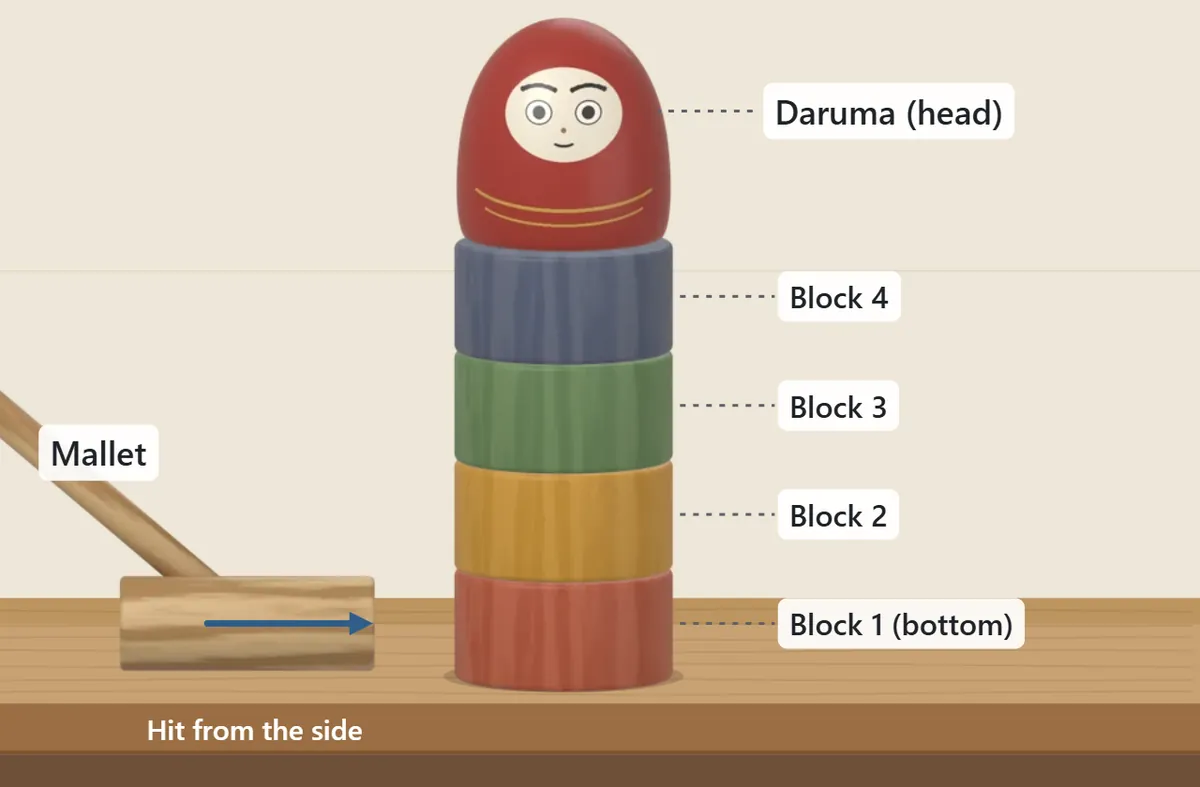
A game starts with four blocks and the daruma on top. You can change the stack to five or seven blocks in the settings. Blocks are numbered from the bottom up, and the mallet can swing from either the left or the right side of the tower.
2. Hit a block out
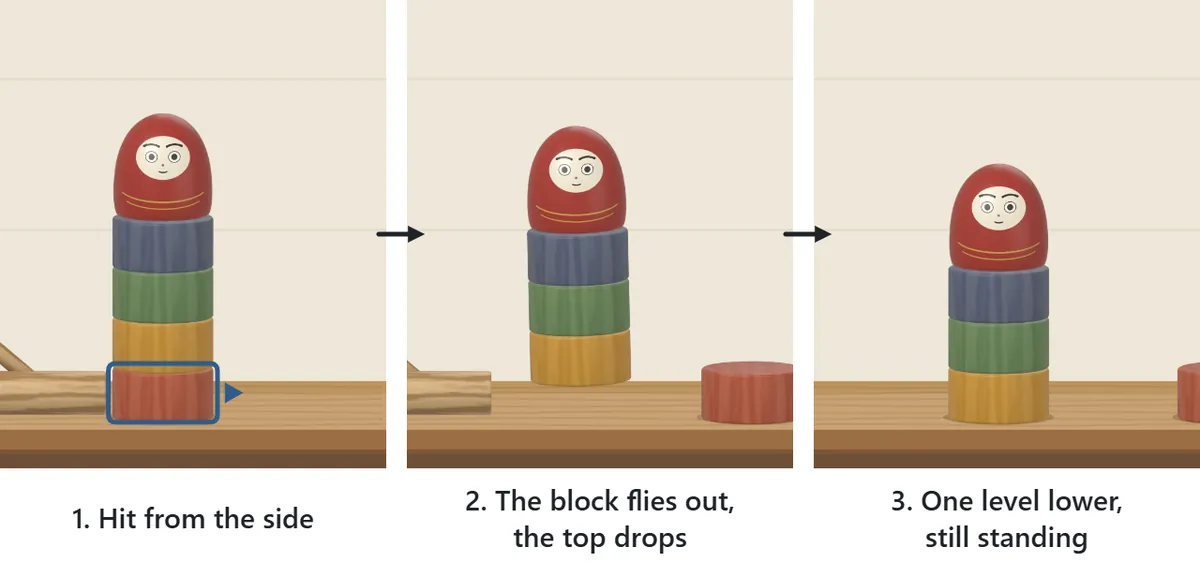
With the right power, only the block you hit slides out, and the blocks and daruma above fall straight down with hardly any tilt. That is one block gone. Repeat until no blocks are left and the daruma sits alone on the stand – that is a clear.
3. Power is everything
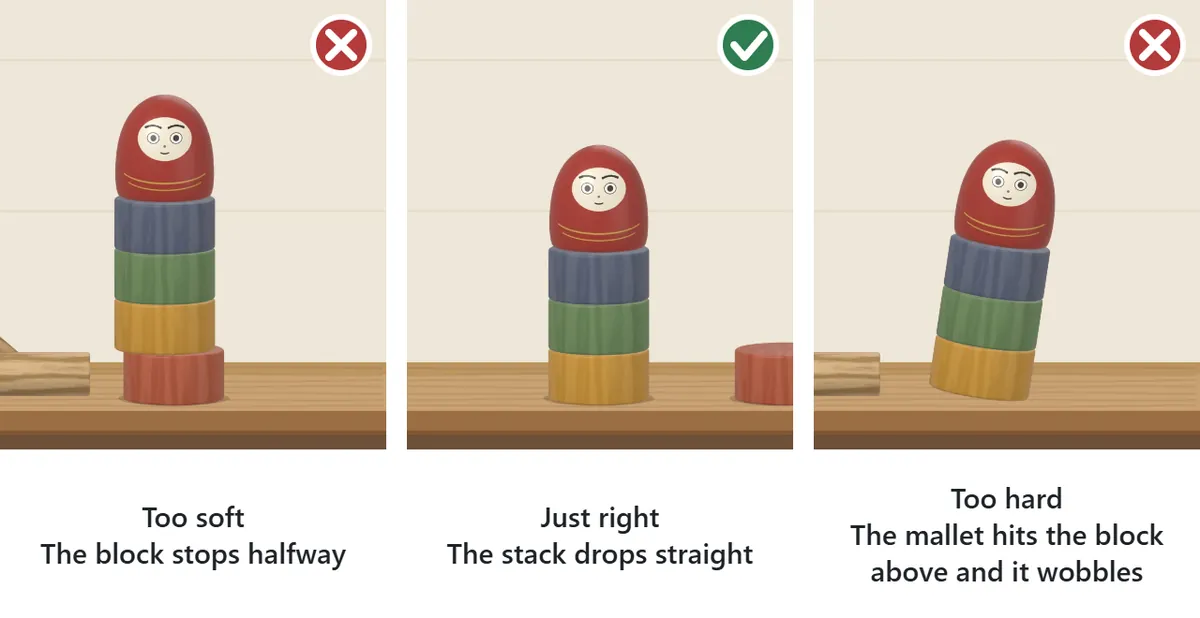
The whole game comes down to how hard you hit. Too soft, and the block drags the pieces above it along with it, or stops halfway. When it stops halfway you may hit it again, but the pieces above will have shifted a little. Too hard, and the block does come out, but the mallet keeps going and clips the piece dropping into its place, which sets the tower rocking. The more weight sits on top, the harder you need to hit, so the right power changes a little as the tower gets shorter.
4. Setting the power: gauge or pull
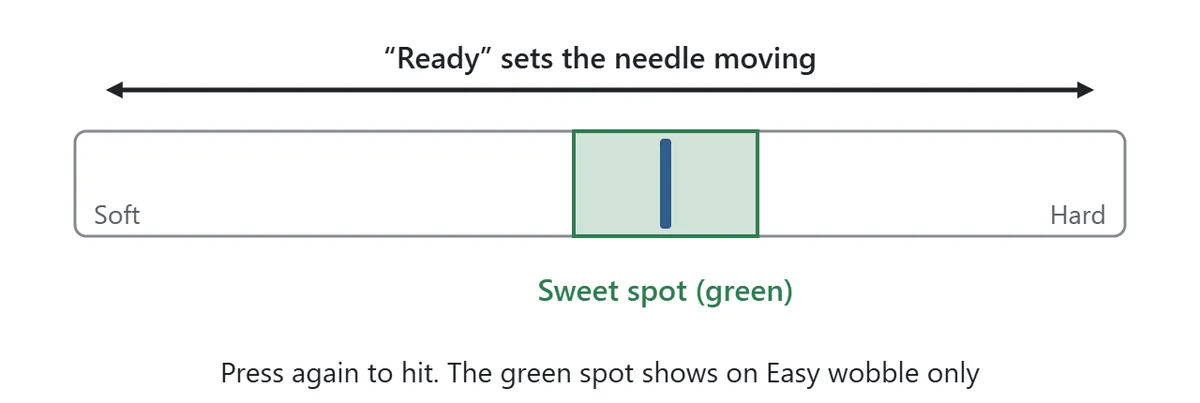
There are two ways to choose your power. With Stop the gauge, press “Ready” and a needle starts sweeping across the power bar; press again when it reaches the spot you want. On the Easy wobble setting, the sweet spot is shown in green. With Pull and release, press and hold the screen, drag sideways toward the mallet, and let go to swing. The farther you pull, the harder the hit. There is no timing pressure, so it suits players who like to take their time.
5. Drop the daruma and it’s over
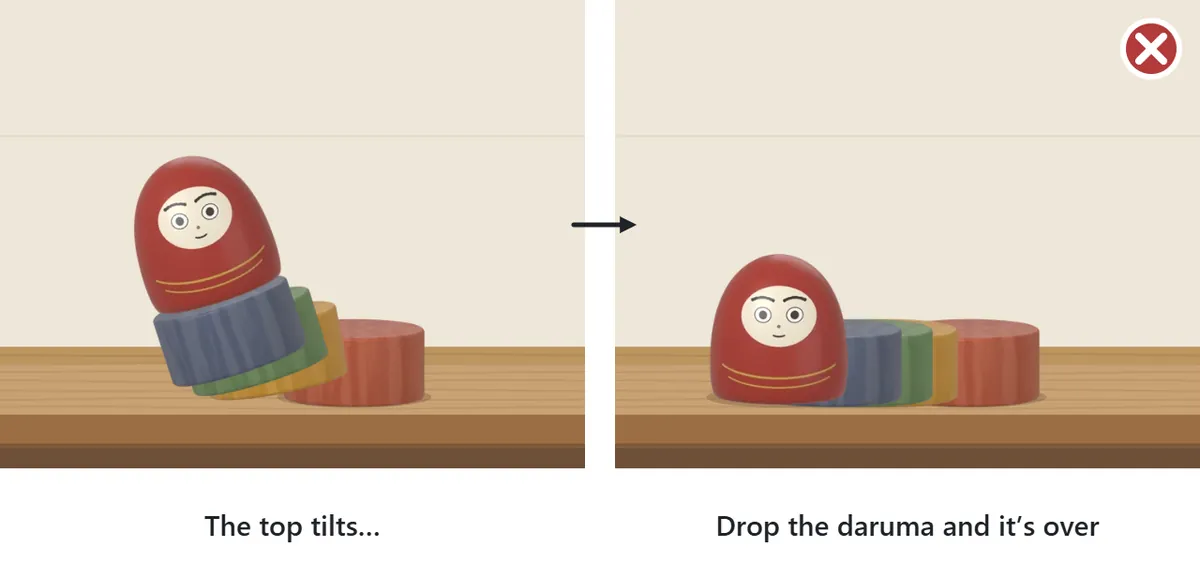
If the upper pieces tilt too far, or slide so far to one side that they lose their support, the tower collapses and the game ends. A small tilt is fine – the tower rocks for a moment and settles. After every hit the game tells you how it went: “Perfect!”, “Clean hit”, “Wobbly…”, “Stuck halfway” or “The daruma fell!”.
Wobbles leave a mark. When the upper pieces rock hard, the jolt of landing and rocking back makes the blocks slip sideways against each other, and they come to rest slightly out of line. That offset doesn’t fix itself on the next hit – it builds up with every wobbly hit. The side the stack has drifted toward has less support under it, so the next rock tips that way more easily, and once the drift gets big, the top can slide right off the edge of the block below.
Just like the real toy, the tower is shakiest at the start. With lots of weight stacked up, the center of gravity sits high: a small tilt is already close to the tipping angle, and the rocking swings the top harder. As blocks come out, the center of gravity drops and the last few hits are actually steadier. But drift from the early hits stays with you, so a sloppy start can bring the tower down later, on blocks that should have been easy.
6. Changing sides, and hitting any block
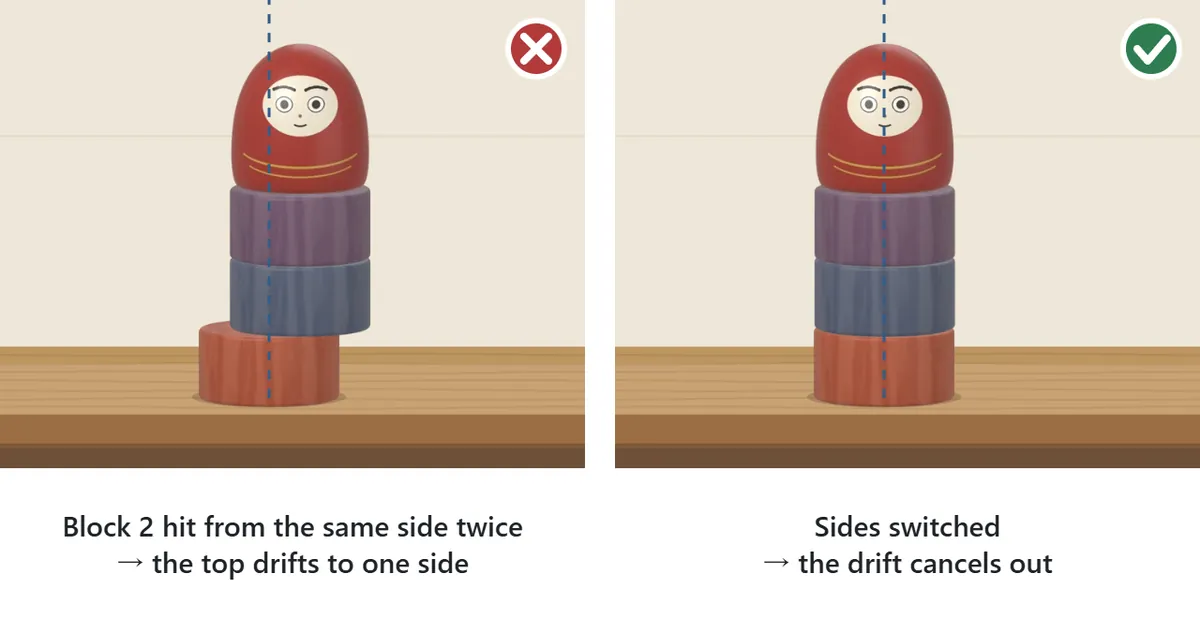
Each hit drags the pieces above a little in the direction the block flew. While you hit the bottom block the whole tower moves together, so this hardly matters. Once you start hitting higher blocks, though, hitting from the same side again and again lets the drift build up until the top leans off to one side. Hit from the opposite side and the drift cancels out.
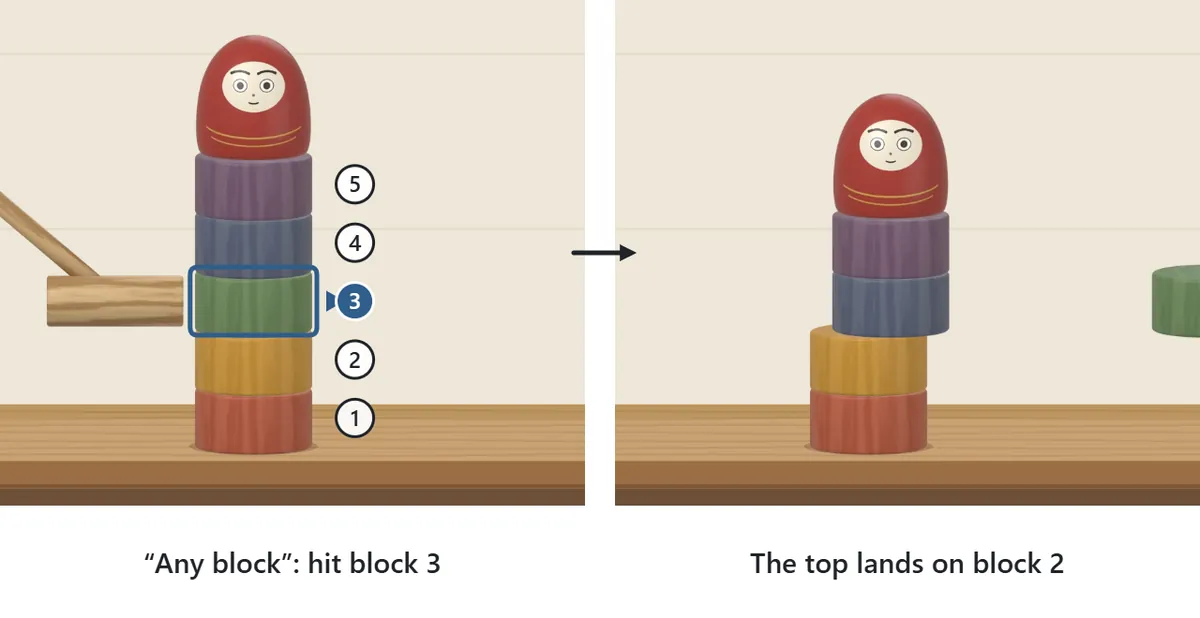
Normally you always hit the bottom block. Switch “Which block” to Any block and you may pick any block instead, either by tapping it on screen or with the up and down buttons. Higher blocks carry less weight, so they need a softer hit.
7. Playing against someone
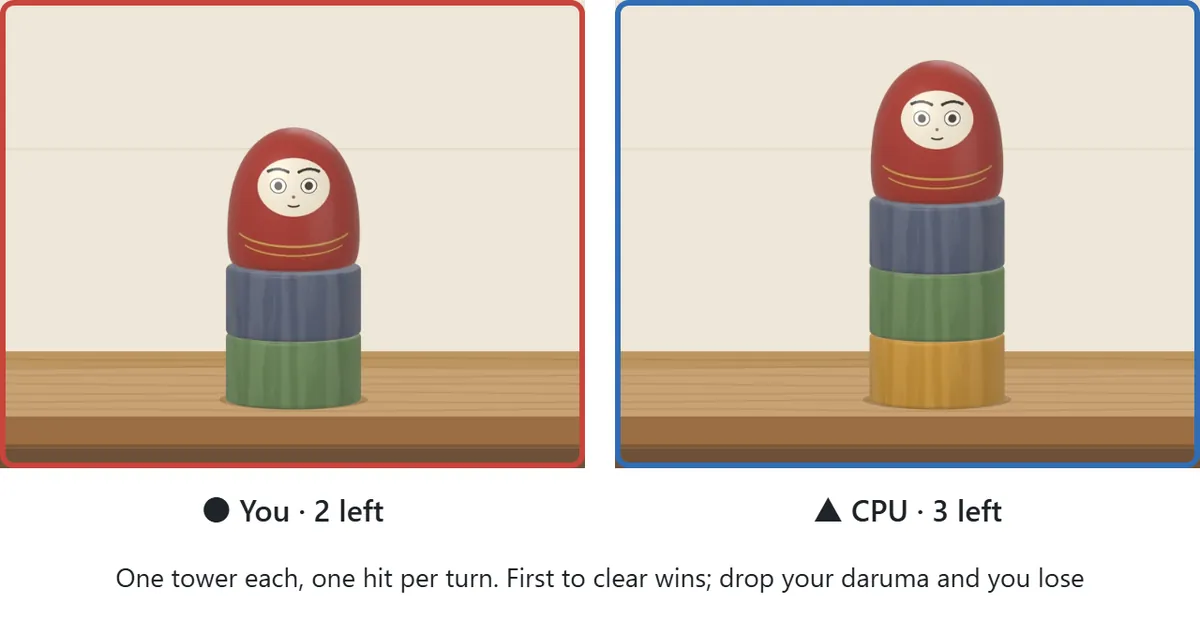
Against the computer or a friend, each player has their own tower and you take turns, one hit each. The first to clear every block wins, and anyone who drops their daruma loses on the spot. If the player who went first clears their tower, the second player still gets one more hit to catch up. If both towers end up cleared, the player whose tower wobbled less over the whole game wins. A coin toss decides who goes first, and your opponent’s tower is shown small in the top-right corner.
Daruma Otoshi rules and settings
| Setting | What it changes |
|---|---|
| Blocks (4, 5, 7) | Four is the classic toy. More blocks make the top heavier and taller, and the window for the right power gets narrower |
| Wobble (Easy, Normal, Hard) | Easy has a slow gauge with the sweet spot in green. The harder the setting, the faster the gauge and the bigger the wobbles |
| Which block | Bottom first is the usual way to play. Any block lets you hit from the middle too |
| Power control | The gauge tests your timing; pull and release tests how far you drag |
In solo play the game keeps separate records for every combination of settings: how many times you cleared the tower, your current and best winning streaks, and the fewest hits you needed. The daily challenge is always four blocks, Normal wobble and bottom first, but the blocks are stacked slightly off-center in a pattern that only lasts for that day. You can try it as often as you like, so aim for a clear in as few hits as possible.
Computer opponents
| CPU level | What it feels like |
|---|---|
| Easy | Often misjudges the power, hitting too soft or too hard, and tends to swing from the same side. Good for learning the feel of the game |
| Normal | Has a decent feel for the right power, but now and then badly misjudges a hit. For players who can already clear the tower |
| Hard | Knocks blocks out almost perfectly and thinks about which side to hit from, though its hand still slips once in a while |
Daruma Otoshi tips and strategy
1. Start a little on the hard side
The most common beginner mistake is a nervous, soft tap that drags the pieces above along with the block. The trick is a quick, sharp hit that whips the block out before the tower has time to move. If you are not sure, start slightly above the middle of the gauge.
2. Learn from the last hit
If the block got stuck, go harder next time; if the mallet clipped the piece above, go a little softer. Adjusting from your last result is the fastest way to find the sweet spot. Remember that every block you remove means less weight on top, so the ideal power drops slightly each time. The very last hit is special: the daruma falls the full height of a block, so even a good hit makes it rock a little.
3. Stop the gauge on the way up
The needle bounces back and forth between the ends. It is harder to judge after it turns around at the hard end, so wait for it to rise from the soft side and press as it reaches your target.
4. Drifting? Hit from the other side
If a soft hit leaves the top leaning to one side, hit the next block from the opposite side to pull it back. Keep hitting from the same side and the drift adds up until the tower falls.
5. Stay calm with a tall tower
Seven blocks are heavy and the window for the right power is narrow. Try Pull and release so you can set the power without racing a moving needle.
6. In a match, steady beats fast
Dropping your daruma loses the match immediately. Even if your opponent is ahead, a clean, straight hit is worth more than a rushed, hard one. And if both towers get cleared, the steadier one wins.
7. Take extra care early on
The first hits, with the most blocks still stacked, are where the tower rocks most and drift builds fastest. A “Wobbly…” here leaves an offset that lasts to the end, so spend the first one or two hits just getting a clean, straight pull. If a wobble does push the top to one side, hit the next block from the opposite side, sending it out toward the drift – that keeps the offset from growing and makes the rest of the tower much easier.
Daruma Otoshi FAQ
Can I play on a phone or tablet?
Yes. Tap “Ready” to start the gauge and tap again to hit. With Pull and release, just drag your finger sideways across the screen and let go.
What if a block stops halfway?
That is not a loss. Hit it again to finish knocking it out, but check whether the pieces above have shifted before you choose your power and side.
The tower tilted but is still standing. Does it count?
Yes, you carry on. The tilt is added to your wobble score, though, which decides the winner when both players clear their towers in a match.
Can I stop and finish later?
On the same device and browser, press “Continue” to pick up at the start of the turn where you left off. The game saves automatically before every hit.
Any tips for the real wooden toy?
Put the stand on a hard, flat surface and swing the mallet level with the block. The blocks really do fly, so aim away from people and anything breakable.
What is Daruma Otoshi? A short history
The daruma is a round doll, usually painted red with a stern, wide-eyed face, and one of Japan’s most familiar traditional good-luck charms. Daruma dolls are sold at New Year markets and fairs, and people often buy one when they make a wish or set a goal for the year. The round shape of the doll made it a natural topper for a stacking toy.
Nobody knows exactly when Daruma Otoshi began, but it is thought to have been a common wooden plaything by the middle of the Edo period, in the 1700s. The blocks are usually painted in bright colors such as red, yellow, green and blue, and today you can find versions in plastic as well as wood. It remains a favorite traditional game in Japan because anyone can pick up the mallet and play in seconds, and a family can gather around a single tower.
For another game from Japanese summer festivals, try Smartball, where you shoot a ball through the pins into numbered holes.