 Yorimichi Games
How to Play Curling
Curling is a winter sport played on a long strip of ice called a sheet. Two teams take turns sliding heavy granite stones, each with a handle on top, toward a round target called the house about 38 meters (125 feet) away. When every stone has been thrown, the team whose stone sits closest to the center scores. This online curling game shows the sheet from directly above. For every throw you choose three things: where to aim, how hard to throw (the weight) and which way the stone spins (the turn). You can play against the computer or share one screen with a friend and take turns.
A single round of throwing is called an end. When all the stones of an end have come to rest, you count the score, clear the ice and start the next end from the other direction. You pick how many ends a game lasts, from a quick two ends up to a full ten.
The curling sheet and its lines
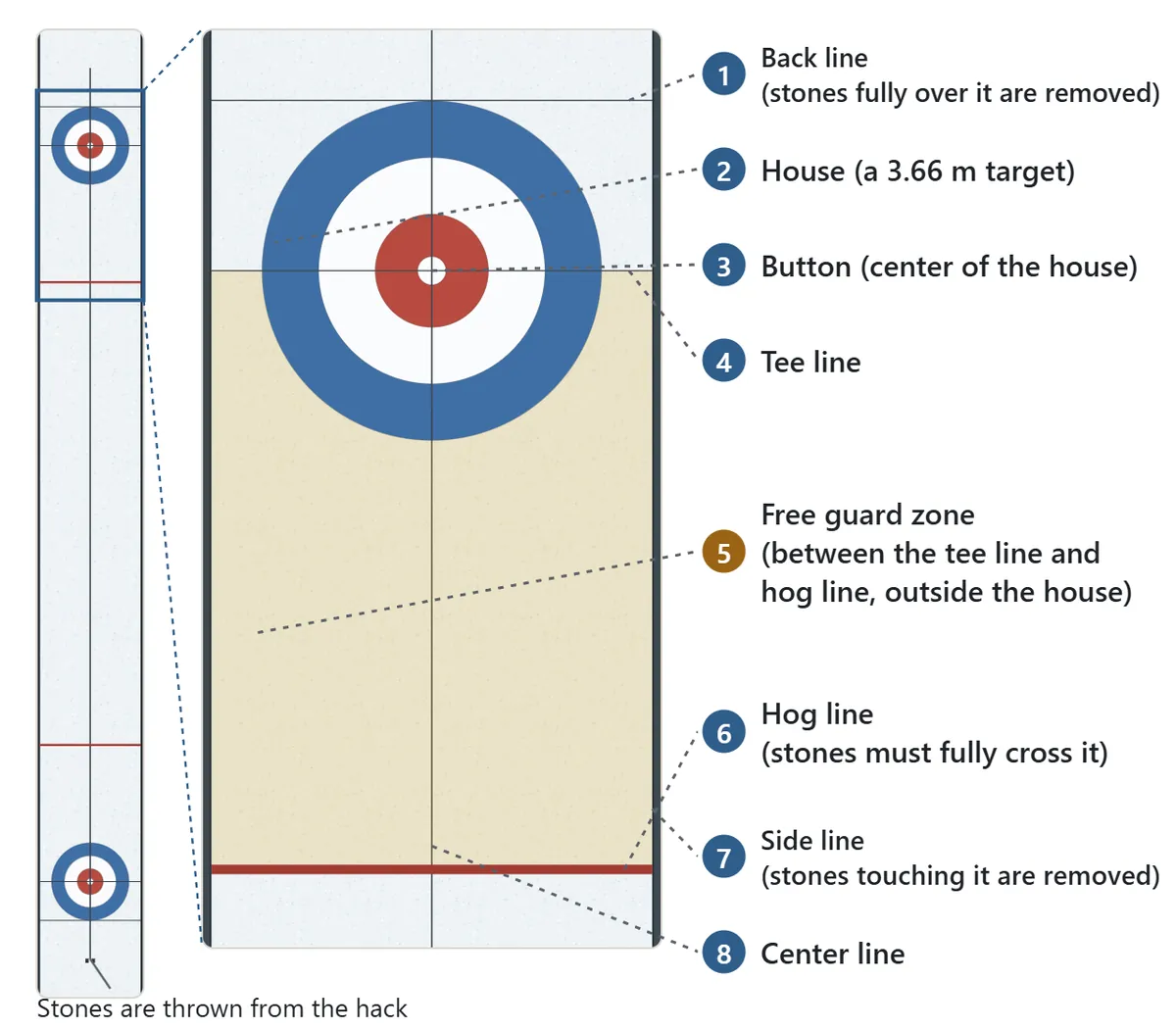
The house is a set of blue, white and red rings 3.66 m (12 feet) across. The small circle right in the middle is the button. The line running across the center of the house is the tee line, the line behind the house is the back line, and the thick line in front of the house is the hog line. The side lines mark the edges of the sheet, and the center line runs down the middle. On the right side of the game screen, a narrow strip shows the entire sheet from the hack to the house, and a frame marks the part you see enlarged on the left.
Aim, weight and turn
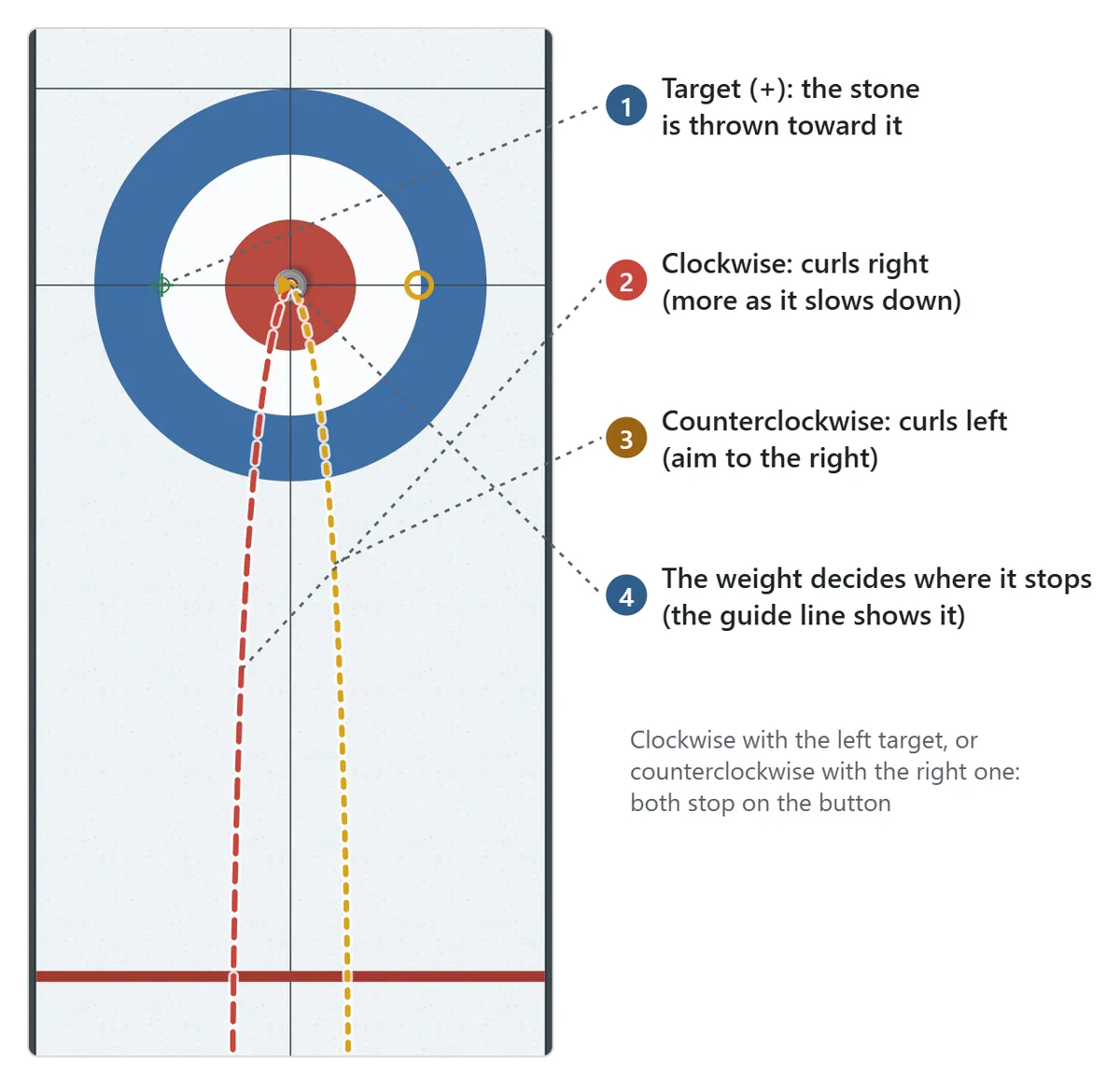
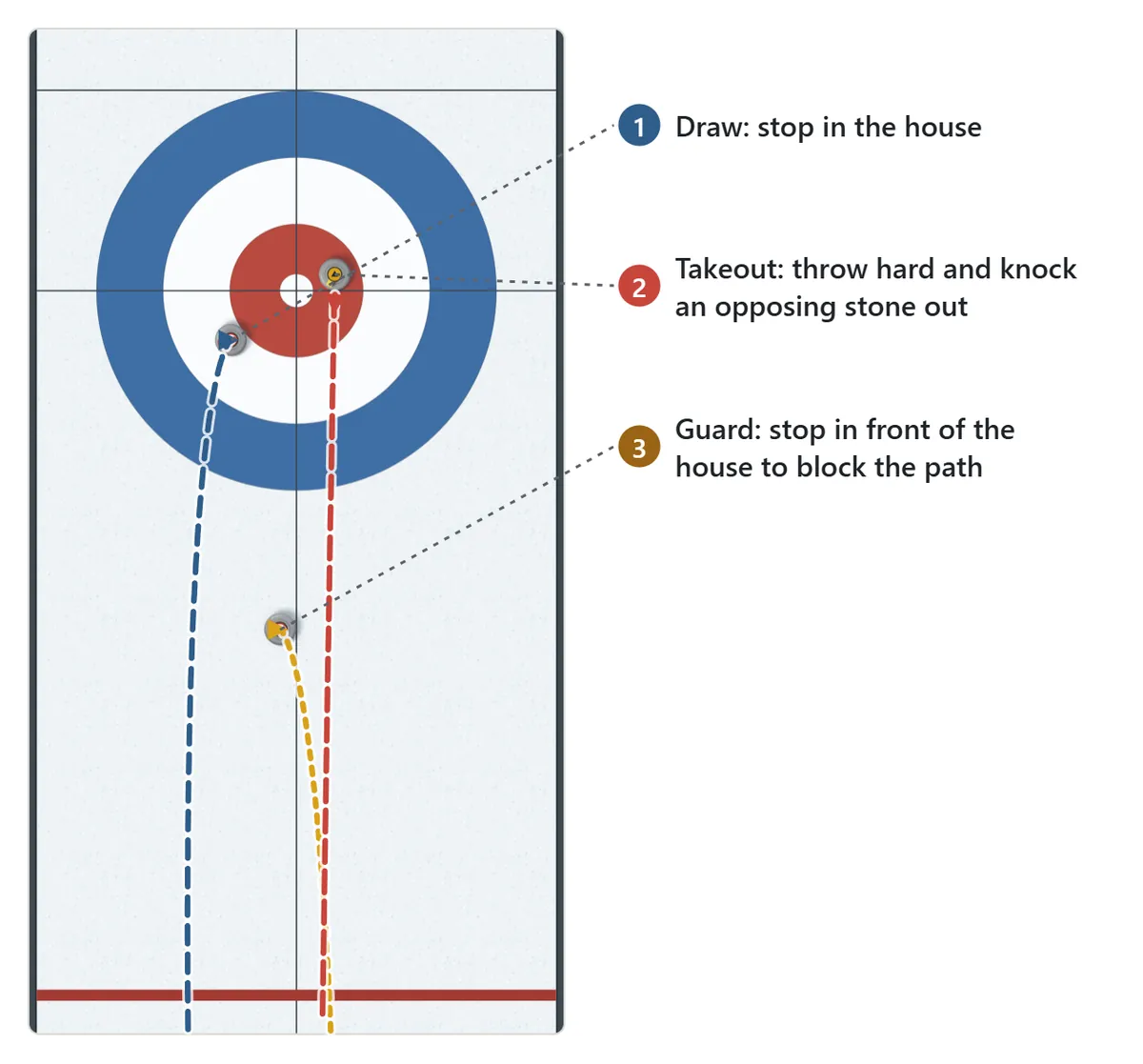
Click or tap the ice to move the green target (+). The stone leaves the hack heading straight at that target. Set the weight with the slider under the sheet; next to it you will see where the stone should end up, such as “Center of the house”, “Guard (in front of the house)” or “Takeout (hard)”. Switch the turn with the Clockwise / Counter button. A clockwise stone curls to the right and a counterclockwise stone curls to the left, and the curl grows as the stone slows down. That is why curling players never aim straight at the spot they want: they aim to one side and let the curl bring the stone in.
With the guide line switched on, a dotted line shows the path the stone would take on empty ice and where it would stop. Move the target and the slider until the end of that line sits on the button. Just like a real delivery, every release has a small amount of error, so two throws with the same settings will not land in exactly the same place.
Sweeping

While your stone is sliding, a Sweep button appears. Hold it (or hold the Space key) and your team brushes the ice in front of the stone. A swept stone slows down more gently and curls less. If a throw looks a little light, start sweeping as it approaches the house to carry it in. Sweeping can only make a stone go farther; it can never make it stop sooner. So the classic advice is to throw slightly light and let the sweepers make up the difference.
Curling Rules
How curling scoring works
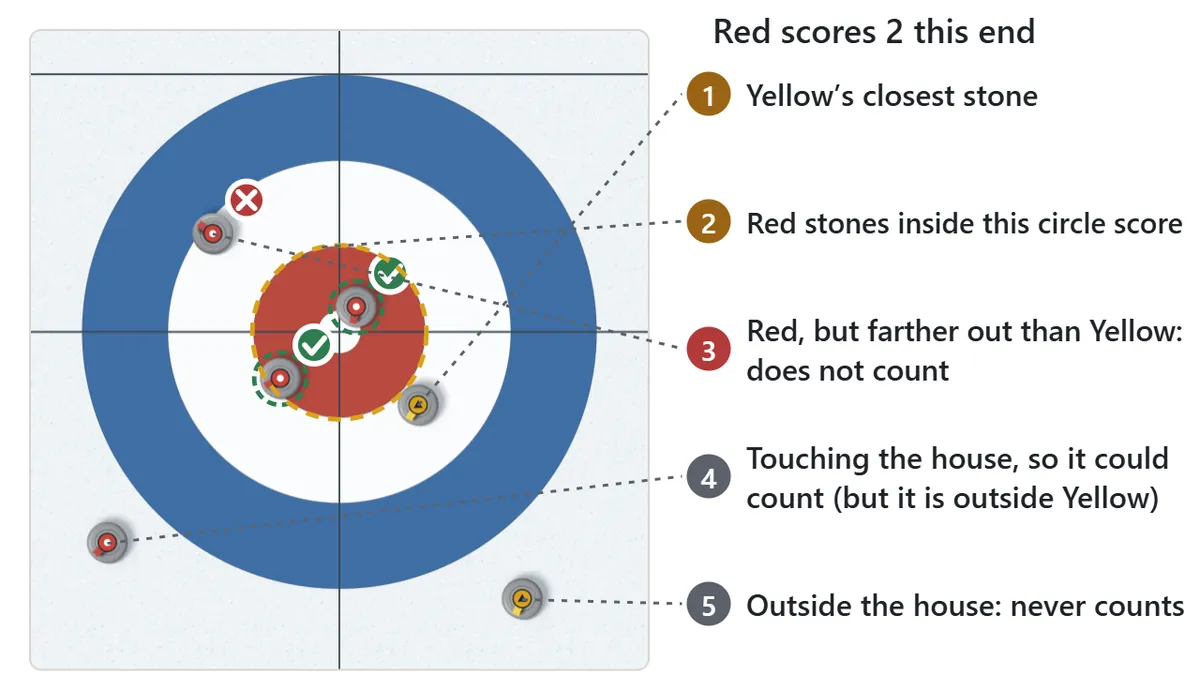
Only one team can score in an end. Find the stone closest to the button: that team scores. It gets one point for every one of its stones that is closer to the button than the other team’s closest stone. A stone counts as long as any part of it touches the house; stones completely outside the house never count. If no stone is in the house, the end finishes 0–0 and is called a blank end. During play, the game circles the stones that are currently scoring with a dotted ring, and the bar above the sheet shows who is sitting on points, for example “Now ● You 2 pts”.
The hammer: who throws last

The last stone of an end is called the hammer, and having it is a big advantage because you get to react to everything your opponent has done. A coin toss decides who has the hammer in the first end. After that, the team that scored throws first in the next end and the other team gets the hammer. After a blank end, the hammer stays with the same team. When all the ends have been played, the higher total wins. If the score is tied, an extra end is played and the first team to score wins.
Stones that are removed from play
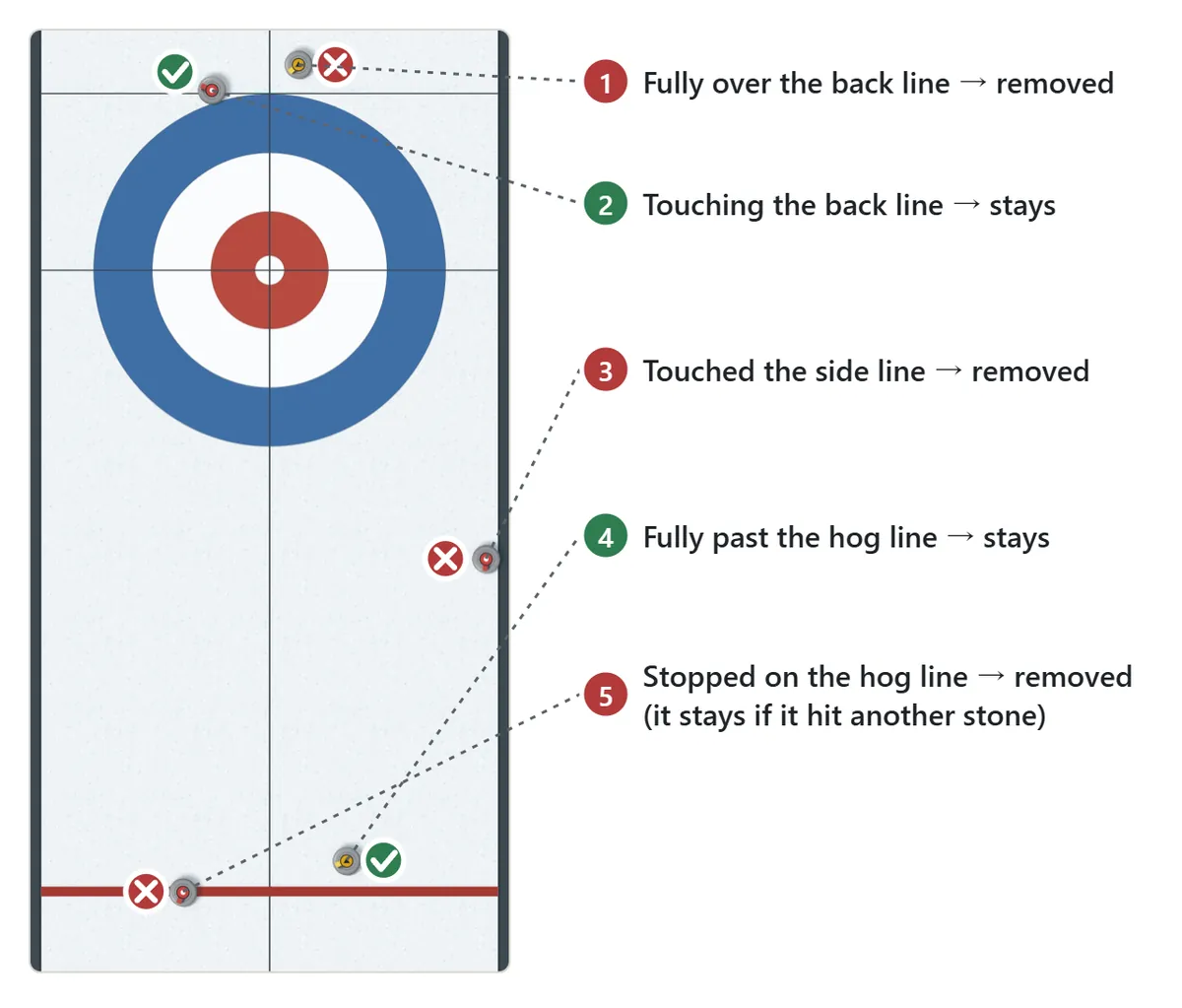
A thrown stone that fails to get completely past the far hog line is removed, unless it hit another stone on the way. Any stone that touches a side line is removed, and so is any stone that goes completely over the back line. The same applies to stones knocked there by another stone. A stone resting on the back line is still in play.
The free guard zone (competition rules)
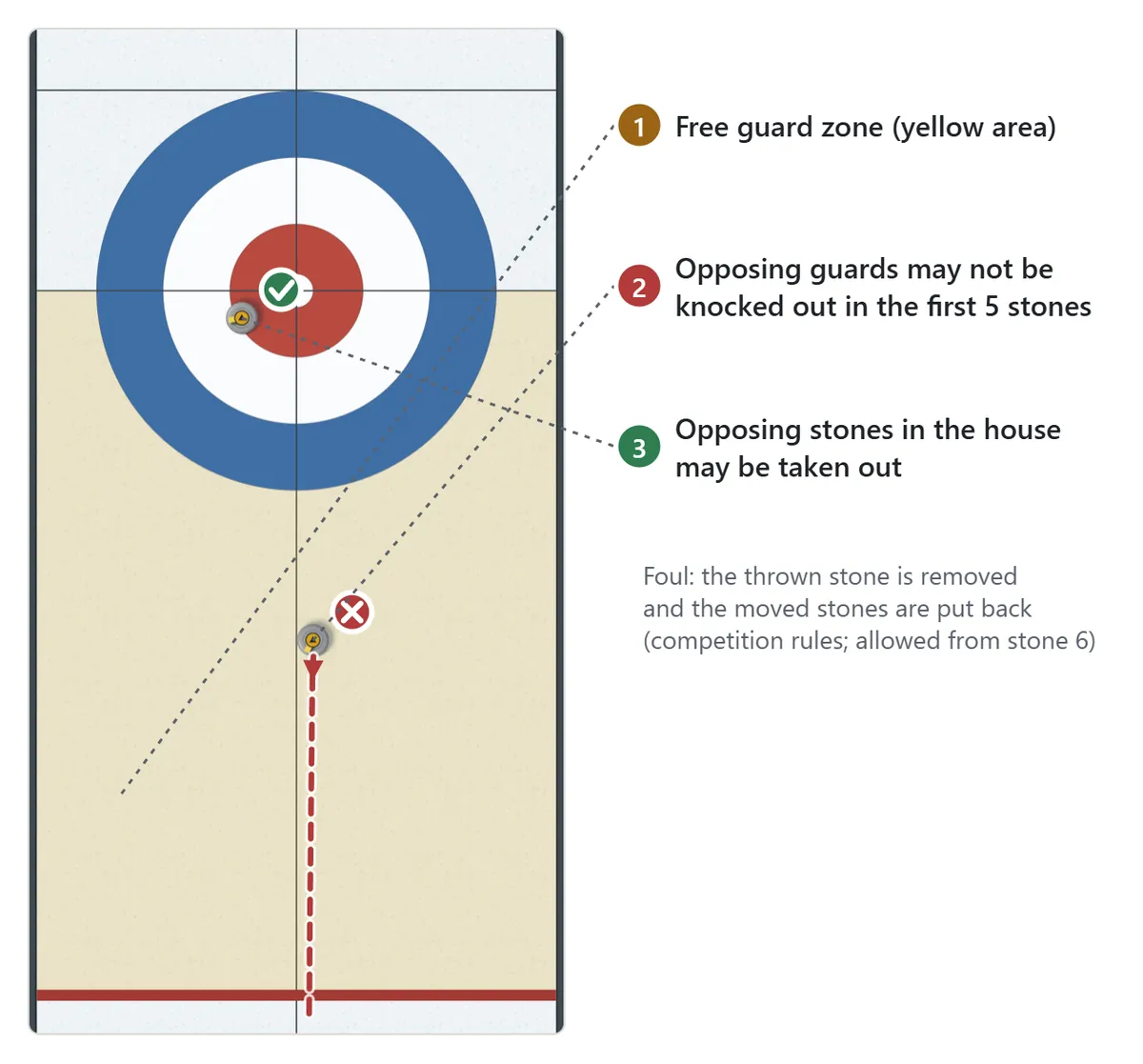
With the competition rules, the first five stones of every end are protected: you may not knock an opposing stone out of play if it sits in the free guard zone, the area between the tee line and the hog line but outside the house. If you do, your thrown stone is removed and every stone that moved is put back where it was. You are still allowed to take out stones in the house and to move your own guards. From the sixth stone on, anything goes. This rule exists to stop teams from simply clearing every guard and keeps ends full of stones and tactics.
Simple rules vs. competition rules
| Rule | Simple | Competition |
|---|---|---|
| Stones per end | 4 per team (8 in total) | 8 per team (16 in total) |
| Free guard zone | None; guards can be taken out | Guards are protected for the first 5 stones |
| Length | 2, 4, 8 or 10 ends (start with 4; real games are 8 or 10) | |
If you are new to curling, start with the simple rules and four ends. Games are short and you can focus on learning to stop a stone in the house. Once that feels natural, switch to the competition rules and try the real tactics of the sport, such as placing a guard and curling a stone behind it.
CPU levels
| Level | What it feels like | Good for |
|---|---|---|
| Easy | Often misses the line and the weight, coming up short or sliding through the house. Rarely goes after your stones. | First games and learning the rules |
| Normal | Plays proper draws and takeouts, but now and then misjudges the weight or picks the wrong shot. | Players who can judge the weight |
| Hard | Accurate, and uses guards and come-around shots. | Players who can hit the button |
Every level still throws the odd stone too heavy or off line, so nothing is decided until the last stone stops moving.
Curling Strategy and Tips
1. Learn your draw weight first
The weight that stops a stone on the button is called draw weight, and it is the most important thing to learn. When the label beside the slider reads “Center of the house”, you are close. Throw a few stones and get a feel for how much the slider moves the stopping point.
2. Throw a little light and sweep
A stone that is too heavy cannot be saved, but a light one can be swept. When in doubt, throw slightly light and sweep if it looks like stopping short.
3. Aim to the side to allow for the curl
Stones curl most at the end of their path. For a clockwise stone, place the target to the left of where you want to finish; for a counterclockwise stone, to the right. Check the curl on the guide line before you throw.
4. Take out a stone sitting on the button
When your opponent has a stone near the button, throwing hard to knock it out, a takeout, is often the best reply. A hard stone barely curls, so it is easier to aim.
5. With the hammer, keep the house open
If you have the last stone, you want a clean path to the button at the end. Clear away clutter during the end so that your final draw has room to score, ideally two points or more.
6. Without the hammer, use guards
If your opponent throws last, put guards in front of the house and curl stones behind them. Stones hidden behind guards are hard to take out, and the free guard zone protects those guards early in the end.
Curling FAQ
Can I play curling on a phone or tablet?
Yes. Tap the ice to move the target, set the weight with the slider and the turn with the button, then tap Throw. While the stone is moving, hold the Sweep button or keep your finger on the screen to sweep.
The stones take a long time to stop. Can I speed it up?
While a stone is sliding, a Faster button appears (the F key on a keyboard). Press it to speed up the rest of the throw.
Why didn’t my stone stop where the guide line said?
The guide line shows the path on empty ice with no sweeping. On top of that, each release has a little random error, so a stone may stop slightly short or long. If it is short, sweep it.
Can I stop and continue later?
Yes. On the same device and browser, press Continue to pick up from the start of the throw you were on. The game saves automatically before every throw.
How is this different from real curling?
A few things are simplified so the game works on one screen. You can only sweep your own thrown stone, and you cannot sweep your opponent’s stones behind the tee line. The no-tick rule (which protects guards on the center line from being tapped aside), the order of players on a team, thinking time and conceding a game early are not included.
A Short History of Curling
Curling is usually traced back to sixteenth-century Scotland, where people slid stones across frozen ponds and lochs. The game spread to Canada and other cold countries, where it became hugely popular, and it is now an event at the Winter Olympics. Because accuracy and planning matter more than strength, curling is often called “chess on ice”: every shot is a guess about what the other team will do next. Players of any age and build can compete on the same sheet, which is a big part of its charm.