 Yorimichi Games
Card Fortune: a clock-shaped card layout
Card Fortune presents a traditional clock-shaped sorting game, also known as Clock Patience or Clock Solitaire. You reveal a card, place it at the position for its rank, and continue from that pile. The layout creates a chain of discoveries around the clock. Here, a result describes the cards you sorted. It does not offer predictions about real events or advice for personal decisions. Enjoy the sequence as a small playing-card game.
Use an ordinary deck without jokers. The outside positions correspond to the hours on a clock, while kings belong in the center. Aces represent one, jacks eleven and queens twelve. The four suits do not affect where a revealed card belongs. At the start, each position has a small face-down pile. Choose a rule in settings and press Start. The blue outline indicates the source of the next reveal, so you can follow the chain without remembering every previous step.
How to reveal and place a card
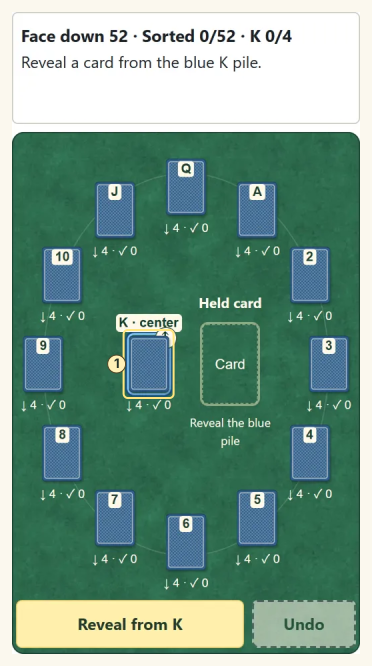
Play begins in the center. Reveal its top face-down card and read the rank on the held card inside the clock. Find the matching rank position and place the card there. The pile you have just used becomes the source of the next reveal. If the new card is a king, its destination is the center, and play continues from there. A card can therefore return to the same pile from which it came.
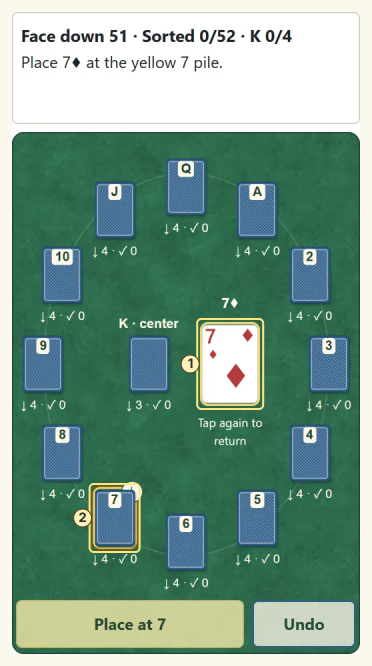
The interface separates revealing from placing. This gives you time to see each card before moving it. Tap the blue outlined pile or press Reveal. Then tap the destination or press Place. The large Place button uses the proper rank automatically, making the game comfortable when the clock positions look small on a phone. You cannot reveal another card while holding the current one. If you tap a different rank, the card stays where it is and the message explains how to match it. There is no penalty and no change to the deal.
Understanding the face-down and sorted cards
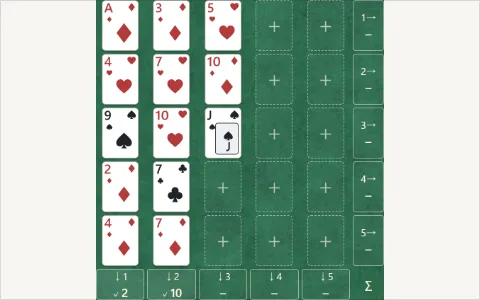
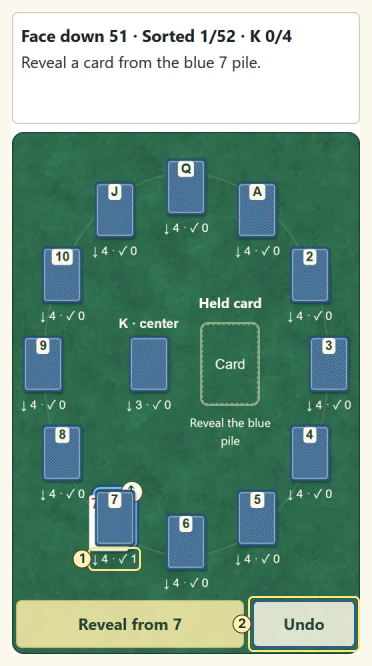
Face-down cards are still waiting to be revealed. Sorted cards have already reached their matching rank position. The downward-arrow count shows unrevealed cards, and the check-mark count shows sorted cards. For example, down three and checked one means that the pile still contains three unrevealed cards and has received one sorted card. Use the count as well as the card back to recognize what remains.
A position highlights its check-mark count when all four cards of that rank are sorted. It may still contain an unrevealed card of another rank. Completing a rank and emptying a source pile are different events, so keep following the blue outline rather than assuming a completed set is no longer involved. The blue source shows a card back on top. Other piles show the latest sorted card, with the edge of a card back if unrevealed cards remain. The card you are currently holding is displayed separately, with a larger rank and suit.
When Classic clock ends
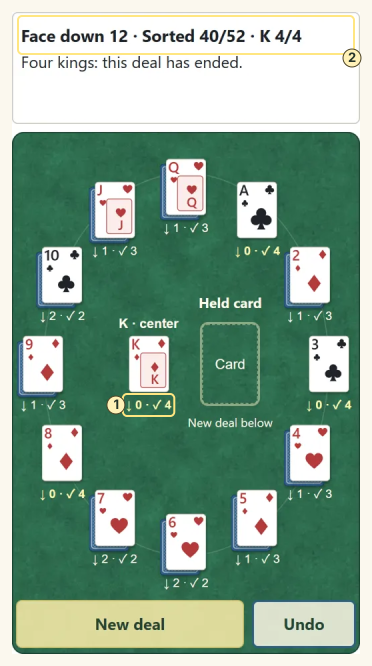
In Classic clock, the deal ends when the fourth king is placed in the center. If every card has reached its rank at that moment, the layout is complete. If face-down cards remain, the sequence stops there. Do not jump to another source under the classic rule. The result panel reports the number of sorted cards and completed rank groups, allowing you to see how far that particular deal went.
An early stop does not show that you made a poor strategic choice. The normal sequence has no decision about which card to use next: every rank determines the next position. Taking longer to press a button or choosing the large button instead of the pile does not alter the outcome. Undo can help you revisit a step, but following the same sequence again produces the same layout. A completed layout is a satisfying card-game result, not a measure of luck in your life or a sign about a future event.
Practice rules and restarts
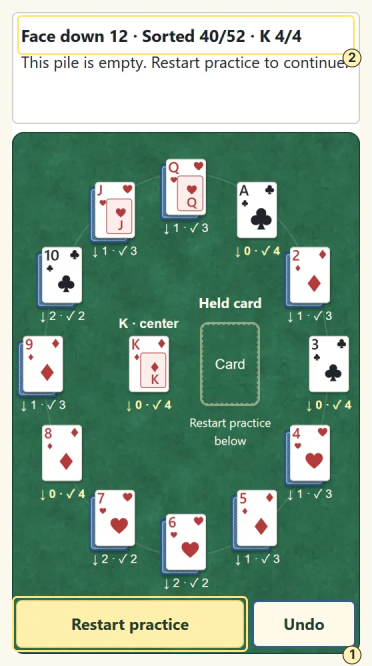
One restart practice allows a single fresh source when the current one has no face-down card left. Look from the ace position clockwise and use the first pile that still contains an unrevealed card. Press Restart practice to begin that continuation. The blue outline then moves to the chosen source. The remaining cards stay in their original order; nothing is reshuffled. If the sequence stops again, the one-restart rule ends the deal and reports the result.
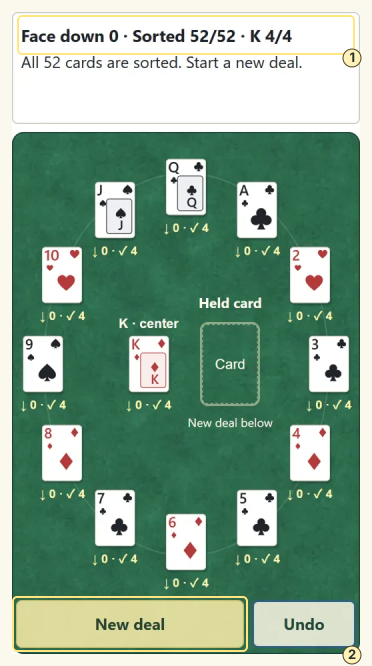
Full sorting practice permits another continuation each time a chain stops. It uses the same source-selection order, so you can work through all the remaining cards. This is useful for watching how the different chains connect and for practicing the rank positions. It is not the same challenge as finishing before the fourth king under the classic rule. The records are kept separately for each rule. A full-practice completion should therefore be read as finishing a sorting exercise, not as a better classic result. Switch rules in settings whenever you want to explore the difference.
Tips for following the layout
Look at the rank before looking at the suit. A red card does not need a red destination: only its rank determines the correct pile. On a clock, three is to the right, six is below and nine is to the left. Remember that the jack and queen occupy eleven and twelve, while the king has the central position. A few slow reveals help establish these landmarks.
The yellow outline and downward mark appear as soon as a card is revealed. Match the held card’s rank to that pile. Tap the held card again, tap empty table space or press Escape to return it face down to the original source. Revealing again gives the same card. The deck and outcome do not change. You choose when to place each card. Large buttons provide an alternative to small targets, and they perform the same legal actions.
Undo removes one action: a reveal, placement or practice restart. It can show where the held card came from or let you examine the moment before a chain ended. It does not shuffle the remaining piles. Pause whenever you want a break. The board has no countdown, speed score or automatic play that carries on while you are trying to read a card. Progress is saved in the browser, and Continue returns to the same layout.
Card Fortune and Clock Patience FAQ
Does the result predict anything?
No real-world meaning is assigned to the arrangement. The result reports sorted cards, completed rank groups and practice restarts. It is a traditional card-layout game.
How is the next pile chosen?
The revealed card directs you to its matching rank pile. After placing it, reveal from that pile. You do not choose a different card or alternate colors. The central king pile starts the sequence.
Why does a completed rank still have face-down cards?
A complete set of sorted cards can sit beneath an unrevealed card of another rank. The check-mark and downward-arrow counts describe different groups. Follow the active outline to know which source comes next.
Can I choose a different pile to improve the outcome?
Classic play follows the rank of the card just placed. Choosing another source is outside that rule. Practice permits a continuation only after a chain stops, and this version selects the first remaining source in rank order.
Can I play with a keyboard?
Space reveals, places or continues practice according to the current phase. Z undoes one action and P pauses. You can also reach the large buttons with Tab and activate them normally. On touch screens, the buttons offer the same actions as the piles.
Where are the records stored?
The same browser keeps your recent layout and records for each rule. The Japanese and English pages share them. Changing devices or clearing browser storage does not carry the saved layout over. Replaying the same deal does not add it repeatedly to the record.
About the clock layout
Clock Patience is one of several card games named after a clock. Some similarly named games use quite different movement rules, so the rank-following procedure is more useful for identifying this version than the word Clock alone. This page uses original card graphics and wording to present that traditional sequence. The interest is in observing the next card, finding its position and seeing how far the chain travels.