 Yorimichi Games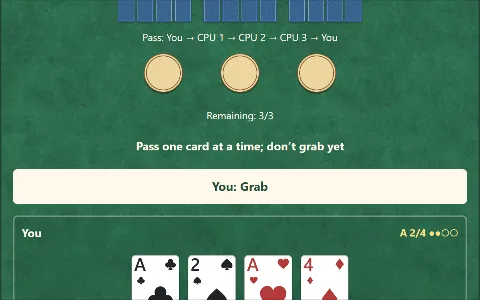
How to play Buta no Shippo (Pig’s Tail)
Buta no Shippo – literally “the pig’s tail” – is a simple Japanese card game played with an ordinary deck of cards. All the cards are laid face down in a big ring, and the players take turns flipping them over one at a time onto a pile in the middle. If the card you flip has the same suit (or, in the standard rules, the same rank) as the card just before it, you have to take the whole center pile. When the ring runs out, the player who has taken the fewest cards wins. All you need to know is how to read suits and numbers, so players of any age can join in on equal terms – and the suspense of a growing pile makes every flip exciting.
On this page you play against one to four computer players. You can also switch to a “suit only” version, or to a version where the cards you take become a hand you can play from.
The table
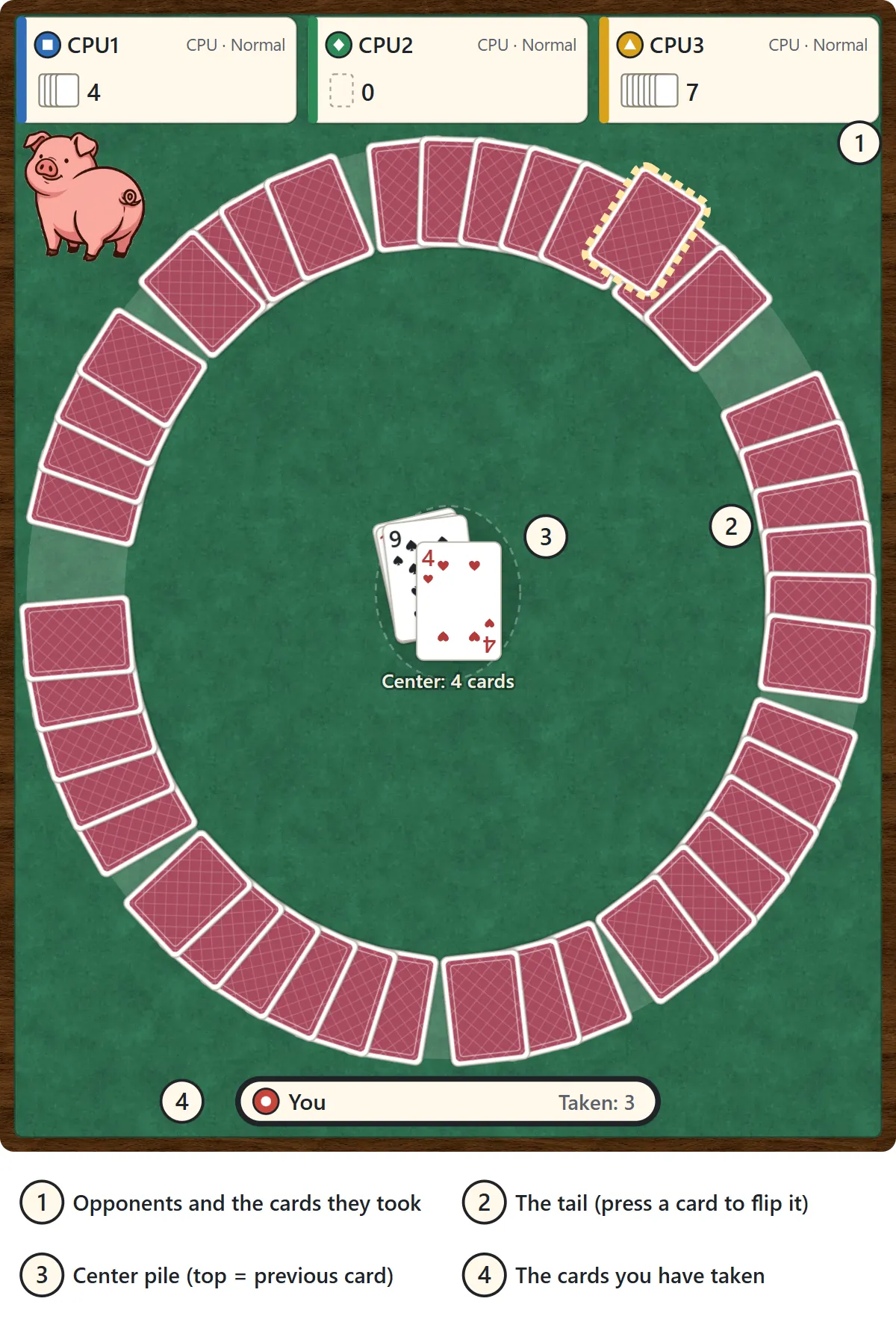
1. Lay the cards out in a ring
Take out the jokers, shuffle the 52 cards well and lay them face down in a ring. That ring is the pig’s tail. Leave plenty of room in the middle for the flipped cards. Nobody is dealt a hand – everyone starts with nothing. In this game the ring surrounds the center pile, and because there are so many cards, neighbors overlap a little.
2. Take turns flipping a card onto the center
Decide who goes first, then play passes around the table. On your turn, pick any card from the tail, flip it face up and put it in the middle. From the second player on, each card goes on top of the previous one. The spot you took a card from stays empty; the other cards are never pushed together.
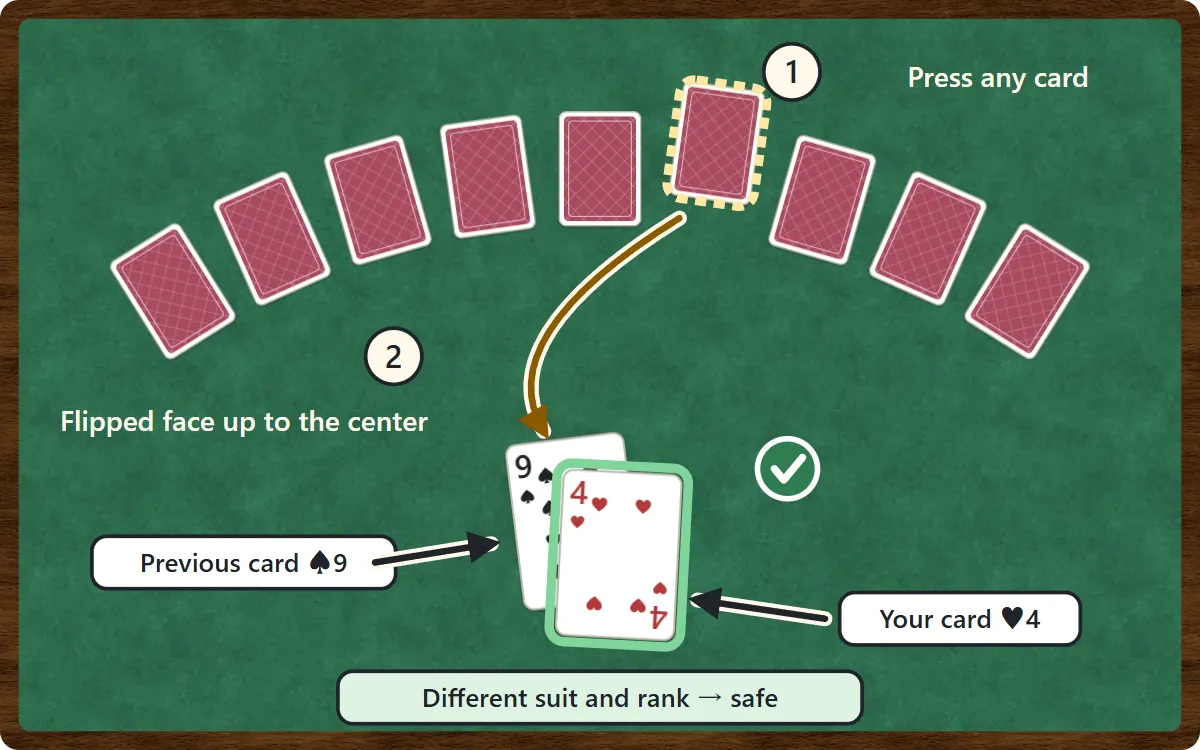
In this version, just press a card in the tail to flip it. On a computer, the card under the mouse pointer gets an outline. Pressing just outside the edge of a card flips the nearest one, which makes it easier on a phone, but pressing an empty gap never flips a neighbor by accident.
3. Match the previous card and you take the whole pile
If the card you flip has the same suit as the top card of the pile – the one played just before yours – it’s a match. Under the standard rules, the same rank counts as a match too. Whoever makes the match takes every card in the center, including the one they just played.
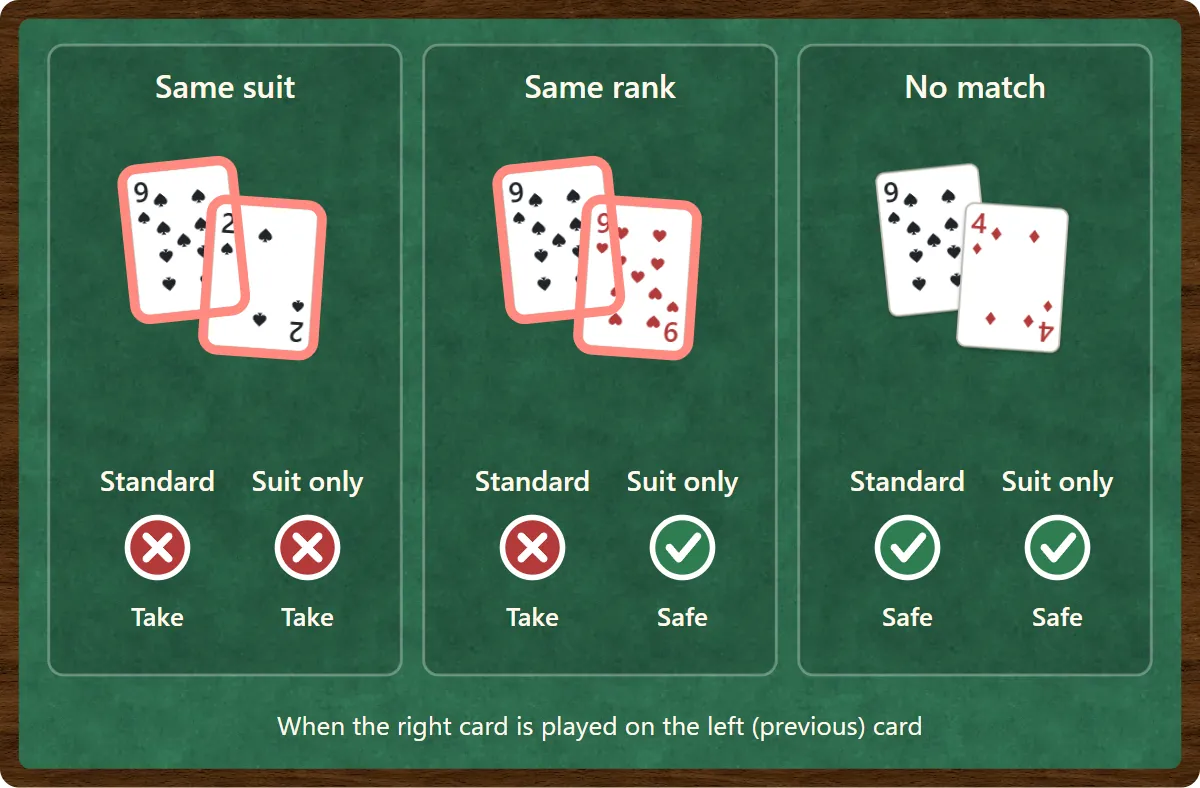
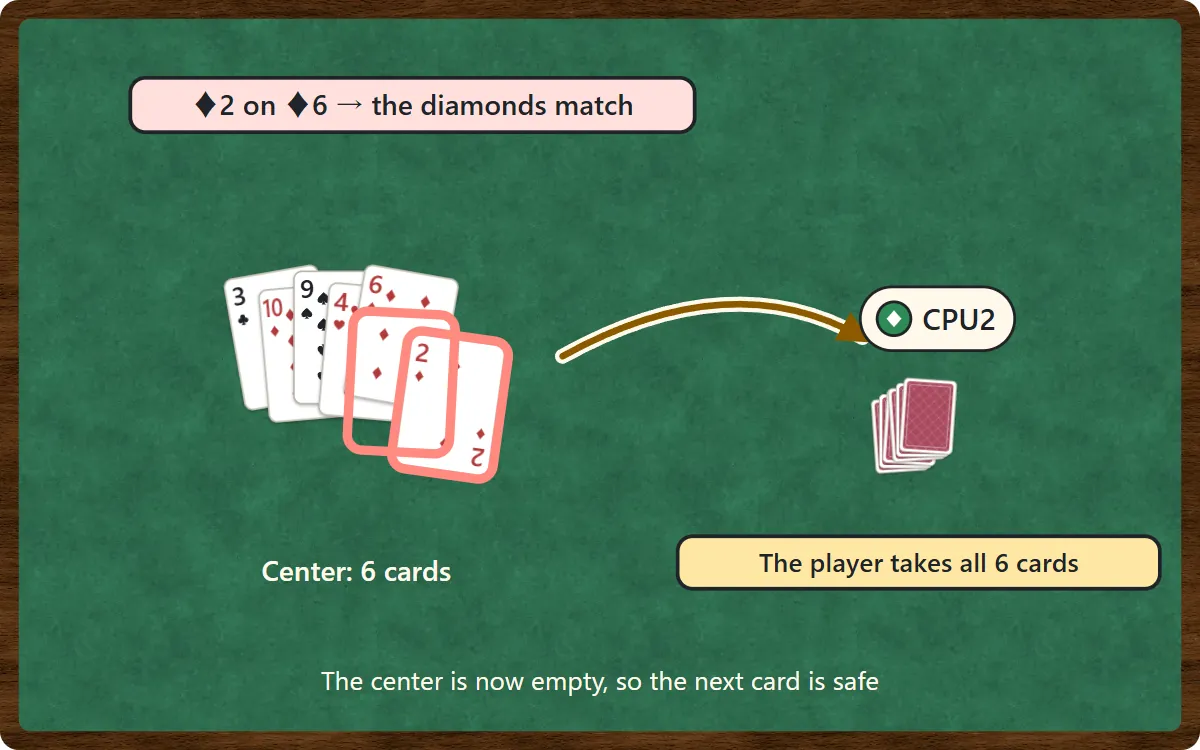
After someone takes the pile, the center is empty and the next player starts a new pile. When the center is empty, any card is safe. The longer the pile grows without a match, the more cards the next unlucky player collects – which is exactly where the fun comes from.
4. When the tail is gone, compare your cards
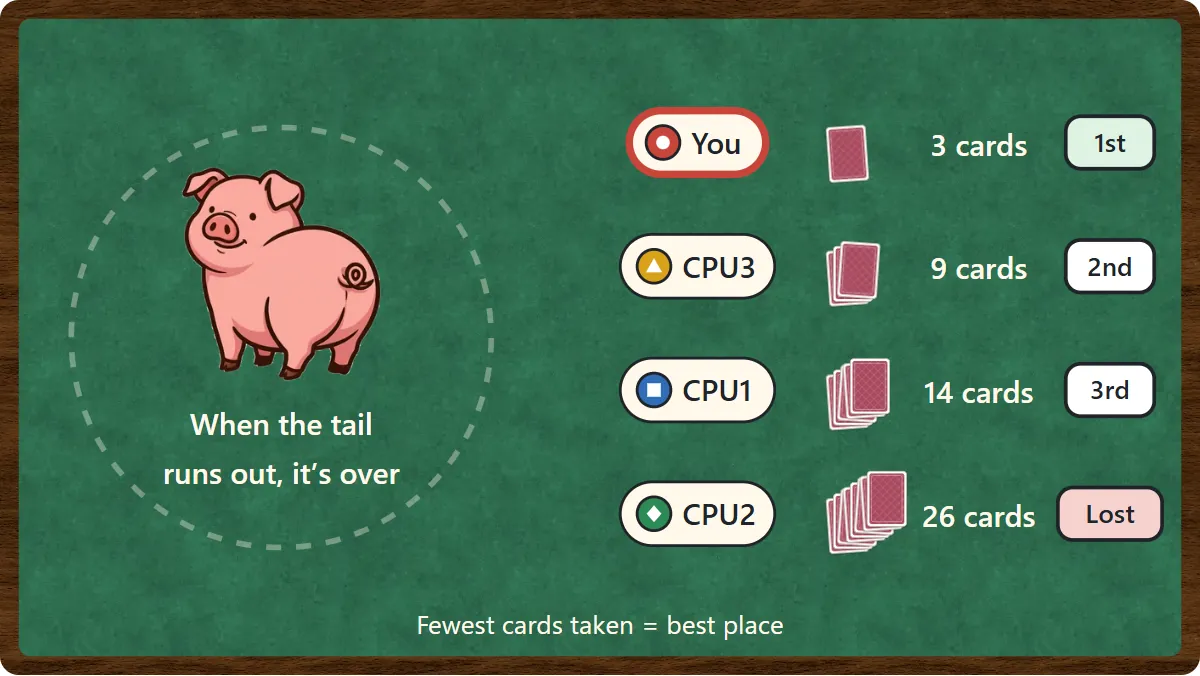
The game ends when every card in the tail has been flipped. Everyone counts the cards they have taken: fewest is 1st place, then 2nd, and so on, and the player with the most loses. Players with the same number share a place.
Buta no Shippo rules and variations
Like many family card games, Buta no Shippo is played a little differently from house to house. This game lets you pick one of three common versions in one click, or combine the options yourself with “Custom”.
| Rules | You take the pile on | Taken cards |
|---|---|---|
| Standard | Same suit or same rank | Just counted |
| Suit only | Same suit (same rank is safe) | Just counted |
| Play from hand | Same suit or same rank | Become a hand |
Play from hand
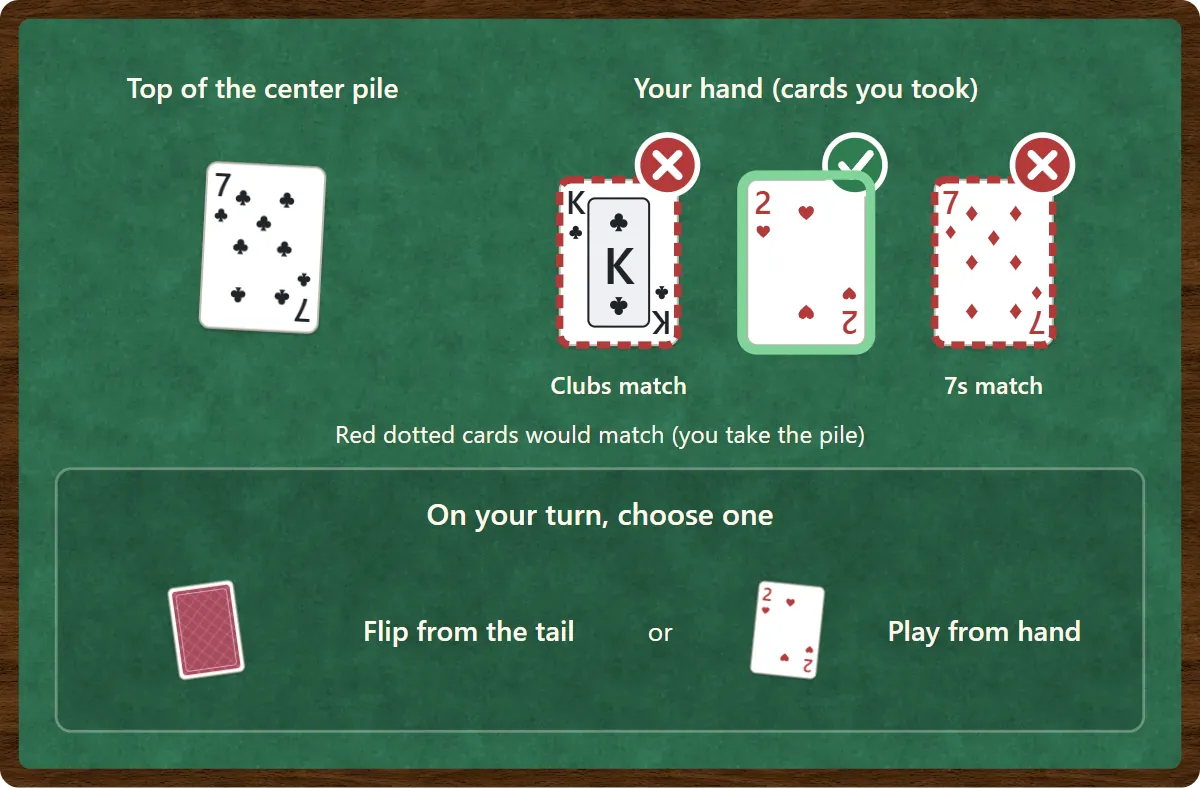
In this version the cards you take become your hand. On your turn you may play one card from your hand instead of flipping from the tail. Only you can see your hand, so if you choose a card that doesn’t match the top card, you get rid of a card safely. The game still ends as soon as the tail is empty, even if players have cards left in hand. It adds a real decision to a game that is otherwise pure luck.
Custom rules
Under “Fine-tune the rules” you can set four options one by one:
- What counts as a match: the same suit or the same rank (usual), or only the same suit.
- Cards you take: just kept and counted, or turned into a hand you can play from.
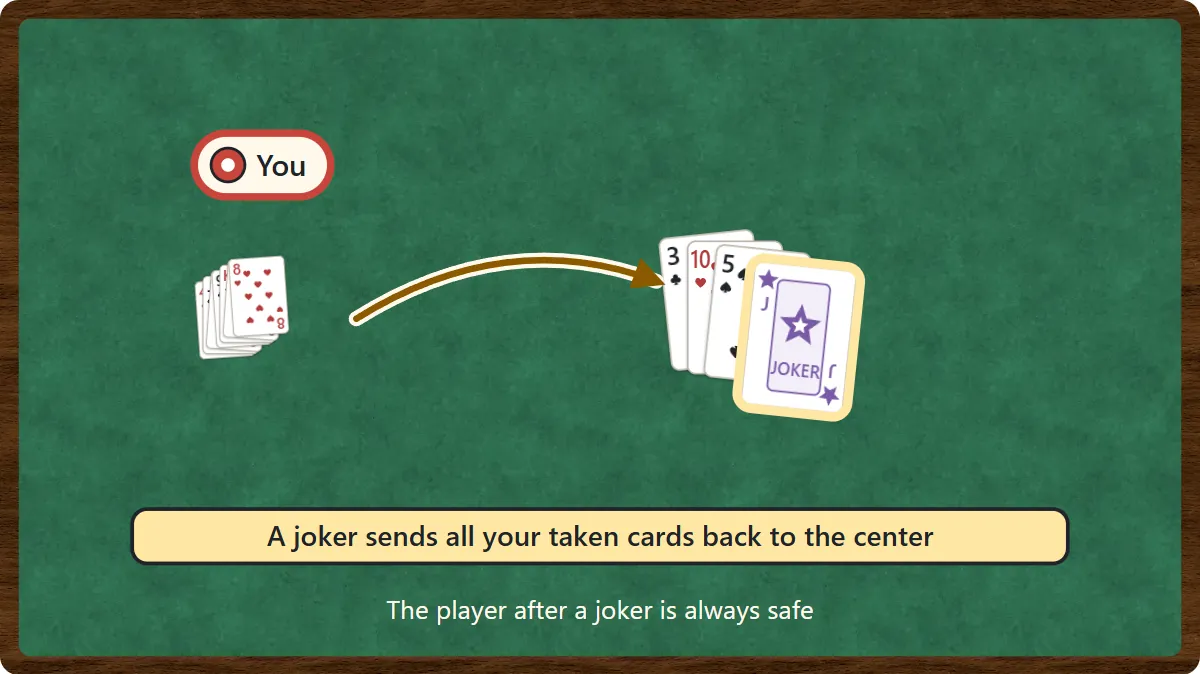
- Jokers: none, or two jokers in the deck. Whoever plays a joker sends every card they have taken back into the center, and the player after a joker is always safe. Even a player with a big stack of cards has a chance of a comeback right to the end.
- After taking the pile: the next player’s turn (usual), or the same player plays another card.
Tips and strategy
1. Every card in the tail is an equal gamble
The tail is face down, so no position is luckier than another. Flip from one end, pick a card that “feels right” – it makes no difference. Just enjoy the flip.
2. The taller the pile, the bigger the risk
With the standard rules, there are up to 12 other cards of the same suit and 3 of the same rank, so roughly one flip in three or four makes a match. When several players in a row are safe, the pile keeps growing, and the next match collects a lot of cards. If the pile is big when your turn comes, brace yourself.
3. Remember what has been played
Each suit has only 13 cards. After a lot of hearts have appeared, few hearts are left in the tail, so a heart on top is less likely to be matched. Every flipped card is visible, so the more you keep track of, the better you can judge the odds.
4. With a hand, play a card that doesn’t match
Under “Play from hand”, playing a card that doesn’t match the top card lets you shed a card without taking the pile. Only flip from the tail when every card in your hand would match.
5. Think about the next player
The card you play becomes the “previous card” for the next player. Playing a suit with many cards still unseen makes it more likely that they match; playing a suit that has almost run out makes them safer. In a friendly game, that choice is part of the fun.
6. Don’t give up after a big pile
With jokers in the deck, one card can send everything you have taken back to the middle. And other players often end up with a huge pile too, so the final places are never certain until the very last card.
Buta no Shippo FAQ
How many players can play?
Here, you and one to four computer players – two to five in total. The more players there are, the more the pile can grow before your turn comes around, which makes for a livelier game.
Does the same rank count as a match?
It depends on the household. Some play that the same suit or the same rank makes you take the pile; others use the suit only. The standard setting here is “suit or rank”, and you can switch to “Suit only” above the game.
Can I use the cards I take?
With the standard rules they simply sit in front of you and are counted at the end. Choose “Play from hand” and you can play one of them on your turn instead of flipping from the tail.
Who goes first?
Traditionally, whoever wins a round of rock-paper-scissors. Here the first player is drawn at random and announced at the start (“CPU2 goes first”). Play then goes around the table in order: after you comes CPU1, then CPU2, and so on.
What if the very last card matches?
Then that player takes the center pile before the game ends. Nobody is safe until the final flip.
Can I play with a keyboard?
Yes. On your turn, use the ← and → keys to choose a card and Enter or Space to flip it. Under “Play from hand”, ↑ and ↓ switch between the tail and your hand.
Is there an English card game like this?
There is no widely known English-language game with exactly these rules. It is a little like Snap turned inside out: in Snap, spotting a match is good for you, while in Buta no Shippo making a match is bad luck. It is not related to the English party game called Pig, in which players pass cards and race to touch their noses.
Where the name comes from
Buta no Shippo is a long-loved family card game in Japan. The name is said to come from the ring of cards, which looks like a pig’s curly tail. In some regions the same game is called “Doughnut”, and there are other local names too. Some families also play a faster version: when a matching card appears, everyone slaps a hand on the pile, and the slowest player has to take it. Because the rules are so simple and it gets people talking about suits and numbers, it is a favorite for family evenings and group play in Japan.