 Yorimichi Games

How to play the merge puzzle
This is a drop-and-merge puzzle game. You drop balls into a container one at a time, and whenever two balls of the same kind touch, they merge into the next bigger ball. A marble becomes a bouncy ball, a bouncy ball becomes a ping-pong ball, and so on, all the way up to a big beach ball. The balls roll, slide into gaps and pile up just like real ones. Your goal is to keep merging and score as many points as you can before the pile climbs over the top line.
There is no timer and nothing falls on its own, so you can take your time with every drop. One game usually lasts a few minutes, which makes it a nice short break – and the Daily Challenge gives you a fresh puzzle to come back to every day.
Aim and drop
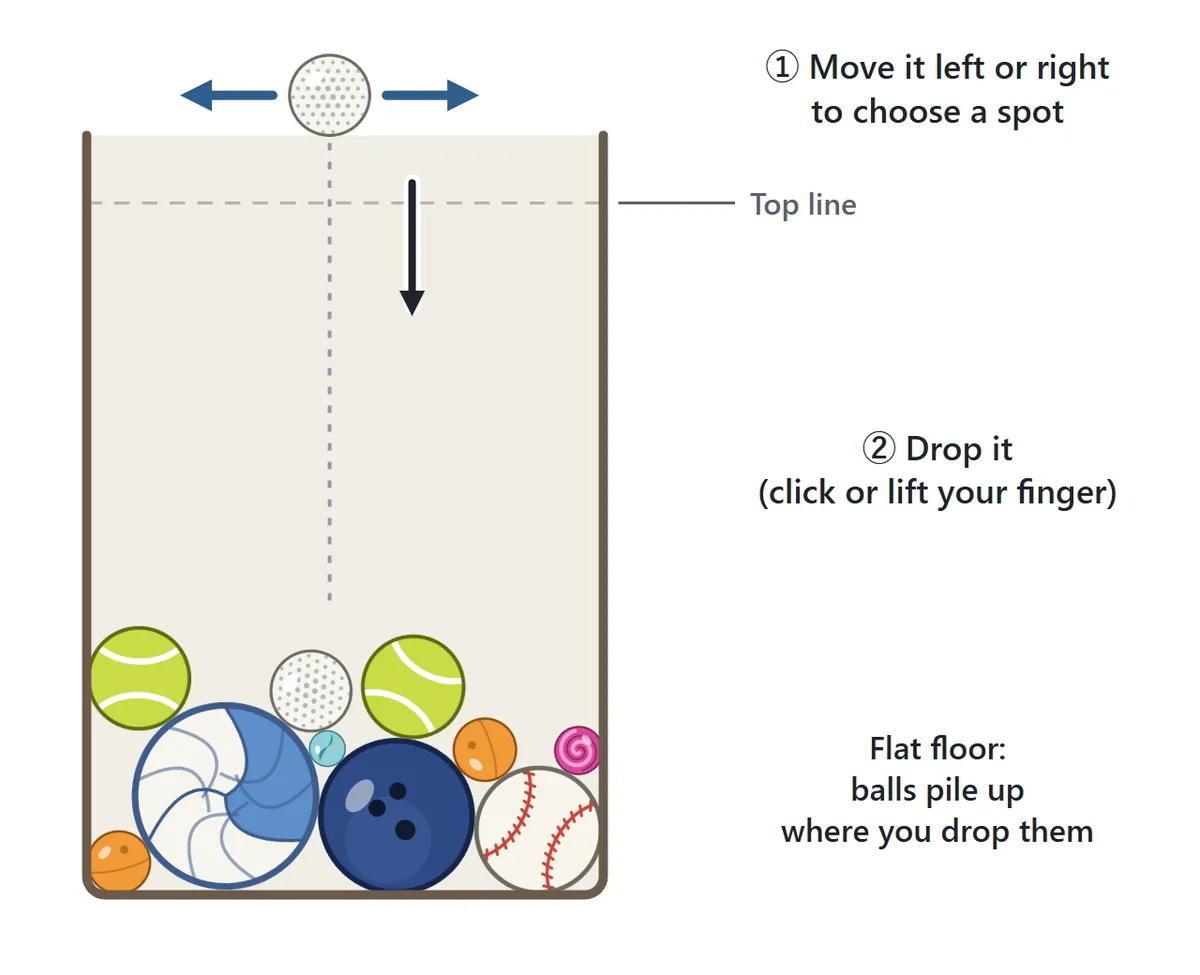
The next ball to drop waits above the container. On a computer, move the mouse left and right over the container to aim, and click to drop. On a phone or tablet, slide your finger over the container and lift it to drop the ball where your finger is. You can also use the left and right arrow keys and the Space bar, or the Drop button and arrow buttons under the game.
A thin dotted line runs straight down from the ball. It shows roughly where the ball will land first, so you can line it up with the ball you want to hit. After each drop, there is a short pause before the next ball appears.
Matching balls merge into a bigger ball
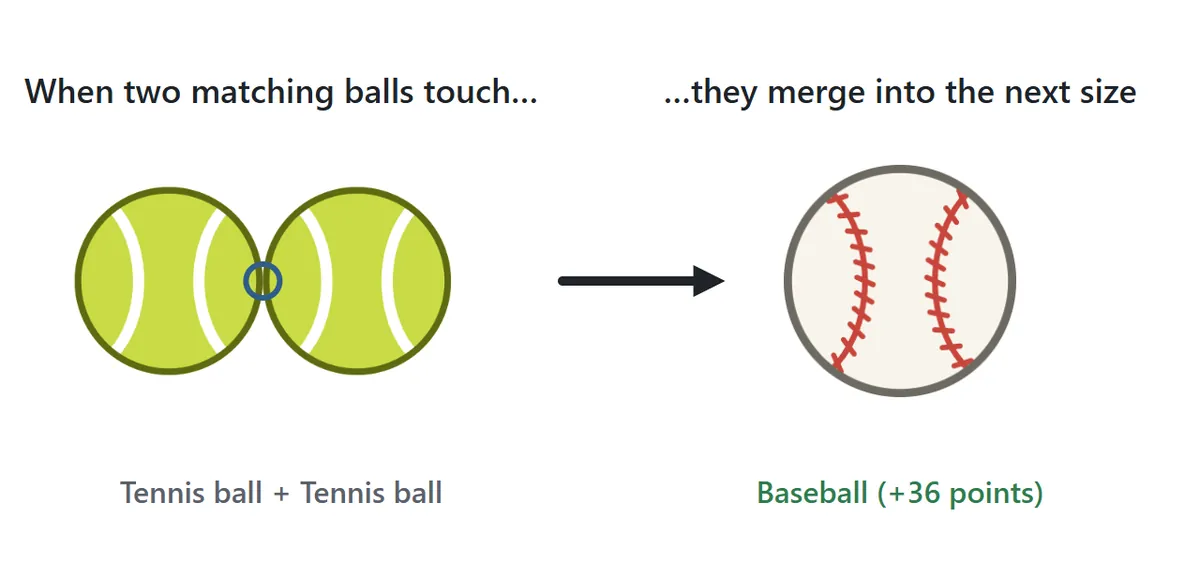
When two balls of the same kind touch, they merge into one ball of the next size, right between where the two balls were. If the new ball then touches another ball of its own kind, it merges again. With a good layout, a single drop can set off a whole chain of merges. Balls of different kinds never merge, no matter how hard they are pushed together.
You only score points when balls merge, and bigger balls are worth more: making a bouncy ball gives 4 points, and making a beach ball gives 121 points. Dropping a ball by itself does not add anything to your score.
The 11 balls, from smallest to biggest

The balls, from smallest to biggest, are: marble, bouncy ball, ping-pong ball, golf ball, tennis ball, baseball, bowling ball, volleyball, soccer ball, basketball and beach ball. The same row of balls is shown right under the container while you play, and the biggest ball you have made in the current game is circled.
Only the five smallest balls (marble to tennis ball) are ever dropped – four on Easy (marble to golf ball). Every bigger ball has to be made by merging. The ball that comes after the current one is shown next to “Next” in the bar above the game, so you always know one ball ahead.
Two beach balls vanish
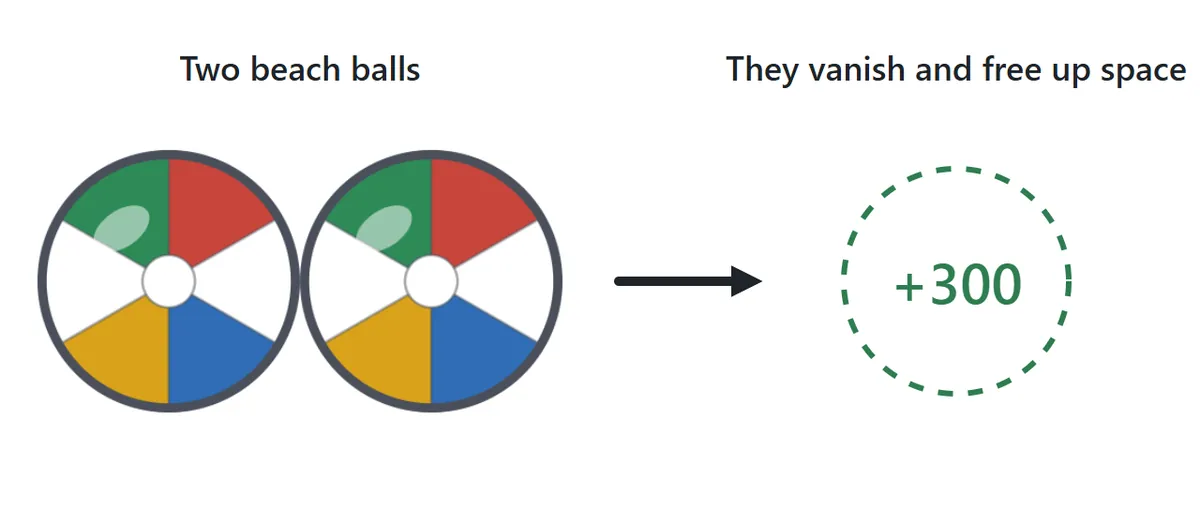
The beach ball is the biggest ball in the game. When two beach balls touch, both of them vanish and you get 300 points. That opens up a lot of room in the container, and the game simply carries on.
Game over: staying above the top line

A dashed line runs across the upper part of the container. When a ball sticks out above this line, the line turns red and a red bar starts growing along it. If a ball is still above the line after two seconds, the game is over. If a merge lowers the pile in time, the bar resets. A ball that you have only just dropped and that is still falling does not count.
Difficulty levels and the Daily Challenge
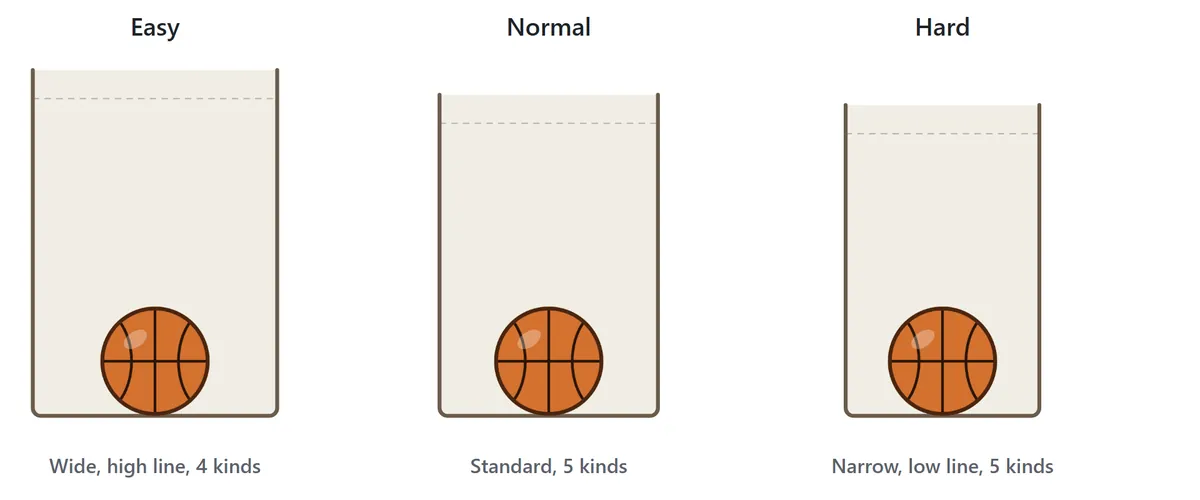
| Level | Container | Balls dropped | Best for |
|---|---|---|---|
| Easy | Wide, high top line | 4 smallest | First games, relaxed play |
| Normal | Medium | 5 smallest | Players who know the rules |
| Hard | Narrow, low top line | 5 smallest | Players who can make big balls |
In the Daily Challenge, the balls drop in a fixed order that is the same for everyone who plays that day, so you can compare scores with family and friends. It is played on Normal. Your first score of the day and your best score of the day are saved, and a new order starts the next day.
Merge game strategy: tips for making bigger balls
1. Don’t trap small balls under big ones
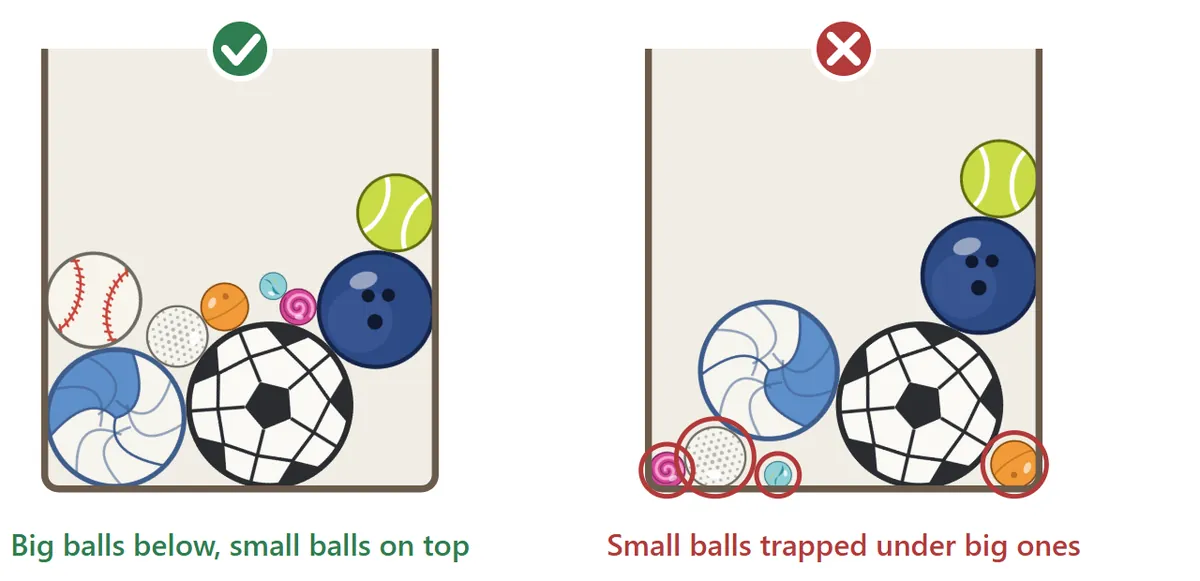
The most common mistake is letting a small ball slip underneath a big one. Nothing you drop can reach it any more, and it keeps taking up space for the rest of the game. Try to keep big balls low and small balls on top by thinking about where each ball will roll.
2. Keep similar sizes next to each other
If balls of nearby sizes sit side by side, like steps from small to big, one merge tends to trigger the next. A bowling ball next to a volleyball next to a soccer ball is the kind of row you want: when the bowling balls merge, the new volleyball lands right beside its partner.
3. Use the “Next” ball
The bar above the game shows the ball that comes after this one. When you are unsure where to drop the current ball, think about where the next one could merge, and keep that spot clear. Planning just one ball ahead prevents a lot of trouble.
4. Choose a home for your big balls
The floor of the container is flat, so a ball dropped onto an empty spot stays right where it lands. Deciding where each ball goes is what makes this game fun. Early on, pick a place for your big balls, such as the left wall, and keep building them on that side. When the big balls stay together, merges tend to chain.
When a ball has no partner to merge with, park it near the opposite wall, away from the big balls you are growing. Keep in mind that a ball dropped onto another ball slides off its round top and rolls to one side. If you want it to sit on top, aim right at the highest point of the ball below.
5. When the pile gets high, look for merges
As the balls approach the top line, stop stacking small balls and look for a drop that will cause a merge. A merged ball takes up less space than the two balls it came from, so every merge lowers the pile. Even if a ball goes slightly over the line, you have two seconds to bring it back down.
6. Slow down
There is no time limit. After each drop, wait for the balls to settle before you aim the next one. Taking a moment per drop is the easiest way to build much bigger balls.
Merge puzzle FAQ
Is there a time limit?
No. Once the next ball appears, you can drop it whenever you like. Nothing falls while you are thinking, so you can play at your own pace.
Can I stop and continue later?
Yes. On the same device and browser, press Continue to pick up the game with the same balls and score. A Daily Challenge can only be continued on the same day. The game also pauses by itself when you switch to another tab or app.
Where are my scores saved?
Your best score and biggest ball for each difficulty, and your Daily Challenge results, are saved on this device. There is no account and no sign-up.
Does it play sound?
Sound is off at first. Press “Sound: off” to turn on sound effects for dropping and merging.
The page scrolls while I play on my phone
The page does not scroll while your finger is sliding over the container. Swipe outside the container to scroll.
Is this free?
Yes. The game is free to play online in any modern browser on phones, tablets, Chromebooks and computers, with nothing to install.
Where do merge games come from?
Puzzles where you combine two identical things into something one step bigger have been popular for a long time, for example sliding-tile games where equal numbers join together. In the early 2020s, that idea of merging was combined with dropping pieces into a container and letting them roll around, and this style of drop-and-merge game spread quickly on phones and in web browsers. Today these games come in all kinds of themes. This one uses everyday balls, so you can watch a tiny marble grow, merge by merge, into a big beach ball.