 Yorimichi Games
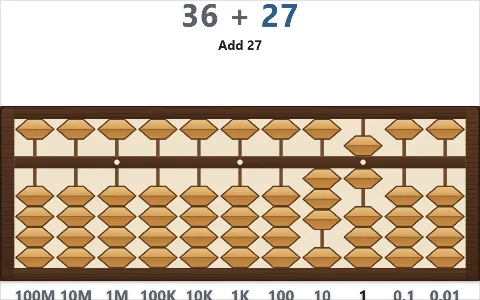
How to play Mental Math Time Attack
Mental Math Time Attack is a timed arithmetic game. You get a fixed amount of time – 30, 60 or 120 seconds – and one math problem at a time: an addition, a subtraction, a multiplication or a division. Work out the answer in your head, type it in, and the next problem appears right away. When the clock runs out, the game counts how many you got right. No paper, no long calculations on the side, just you and the numbers.
It is a one-player game that runs in your browser, so there is nothing to download and no account to create. The problems go from single-digit facts all the way up to two-digit calculations such as 38 + 47 or 46 × 7, so it works as a quick warm-up, as daily arithmetic practice, or as a real mental workout when you pick the hardest settings. Set everyone in the house to the same settings and compare scores, or simply try to beat your own best.
Reading the game screen
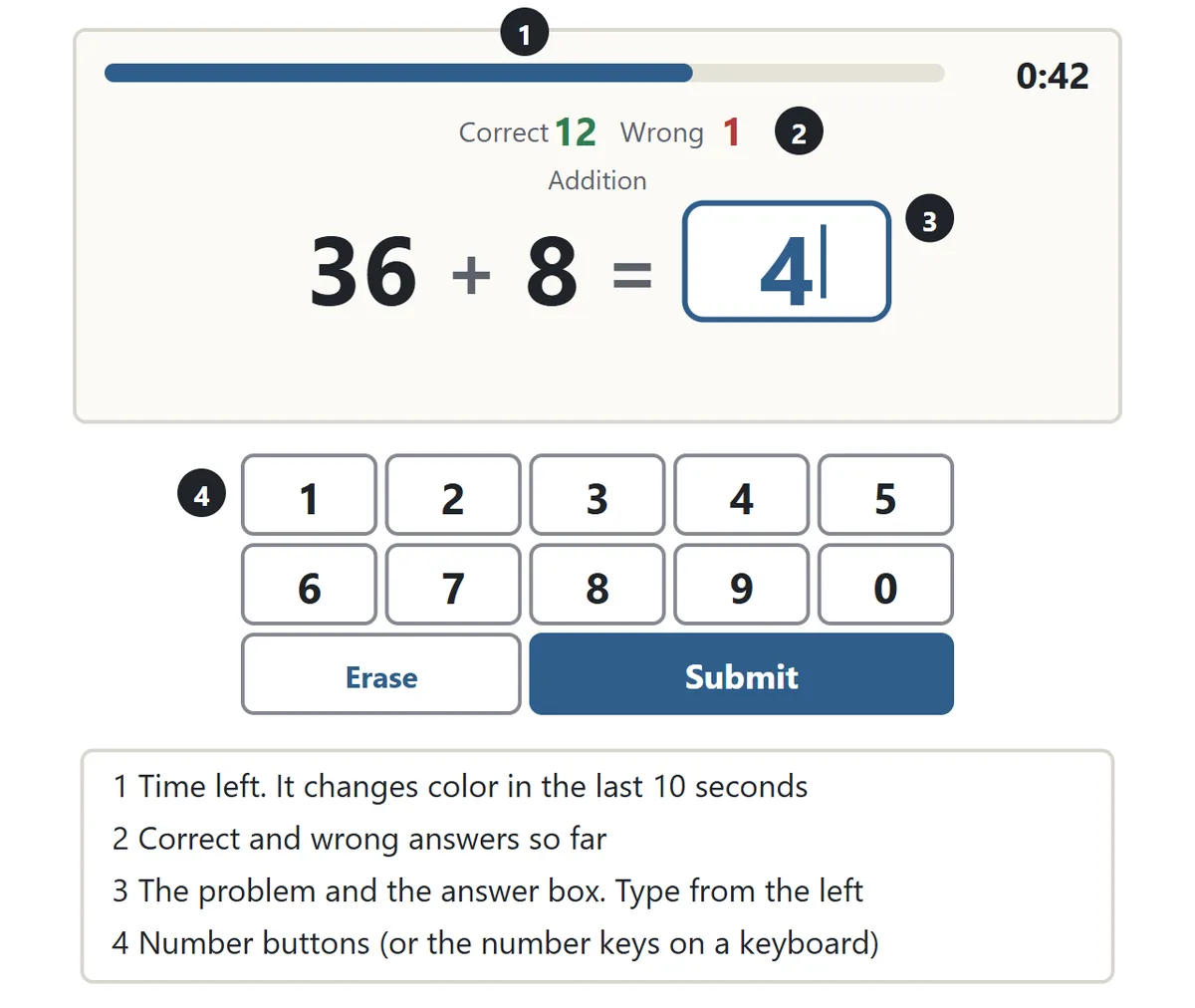
Press “Start” and the game counts down 3, 2, 1 before the first problem appears. The bar and the number at the top show the time left; when you are down to the last 10 seconds, they change color. Just below, you can see how many problems you have answered correctly and how many you missed so far. If time runs out while you are halfway through typing an answer, that problem is not counted either way.
How to enter answers
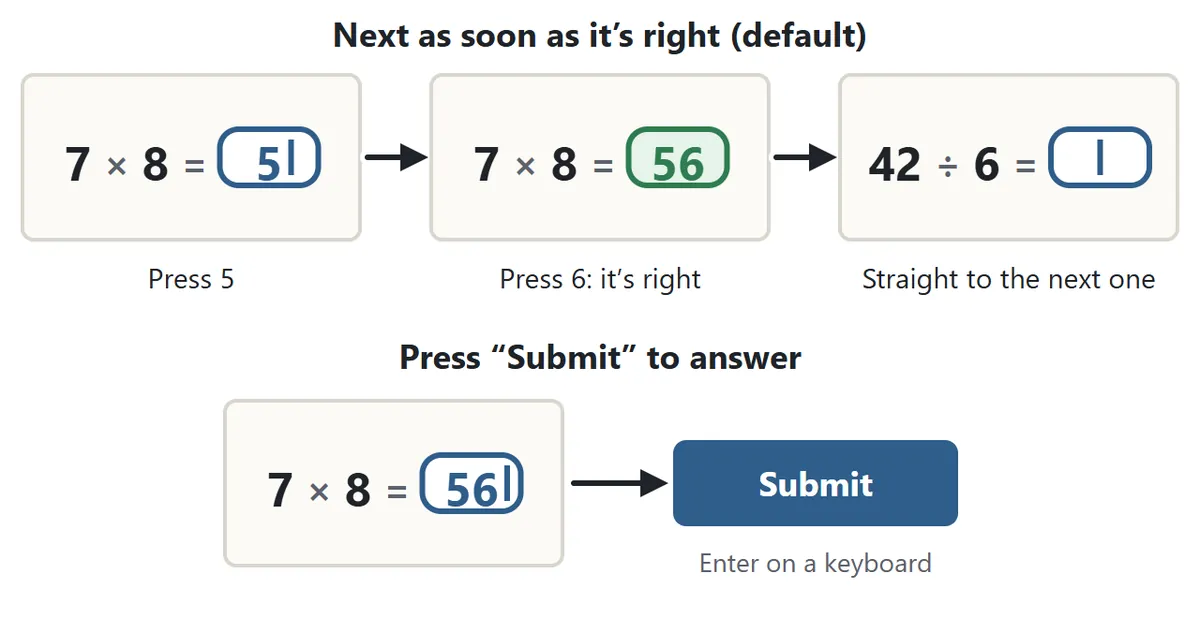
With the default setting, “Next as soon as it’s right”, the moment you type the correct answer the next problem appears – there is no button to press, which keeps the pace high. If you type as many digits as the answer has and they don’t match, it counts as a miss. If you prefer to check before you commit, switch the setting to “Press ‘Submit’ to answer”. Then the answer is only checked when you press the Submit button (or Enter on a keyboard).
On a computer, use the number keys, Enter and Backspace. On a phone or tablet, tap the large number buttons on the screen, or press the “Keyboard” button to use your device’s own number pad. Answers are typed from the left, starting with the highest digit, exactly as you would write them.
When you get one wrong
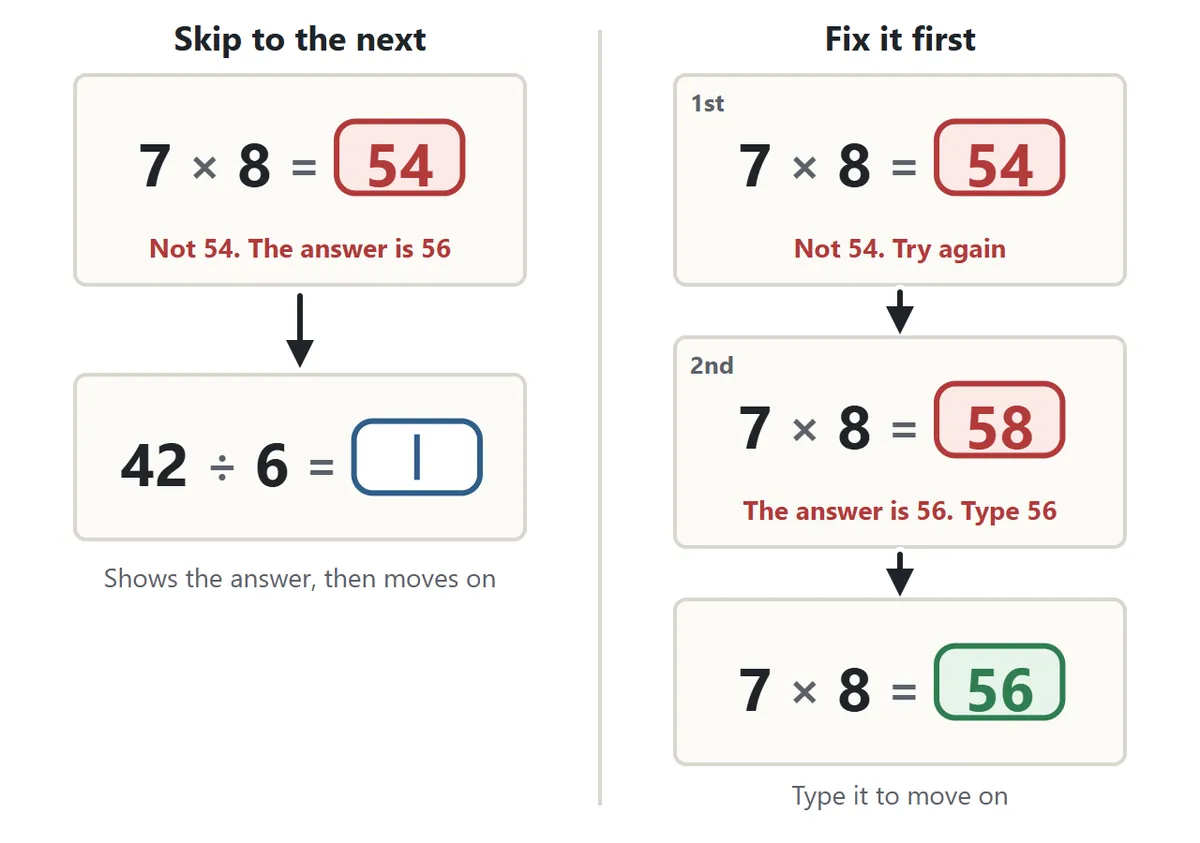
There are two ways to handle mistakes. “Skip to the next” shows the correct answer for a moment and moves on. “Fix it first” asks you to try again after your first miss; after a second miss it shows the correct answer, and you type it in to move on. The clock keeps running while you fix it, so this setting rewards accuracy rather than guessing. Either way, every miss is listed on the results screen at the end.
Math problems and difficulty levels
You can practice one operation on its own – addition, subtraction, multiplication or division – or choose “Add & subtract” or “All four” for a mix. The difficulty sets how many digits the numbers have.
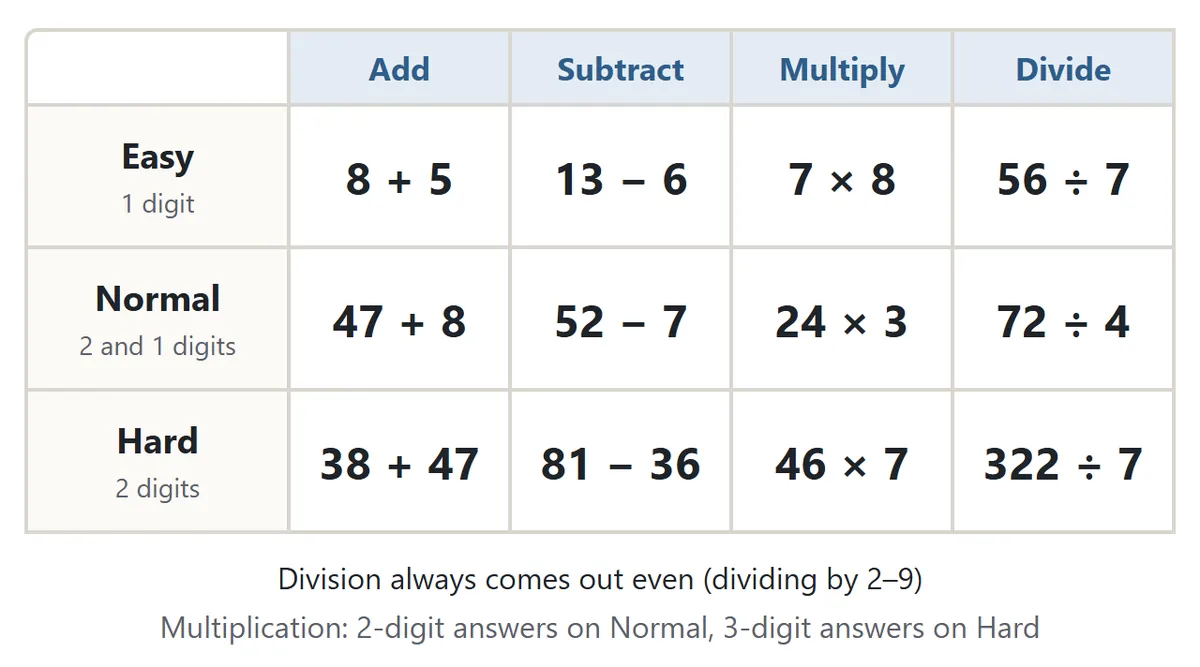
| Level | Addition & subtraction | Multiplication & division |
|---|---|---|
| Easy (1 digit) | 1 digit + 1 digit (8 + 5) and the matching subtraction (13 − 6) | Times tables up to 9 × 9 (7 × 8) and the matching division (56 ÷ 7) |
| Normal (2 and 1 digits) | 2 digits + 1 digit (47 + 8), 2 digits − 1 digit (52 − 7) | 2 digits × 1 digit with a two-digit answer (24 × 3) and the matching division (72 ÷ 4) |
| Hard (2 digits) | 2 digits + 2 digits (38 + 47), 2 digits − 2 digits (81 − 36) | 2 digits × 1 digit with a three-digit answer (46 × 7) and the matching division (322 ÷ 7) |
Division problems always come out even – there are no remainders – and you always divide by a number from 2 to 9. By default, subtraction never gives a negative answer. Choose “Allow negatives” and problems such as 3 − 8 = −5 join the mix; to answer them, press the “−” button (the minus key on a keyboard) before the digits. No problem ever has 0 as its answer, and the same problem won’t come up again within a dozen questions.
Each step up in difficulty makes every problem take noticeably longer. Start on Easy until the controls feel natural, then move up to Normal and Hard – it becomes much easier to see where you are losing time.
Results and personal bests
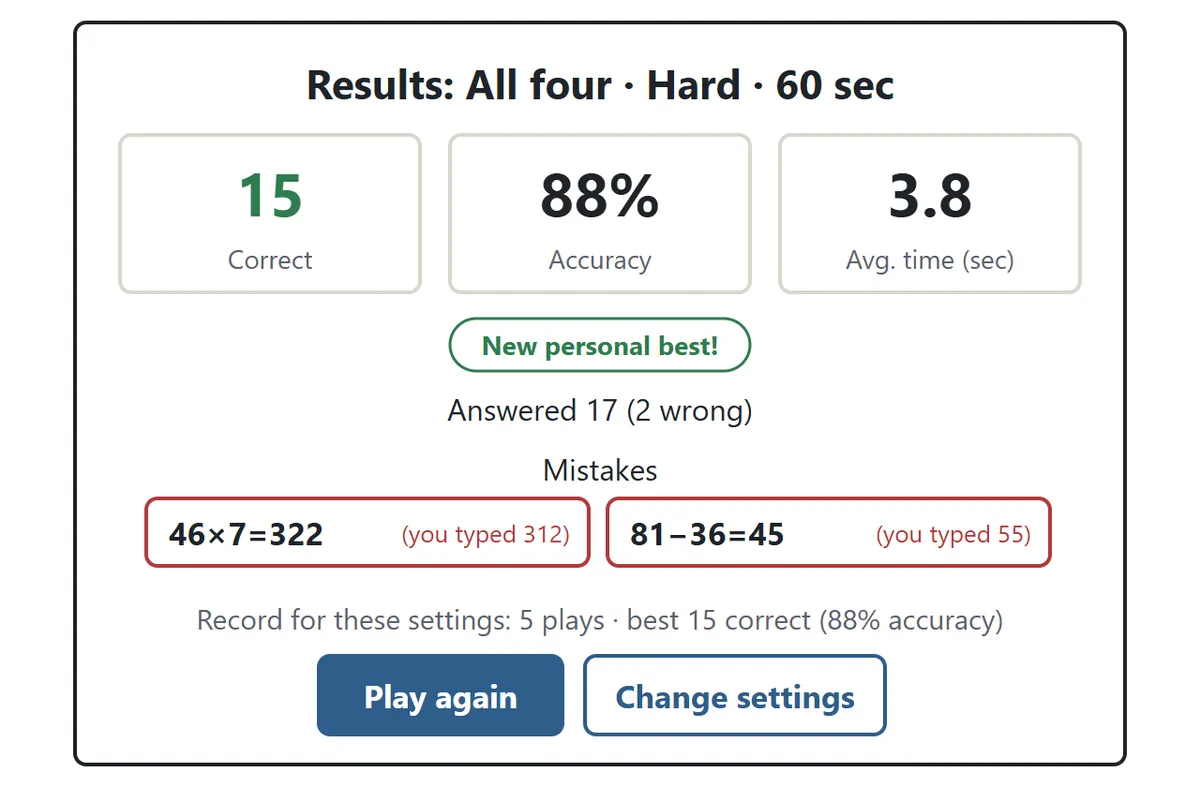
When time is up, you see three numbers: how many you got right, your accuracy, and your average time per problem. Accuracy is the share of answered problems that you got right on the first try. Underneath is a list of your mistakes, each with the correct answer and the answer you typed, so you can spot which kinds of problems trip you up. Records are kept separately for every combination of operation, difficulty, time and negative answers, and when you beat your best score for that combination, you get a “New personal best!” badge. The game also shows your last few scores so you can see the trend.
Daily challenge
In the daily challenge, everyone who plays on the same day gets the same problems in the same order. The settings are fixed at All four, Normal and 60 seconds, so you can compare scores fairly with friends and family. The game remembers your first score of the day, your best score that day, and how many days in a row you have played. The day is based on the date on your device.
Mental math tips and tricks
1. Add from the biggest place value
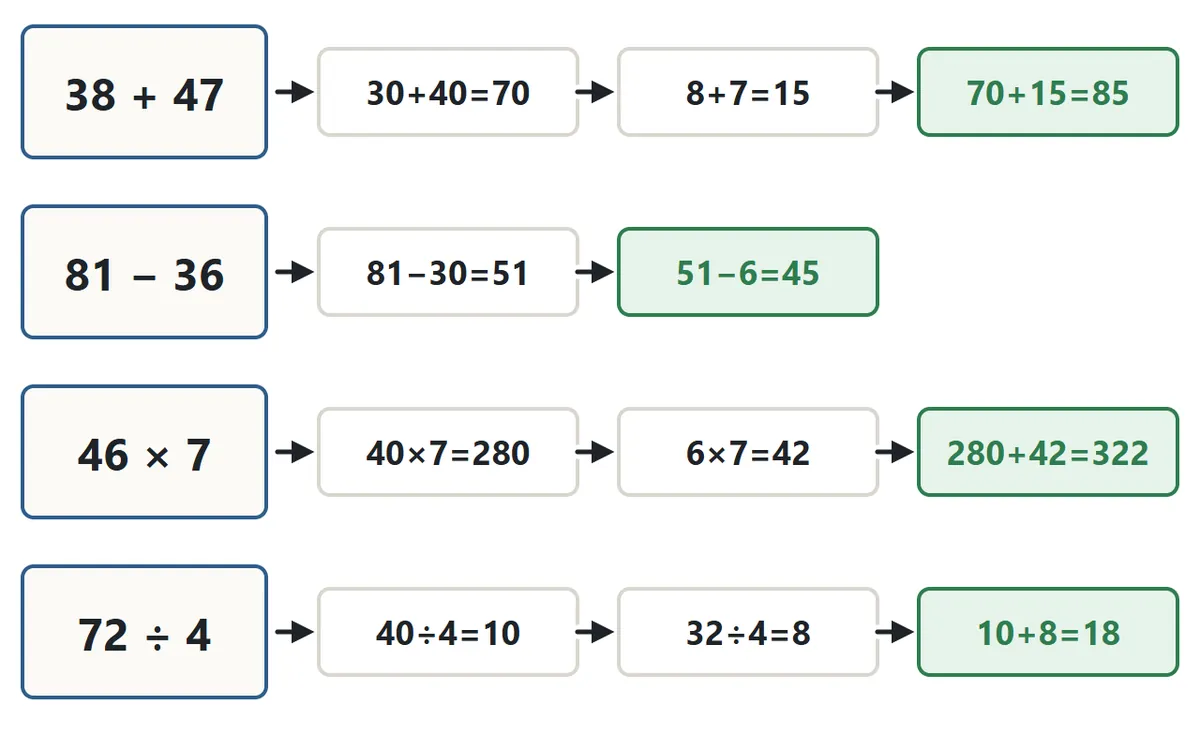
On paper you add from the ones column, but in your head it is often easier to start with the tens. For 38 + 47, add 30 + 40 = 70, then 8 + 7 = 15, then 70 + 15 = 85. The answer is typed from the highest digit too, so you can type the numbers in the same order you think of them.
2. Subtract in two steps
For 81 − 36, take away 30 first to get 51, then take away 6 to get 45. Splitting the number you subtract makes borrowing much less error-prone. When the ones digit can’t be taken away directly, as in 52 − 7, another trick is to pass through a round number: 52 − 2 = 50, then 50 − 5 = 45.
3. Multiply the tens and the ones separately
46 × 7 is 40 × 7 = 280 plus 6 × 7 = 42, which makes 322. If you know your times tables, any two-digit by one-digit multiplication is just two table facts and one addition.
4. Think of division as multiplication
Division is multiplication in reverse. For 56 ÷ 7, ask yourself “7 times what is 56?” and the times table gives you 8. For something like 72 ÷ 4, you can also split 72 into 40 and 32: 40 ÷ 4 = 10 and 32 ÷ 4 = 8, so the answer is 18.
5. Accuracy first, then speed
With “Skip to the next”, a wrong answer moves you on quickly, but the game still spends a moment showing the correct answer, so rushing usually lowers your score instead of raising it. Aim for 90% accuracy or better at first, then gradually push the pace.
6. Use the different time limits
Thirty seconds is a short burst of full concentration. Two minutes tests whether you can stay accurate as you start to tire. If you play every day, sticking to the same settings makes it much easier to see how you are improving.
Mental Math Time Attack FAQ
Which level should I start with?
Easy uses single-digit addition and subtraction plus the times tables up to 9 × 9 and their division facts. Normal mixes two-digit and one-digit numbers, and Hard uses two-digit numbers on both sides for addition and subtraction. If you haven’t done mental arithmetic for a while, start on Easy with 60 seconds and move up once your accuracy stays above 90%. Hard division problems such as 322 ÷ 7 are a genuine challenge even for experienced players.
How do I type a negative answer?
The “−” button only appears when subtraction is set to “Allow negatives”. Press “−” first, then type the digits. On a keyboard, use the minus (-) key.
What happens if I stop in the middle?
If you press “Settings” during a game or switch to another tab, the clock stops. Press “Continue” in the settings, or “Resume”, to carry on with the time you had left.
Where are my scores saved?
Your records are stored only in this browser on this device. There is no sign-up or login, and records are not shared between devices or browsers.
Is there sound?
The game starts with sound off. Press “Sound: off” below the game to turn on short sound effects for right and wrong answers.
About mental math
Mental math, or mental arithmetic, simply means calculating in your head without writing anything down and without a calculator or abacus. Being able to handle simple calculations this way – adding and subtracting two-digit numbers, or multiplying a two-digit number by a one-digit number – is widely seen as a basic number skill. It comes up all the time in everyday life: adding up a shopping bill, estimating your change, splitting a bill, or checking whether a total looks about right. Like most skills, it gets faster with a little regular practice, and a timed game is an easy way to fit that practice into a spare minute.
Comments
Write a comment
No comments yet.